Reports say Scaloni has agreed to a deal through 2028, with an option to continue until 2030. Argentina has yet to confirm the agreement.
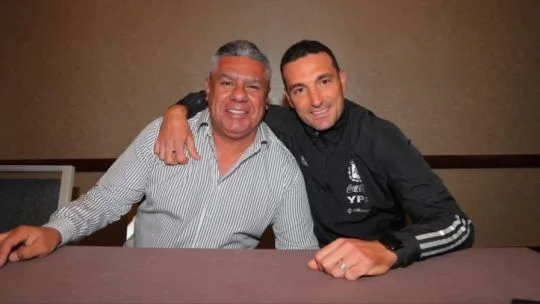
Lionel Scaloni appears set to remain Argentina coach for the next phase of the national team’s cycle, with reports pointing to a deal that could keep him in charge through the 2030 World Cup. The proposed terms would give the Argentine Football Association (AFA) a firm commitment through 2028, while making a further two years dependent on both sides agreeing to renew. That distinction matters: the reports describe a route to 2030, not a guaranteed six-year tenure.
For Argentina, the question is less whether Scaloni has earned another contract than how the federation wants to structure it. A nearer term would secure continuity for the next stretch of the cycle, while a renewal clause leaves room for either side to reassess later. The arrangement also reflects the unresolved status of the negotiations: until the AFA confirms the deal, the reported terms remain just that—reported.
Two-year deal, with a route to 2030
News agency Noticias Argentinas and Perfil report that the 48-year-old has agreed to a contract running until 2028, with a renewal clause that could extend it to 2030. The reports say negotiations concluded after Scaloni and AFA president Claudio “Chiqui” Tapia settled outstanding contract details, including financial terms. They don’t disclose the proposed financial arrangements, so the reported agreement offers no basis for judging how the parties valued the job.
The agreement follows a period in which Scaloni considered his future. Talks with Tapia took place during the most recent international break. The AFA has confirmed that negotiations opened, but has not announced a completed deal. That gap between talks and confirmation is significant: public reports can describe a settlement, but the federation’s statement is the clearest official marker of where the process stands.
Argentina’s recent results help explain why continuity matters: since taking charge in 2018, Scaloni has led the Albiceleste to two Copa América titles, the 2022 Finalissima and the World Cup in Qatar. He also guided the team to the final of this year’s World Cup. That record gives the AFA a strong sporting reason to retain him, though past success can’t by itself answer how the team will adapt as its personnel and priorities change. This is more significant than it looks: keeping a coach can preserve a working approach, but it also means the next phase will be judged against an unusually high standard.

November friendlies bring immediate selection questions
A formal announcement could arrive in the coming days or during the next international break, scheduled for November 9–17, according to the reports. Argentina are due to play Uruguay at Boca Juniors’ La Bombonera on November 13, then Costa Rica at Córdoba’s Mario Alberto Kempes stadium on November 17. Kick-off time for the Uruguay match has not been confirmed. The timing creates a natural public moment for an announcement, but the reports don’t establish that the AFA will use either fixture to make one.
The fixtures will close Argentina’s year as Scaloni evaluates players for the next World Cup cycle. Friendlies can give a coach room to assess options, but selection choices are shaped by availability as much as form. Here, suspensions and injuries complicate the picture. If you’re following Argentina’s transition, the key question is how much the squad can be assessed when several prominent players may be unavailable.
His available squad could be affected by suspensions handed down after the 2026 World Cup final. Boca Juniors midfielder Leandro Paredes has seven matches left of a 10-match ban; Roma right-back Nahuel Molina has four remaining from a seven-match suspension. Those absences narrow the choices for upcoming games and may also affect how the staff distributes opportunities across the squad. (And this is the part most people overlook: a friendly can still be useful even when the ideal first-choice lineup isn’t available.)

Inter Milan striker Lautaro Martínez is also a doubt as he recovers from a muscle tear. Lionel Messi, meanwhile, has retired from international football. Atlético Madrid centre-back Cristian Romero is now Argentina’s captain. These changes underline the practical challenge facing the next cycle: the team must plan around current absences while shaping a group that can operate without relying on every familiar name.
Messi’s retirement marks a clear change in the squad’s circumstances, while Romero’s captaincy gives the team a different leader on the pitch. The source doesn’t spell out how Scaloni intends to replace Messi’s influence or adjust the team’s style, and any claim about a tactical shift would be premature. The immediate test is more basic: managing selection, fitness and leadership through a run of fixtures with key players unavailable.
What a longer commitment would mean
Argentina are expected to host the opening match of the 2030 World Cup. Spain, Portugal and Morocco will also stage the tournament, which is set to begin with three centenary matches in South America. For Scaloni, a deal extending as far as 2030 would put him in position to guide the team into that tournament, though the AFA’s confirmation is still pending. A contract with that horizon would give the national team a chance to plan around a settled coach, but the renewal clause makes clear that the longer span would require another decision.
That said, the near-term work will matter more than the headline date. A coach can be contracted for a cycle, but the team still has to manage absences, identify options and carry its standards into new competitions. The reported deal offers a framework for continuity. It doesn’t settle how Argentina will handle the transition now under way, or whether both sides will want to extend the relationship when 2028 arrives.
For the moment, the strongest evidence is the record and the AFA’s confirmation that talks took place. The reported terms suggest an agreement is close, yet the federation hasn’t formally announced it. A long runway, with a decision still ahead.


Discussion
Sign in to join the discussion.