Argentina’s Senate leader says she’s ready to be president, while stressing that candidate decisions are still a year away and Javier Milei leads the field.
A presidential opening without a campaign announcement
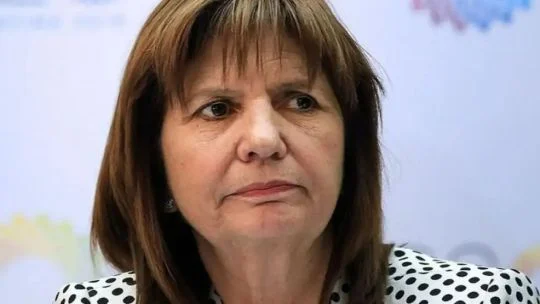
Patricia Bullrich is positioning herself as a potential presidential contender while leaving Javier Milei’s plans and the 2027 election timetable in the foreground. “It’s not that I want to be president; I’m ready to be president,” she said in an interview with Infobae broadcast Thursday. She added that “we are still a year away” from deciding on candidates. The phrasing puts her availability on the record while preserving room for the governing camp to settle its choice later.
Bullrich, 70, stopped short of declaring a campaign. Asked again whether she would run, she replied: “No comment.” She also said the president is the leading candidate: “The President is always in the lead when it comes to being a candidate. That’s just how it is.” Her answer acknowledges the advantage of incumbency while avoiding a direct endorsement of any arrangement for the next election.
That balance is the point. Bullrich has signaled ambition, but she’s also making clear that Milei’s position comes first in the current political calculation. A year before candidates are to be decided, the distinction lets her present herself as prepared without forcing an immediate confrontation over who should lead the ticket.
From rival candidate to party leader
Her remarks come as she holds a senior role in Milei’s party. After placing third with almost 24 percent of the vote in Argentina’s 2023 presidential election, representing the Juntos por el Cambio coalition, Bullrich urged voters to support Milei. She later joined his government as security minister and switched to La Libertad Avanza, where she now leads the party’s Senate caucus. That sequence has put her in an unusual position: she has her own electoral history, but her current influence is tied to a party whose leading figure is the president.
The almost 24 percent she received in 2023 gives her a record of support to point to, though it doesn’t settle what role she should have in a future campaign. Her move into Milei’s government also changed the nature of the relationship. She’s no longer simply a former opponent who endorsed him; she’s part of the governing operation, with a public profile and a role inside the legislature.
Asked whether she could join Milei’s ticket as his running-mate, Bullrich said he had not made that offer. She argued that a vice-presidential candidate should bring their own electoral support: “It’s not about having votes handed to you by the person at the top of the ticket; you also bring votes of your own.” The answer sets a standard for the job and, at the same time, makes the question of her own political base hard to ignore.
Keeping an independent base inside the coalition
That answer points to a broader question for Bullrich: how to maintain an independent political base while serving in Milei’s governing camp. In recent weeks she has criticized some policy decisions, but has been careful to describe those differences as disagreements rather than a split with the president. That distinction matters in a coalition where public dissent can be read as a signal about future alliances, even when the speaker says the relationship remains intact.
For Bullrich, the challenge is to show that she can contribute something distinct without making her position look like a challenge to Milei’s authority. Her comments about bringing votes of one’s own fit that effort. So does her emphasis on discussion inside the coalition: it frames disagreement as a way to strengthen the government’s political footing, rather than as evidence that she’s preparing to leave it.
This is more significant than it looks. A politician can hold a senior post and still need to demonstrate that her support isn’t merely borrowed from the leader she serves. If you’re working in this space, that’s the tension to watch: Bullrich is making a case for independent weight while openly recognizing Milei’s current lead.
Policy disputes inside the governing camp
On October 9, Bullrich met Milei at the Olivos presidential residence after publicly raising concerns about several government decisions. The meeting reportedly lasted around two hours. Afterwards, she wrote on X: “A deep conversation with President @JMilei. We discussed everything I have been raising, with complete honesty.” Her account presents the meeting as direct communication, but doesn’t say that the two resolved their disagreements.
Her concerns include disability-related provisions in the 2027 Budget Bill and proposed changes to the Land Law. She has also called for a political forum where disagreements within the coalition can be discussed. The requests touch on both policy and process: she’s challenging particular decisions while arguing that the governing camp needs a regular way to handle disputes.
A forum could give coalition members a place to test arguments before disagreements become public, though the source doesn’t describe what form such a forum would take or whether Milei has agreed to establish one. The practical question is whether Bullrich’s call leads to a durable channel for debate or remains a public appeal. For now, her stated position is that the differences should be addressed within the coalition.
Domestic support and the US backstop
Bullrich has pressed the government to build domestic political support and safeguards, rather than depend on backing from Washington. She was referring to the US$20-billion financial backstop announced by the US government ahead of Argentina’s 2025 midterm elections. Her argument links political support at home with the government’s ability to withstand periods of uncertainty.
“We cannot allow what happened in 2025 to happen again, when we ended up dependent on Scott Bessent,” she said, naming the US Treasury secretary. Bullrich argued that political support helps the government maintain governability and economic confidence, particularly during election periods, when uncertainty can weigh on businesses and investors. The point isn’t that she rejects outside support; it’s that she wants Argentina to have stronger domestic backing and protections of its own.
She said she would prefer to tell Bessent that Argentina no longer needed outside support because it had built its own safeguards against volatility. That’s a political argument as much as an economic one: a government with support at home may have more room to manage pressure when markets and voters are watching closely. And yet, her reference to the backstop also underscores how much the government’s position can depend on support beyond its own political base.
What the positioning could mean
Bullrich’s comments combine a pitch for greater political autonomy with a clear acknowledgment of Milei’s current advantage as the likely standard-bearer. She has made her readiness explicit, but she hasn’t declared a candidacy, claimed a place on the ticket, or described a break with the president. For now, the message is carefully conditional: she’s prepared to lead, while accepting that the governing camp’s decision is still ahead.
That leaves several questions open. Can Bullrich preserve a distinct base while remaining a senior figure in Milei’s party? Will her policy objections produce a forum for coalition debate, or remain individual interventions? And will her emphasis on domestic safeguards become a sustained part of the government’s approach? The source offers no answers yet.
For now, Bullrich has made her readiness explicit while keeping her candidacy undecided. The signal is clear. The timing isn’t.
Discussion
Sign in to join the discussion.