Brazil’s runoff pits Lula’s social agenda against Flávio Bolsonaro’s bid to extend his family’s political influence, with polls showing a near tie.
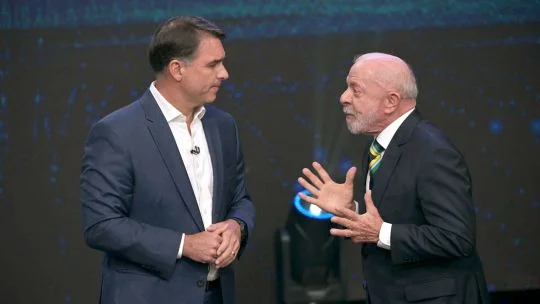
Brazil’s presidential runoff is a test of whether Luiz Inácio Lula da Silva can hold the country’s left-wing coalition together against a Bolsonaro successor. Senator Flávio Bolsonaro outperformed expectations in the first round, taking 47 percent to Lula’s 45 percent, and the latest polling leaves the contest too close to call.
The vote, scheduled for Sunday, will shape the direction of Latin America’s largest democracy and its 214 million people. Lula, nearly 81, is seeking a fourth, non-consecutive term. His 45-year-old challenger is the son of former president Jair Bolsonaro, who is serving a 27-year sentence under house arrest after his conviction over an attempted coup following his 2022 election defeat.
Flávio has promised to free his father if elected. That pledge gives the race a family and democratic dimension, while the candidates’ campaigns have focused heavily on household finances, public safety and political identity.

A narrow polling lead, and an uneven digital fight
A Datafolha poll put Flávio at 51 percent of voting intentions and Lula at 49 percent, a statistical tie within the margin of error. The first-round result, however, showed that surveys had underestimated the senator’s support, giving his campaign reason to question whether the polling gap tells the full story.
Social media has been central to the campaign, an arena where the right has typically held an advantage. Lula has stepped up his online outreach, including direct-to-camera appeals, despite not owning a cellphone.
His party has accused Meta of election interference, alleging that the company restricted Lula’s content on WhatsApp and Instagram. Meta denied favoring either candidate. It previously said some Lula campaign ads were mistakenly disabled because of technical errors that also occurred outside Brazil.
The United States has also hovered over the contest. President Donald Trump has not explicitly endorsed Flávio, though the challenger’s political alignment has placed the race within a wider contest over the regional strength of right-wing governments.
Cost of living and credibility
Flávio has campaigned on boosting purchasing power and reducing insecurity, concerns for a country with roughly 160 million registered voters. At a São Paulo rally, civil servant Geneci Bispo, 58, criticized the government’s tax policy, saying it raised taxes on workers to fund welfare dependency among low-income people.
The senator has also attacked Lula over a corruption conviction that was later annulled. Yet Flávio is himself under investigation over financing for a biopic about his father. Part of the film’s funding came from a banker implicated in one of Brazil’s largest financial scandals.
At a televised debate on Sunday, Flávio told Lula, “Brazil is going to retire you.” A day later, at a rally in Pará, he promised voters “hope and the right to dream.” The contrast captures his campaign’s mix of personal attacks and appeals to change.
Lula’s late push
The first-round result energized Lula’s supporters, who have held large rallies since the vote. The president thanked people who took to the streets “to ensure the continuity of democracy in this country.” At a protest in Rio de Janeiro, marketing professional Camila Hassen, 35, described democracy as “a very precious and fragile thing.”
Lula has also moved to reinforce his economic message. His administration raised Bolsa Familia, the flagship benefit for poor families, with the increase taking effect this week. Parliament also approved a reduction in working hours, a popular measure that Flávio supported.
Those steps give Lula fresh arguments in the final stretch, while Flávio’s first-round performance shows the scale of the challenge. The runoff will turn on whether voters prioritize the incumbent’s social policies and democratic appeal or the challenger’s promises on prices and security.
Discussion
Sign in to join the discussion.