Approval is falling for several of Latin America’s conservative leaders as voters seek visible progress on security, economic hardship and governance.
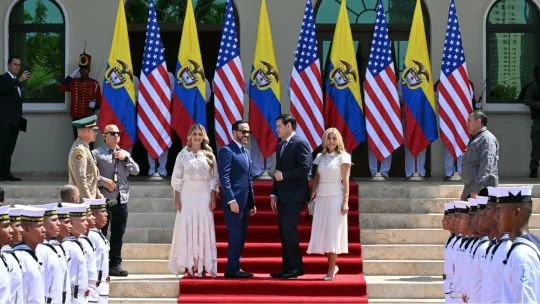
Latin America’s new conservative leaders are running into a familiar constraint: voters who backed promises of security and economic recovery expect to see results quickly. With support slipping across the region, the coming election in Brazil will unfold amid a wider test of whether right-leaning governments can turn campaign pledges into visible improvements.
Recent polling points to discontent in Peru, Colombia, Chile and Argentina. Ipsos found that approval of Peru’s President Keiko Fujimori fell to 40 percent from 57 percent when she took office in August. Colombia’s Abelardo de la Espriella lost more than three points in his first month as president. In Chile, a quarter of President José Antonio Kast’s supporters say they regret voting for him, according to the left-wing Fundación Nodo XXI. Argentina’s Javier Milei, a prominent figure for free-market conservatives, has reached record-low ratings a year before seeking re-election.
These leaders campaigned on curbing crime, strengthening weak economies and building closer ties with US President Donald Trump. Their falling numbers suggest that voters are judging those promises by delivery, rather than by political identity alone.
Expectations collide with slow results
Michael Shifter, a senior fellow at the Washington-based Inter-American Dialogue, told AFP that many governments had raised expectations beyond what they could meet. Voters want fast change, he said, even when the problems involved cannot be fixed quickly. Shifter also cautioned against reading the backlash as a specifically conservative problem: he doubts a left-wing government would necessarily fare better under the same pressure.
The pattern extends beyond the four countries with recent approval figures. An AmericasBarometer survey of more than 25,000 people across 21 countries found weak support for leaders in eight US allies that belong to Trump’s “Shield of the Americas” alliance: Argentina, Bolivia, Chile, the Dominican Republic, Ecuador, Guatemala, Panama and Paraguay.
Bolivia offers a sharp example of how quickly public patience can run out. Voters removed the long-ruling socialists during the country’s worst economic crisis in 40 years and chose Rodrigo Paz, a moderate, pro-business alternative. Six months into his presidency, demonstrators were blockading major cities and demanding his resignation. Fuel shortages remain a central grievance.
“I thought it would be different, that things were going to change,” Jamil Alanoca, a 19-year-old business student, told AFP.
Peru’s voters, meanwhile, went to the polls in April and June seeking relief from an epidemic of extortion. Ipsos Peru polling director Guillermo Loli said insecurity that has persisted for years won’t disappear overnight, but voters should at least see “concrete actions.” That distinction captures the immediate challenge for governments: progress may take time, but the public expects evidence that it has begun.
Bukele’s model has limited reach
El Salvador’s Nayib Bukele stands apart. His approval rating is 83 percent in the AmericasBarometer survey, following a sweeping crackdown that drove crime rates to historic lows. More than 90,000 suspects have been jailed under a state of emergency in place for four years; rights groups say the campaign has involved serious abuses.
The 2026 Pulse of Democracy report, produced by Vanderbilt University using AmericasBarometer polling, described El Salvador as a defining experiment in trading liberties for safety and delivering greater safety by its chosen measures. Shifter, however, doubts that Bukele’s results against domestic gangs can be reproduced against the transnational criminal networks operating elsewhere in the region. He called Bukele “sui generis” and an exception.
Some voters are still willing to give other leaders more time. Chilean pensioner Leoncio Silva said he expects Kast to defeat the foreign gangs blamed for rising violence and urged people to wait a year before judging him. Whether that patience holds may depend on what voters can see on the ground: falling crime, relief from economic pressures and concrete steps that make government promises feel real.
Discussion
Sign in to join the discussion.