Argentina has lost 32,290 companies since November 2023, while Fundar reports an 18-month decline across most sectors and provinces.
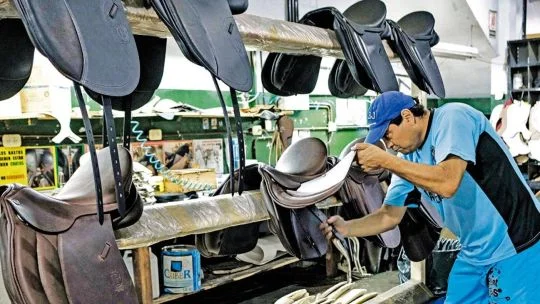
Argentina’s business base contracts at a historic pace
Argentina’s business base has shrunk more sharply in the first 32 months of Javier Milei’s presidency than under any recent administration with comparable data, according to a new report from the Fundar think tank. Since November 2023, the country has lost 32,290 companies, leaving it with the fewest businesses since 2007. Those figures describe more than a weak stretch in the business cycle: they point to a sustained reduction in the number of firms operating across much of the country.
The distinction matters. A company count cannot show, on its own, how many people have lost work, whether surviving firms are producing less, or how large the closures were. But a decline spread across sectors and provinces is harder to dismiss as a problem confined to one industry or region. The trend also raises a practical question for the recovery: how quickly can new activity take hold if the pool of operating businesses keeps shrinking?
A decline across sectors and provinces
Fundar’s Monthly Business Monitor records 18 consecutive months of contraction. Losses have reached 14 of Argentina’s 18 economic sectors and 23 of its 24 provinces. Compared with the same month a year earlier, the number of companies fell by 15,475, or 3.1 percent; so far this year, 10,095 firms have disappeared. The breadth of the decline suggests that the pressure is not limited to a single local shock.
The total is down 6.3 percent under Milei. By comparison, during the first 32 months of the presidencies of Cristina Fernández de Kirchner, Mauricio Macri and Alberto Fernández, company numbers ranged from a 2.2 percent drop to 4.1 percent growth, Fundar said. The comparison puts the current contraction in perspective, though it doesn’t explain the fate of each firm or establish that every closure has the same cause.
Fundar economics director Guido Zack attributed the pressure to weak domestic demand, high costs in dollar terms, taxes, infrastructure problems and the cost of financing. “The data show a persistent and widespread deterioration of Argentina’s business fabric,” he said, adding that production and investment need viable conditions. That list spans both immediate pressures, such as lack of customers and expensive credit, and longer-running constraints, including infrastructure. For a company weighing whether to keep operating, several burdens arriving at once can be harder to absorb than any one of them alone.
The numbers here are underwhelming for a government seeking a durable recovery. A smaller business base may also narrow the routes through which growth reaches households: firms are where much private employment and production take place. The count doesn’t tell us how many jobs have been affected, though. That limit is worth keeping in view when interpreting what is a stark indicator.

Growth forecasts face a tougher test
The business contraction comes as expectations for economic growth have weakened. The Central Bank’s REM survey of market expectations cut its 2026 growth forecast to 1.5 percent from the 3 percent projected in June. The same report lowered its projection for Argentina’s economy from 3 percent to 2.5 percent. These are forecasts, not results, but revisions lower show that the outlook has become less confident.
There’s an apparent tension between the prospect of growth and the shrinking number of firms. An economy can expand while some businesses close, particularly if activity is concentrated in areas that are growing. But the monitor’s wide geographic and sectoral reach makes the contraction harder to treat as a narrow adjustment. The available figures don’t identify which sectors may drive any rebound, so the forecasts alone can’t resolve that tension.
Banco Provincia’s Economic Research Department said in a weekly report that GDP would need to grow at least 2.3 percent from August through December to keep the statistical carry-over into next year from turning negative. That threshold concerns the arithmetic inherited by the following year, not a guarantee of stronger activity for businesses or households. If you’re working in this space, the distinction matters: a better starting point in the GDP figures would not by itself show that demand, financing or operating conditions had improved.

Household demand is the next test
Private consumption could support GDP because it accounts for a large share of economic output. But its strength hinges on household purchasing power, jobs, access to credit and public-sector transfers—factors that have all weakened in recent months. If households have less room to spend, the businesses that depend on local customers may struggle to replace lost demand, even if other parts of the economy improve.
Here’s the thing: consumer spending and business survival are linked, but neither measure guarantees the other will turn around. A rise in consumption could help firms bring in revenue; a continuing wave of closures could, in turn, constrain employment and local activity. The source figures don’t establish how strong either effect will be. They do make the coming months a test of whether demand can stabilize while companies continue to disappear.
And this is the part most people overlook: the recovery question isn’t only whether GDP grows, but whether that growth is broad enough to reach businesses facing weak demand and high costs. That said, the monitor offers a record of contraction, not a forecast of what comes next. Persistent losses. The coming months will show whether consumer demand can offset the ongoing decline in Argentina’s business base.
Discussion
Sign in to join the discussion.