Current U.S. munitions shortages stemming from the Iran conflict are undermining military readiness and global deterrence efforts.
As the war in Iran continues to unfold, a significant flaw in U.S. military strategy has become apparent: while the U.S. military can mobilize quickly, replenishing depleted arsenals is a slow and complex process. Recognition of this issue has only come after substantial military commitments have already strained the inventory.
The Pentagon's recent contracts reflect a pressing need to address this challenge. Among these is a staggering $24.4 billion agreement with Raytheon to boost production of the Standard Missile-6 (SM-6), alongside a $20.7 billion contract for AIM-120 AMRAAMs and a $58.6 billion deal for Patriot missiles with Lockheed Martin. Despite these moves, the act of signing contracts doesn’t immediately restore missile stockpiles.
The consequence of this depletion has been notable on the battlefield. Reports indicate that U.S. commanders in the Middle East have taken the unusual step of allowing some incoming Iranian missiles, particularly those aimed at unpopulated areas, to land without interception. This measure is an attempt to conserve the increasingly scarce interceptor resources for more significant threats.
In a recent interview with Time, President Trump played down the severity of munitions shortages, although he acknowledged that some inventories are indeed running low.
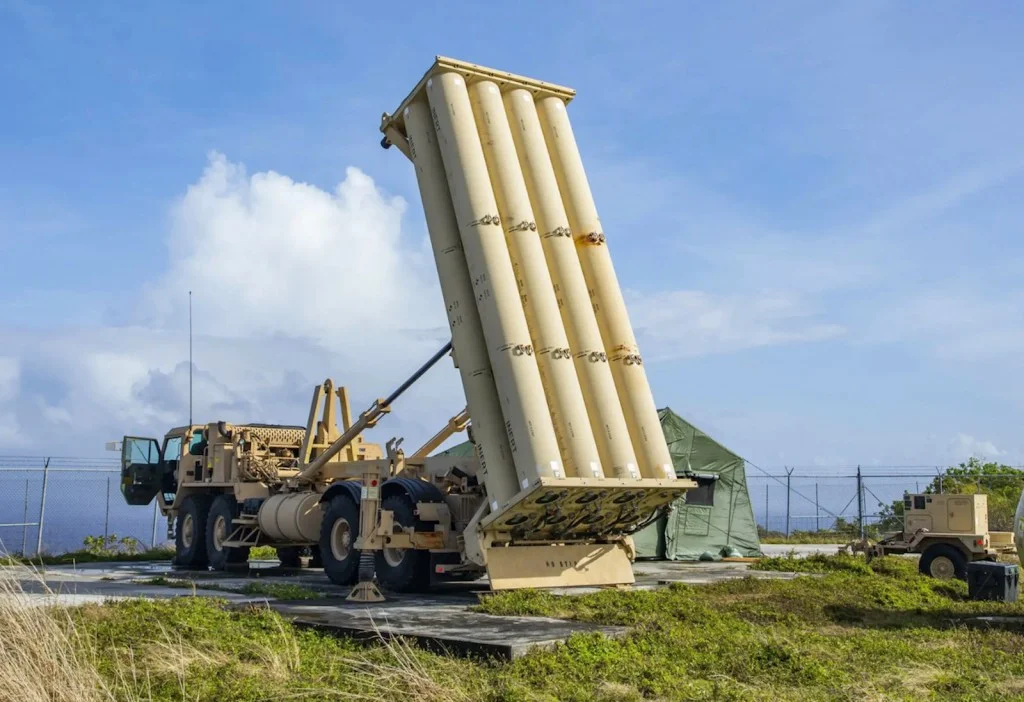
Independent analysis from the Center for Strategic and International Studies (CSIS) highlights that by late July, the U.S. stock of Patriot and THAAD interceptors had dwindled to fewer than 827 and 278, respectively. This decline is a direct consequence of commitments made during previous conflicts, including the 12-day war in June 2025, during which U.S. forces reportedly fired over 150 THAAD interceptors and about 80 SM-3s to counter Iranian missile threats to Israel.
Challenges in Replenishing Stockpiles
Even prior to the intensification of hostilities with Iran, military officials recognized the need to enhance munitions production capacity. In January, the Pentagon partnered with Lockheed Martin to increase THAAD production from 96 to 400 units per year and boost Patriot PAC-3 output from 600 to 2,000 units by 2030. However, such increases won't resolve immediate shortages; the manufacturing lead time for these interceptors ranges from 25 to 51 months.
This prolonged production timeline has led to severe vulnerabilities. A report from the Pentagon Inspector General released in September confirmed that the Iran conflict has exposed industrial bottlenecks, leading to shortages of critical munitions.
Impact on Global Deterrence
Although the U.S. military can still maintain operations in Iran, the rapid depletion of munitions casts doubt on its deterrent capabilities elsewhere. The Congressional Budget Office estimates that the U.S. military has likely expended between one-half and two-thirds of its missile-defense inventory since June 2025. Rebuilding this inventory could take five years, even with ramped-up production.
The impact is already evident in Ukraine, where military officials have reported severe shortages of Patriot interceptors since the Iran war escalated. President Zelensky highlighted that Ukraine possesses significantly fewer interceptors now than in 2025, while Russian missile launches have intensified.
Historically, Washington has underestimated how long military actions can extend, resulting in strain on its munitions. The Iraq War was expected to be a swift victory, yet U.S. forces found themselves critically low on weapons just days into the campaign. Despite ongoing assurances, current strategies echo this past miscalculation, with promises of a speedy resolution made while the conflict drags on.
Warnings about supply chain issues in the defense manufacturing sector had been issued long before the current conflict escalated. Only earlier in 2023 did the Pentagon make meaningful moves to increase interceptor production, illustrating a short-sighted approach to military preparedness.
The unforeseen duration of the conflict has significant implications, not just for the U.S. military’s operational readiness, but also for its credibility and reliability as an ally on the global stage.
Azhar Azam is a geopolitical analyst specializing in economy, climate change, and international security. His insights have appeared in numerous global platforms.
Discussion
Sign in to join the discussion.