Peronist Loyalty Day reflects on eight decades of political evolution in Argentina, highlighting current divisions within the movement.
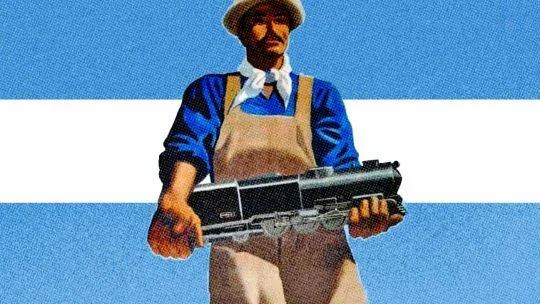
Peronist Loyalty Day, observed annually in Argentina, holds a complex significance rooted in the historical and ideological evolution of the Peronist movement. Established in 1945, this day commemorates the rallying of workers who protested for Juan Domingo Perón's release from political imprisonment. This event not only marked the beginning of Peron's ascent to power but also established a lasting legacy that has continued to shape Argentine politics.
The Persistent Nature of Peronism
Defining Peronism is no straightforward task; it's a multi-faceted political philosophy that refuses to be confined by a single characterization. Often referred to as Justicialism, Peronism incorporates elements of social justice, economic independence, and political sovereignty. However, these principles have experienced significant reinterpretation and practical deviation over the decades. Observers have pointed out that while it seeks to unify a broad coalition of interests—from labor unions to business leaders—Peronism simultaneously fosters its own internal contradictions.
A Legacy of Contradiction
Over the last 80 years, the Peronist movement has oscillated between various political and economic paradigms. Notably, during Carlos Menem's presidency in the 1990s, the party dramatically shifted towards neoliberal policies, which appeared to abandon the core tenets of Peronism. In recent years, figures like Cristina Fernández de Kirchner have drawn attention to the profitability of business sectors during their administrations compared to those under Mauricio Macri and Javier Milei, hinting at a selective claim of Peronist ideals that align with present political narratives.
The Modern Split of Loyalty Day Celebrations
Modern observations of Peronist Loyalty Day have transformed significantly since its inception. While the occasion originally united various factions within the movement, the current political landscape features a fragmented celebration with no singular representation of Peronism. The 2019 election marked a pivotal moment, as factions came together to unseat Macri, but since then, divisions have resurfaced among various “ismos,” such as Kirchnerism and Kicillofism. Today, those factions often celebrate separately, as seen with divergent events held by Kirchnerites and supporters of Buenos Aires Governor Axel Kicillof.
Historical Context and Analysis
The origins of Peronist Loyalty Day are deeply entwined with Argentine labor history. Just days before October 17, 1945, Perón was removed from his government posts amid rising tensions with the military government of Edelmiro Farrell. His subsequent release was spurred by workers' mobilizations that coalesced in front of Plaza de Mayo, where Perón delivered a rousing speech that turned him into a symbol of the working class. This moment not only propelled him into the political limelight but also solidified the deep connection between Peronism and labor rights, which remains a guiding force within the movement today.
Contradictions in Successful Movements
The ability of political entities to encompass their own contradictions often marks a crucial point in their evolution. Major historical developments—be it in the context of the Soviet Union or the Catholic Church—demonstrate a recurring theme where self-contradiction has ultimately become more acceptable when manifesting from a perceived strength. Peronism represents a unique case, embodying a tendency toward consolidation under the banner of a singular figure rather than an evolving ideological framework. This confusion has given rise to competing factions that struggle to define themselves amidst a backdrop of broader political discourse.
Looking Ahead
As Argentina navigates a complex political landscape filled with divergent factions under the umbrella of Peronism, the journey forward is uncertain. The persistent divisions exemplified in this year's Loyalty Day celebrations reflect ongoing debates about the future of these ideologies. The challenge will be to reconcile the various interpretations of Peronism to present a unified front that goes beyond slogans and historical icons. Observers will be keen on how these dynamics unfold amidst the current economic challenges, shaping not only party politics but the future direction of Argentine society as well.
In essence, Peronist Loyalty Day serves as a mirror reflecting the complexities and contradictions that define this political movement. Understanding its evolution provides a deeper insight into current political happenings in Argentina, particularly as factions vie for influence and coherence in a time of rapid change.
Discussion
Sign in to join the discussion.