South Korea's first hypersonic glide vehicle test aims to enhance deterrence against North Korea's nuclear capabilities amidst escalating tensions.
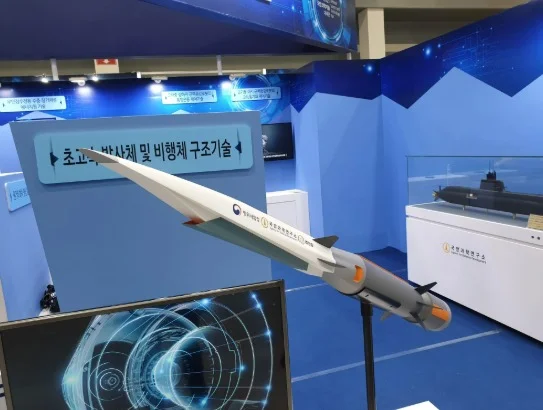
South Korea's recent hypersonic glide vehicle test underscores the nation's urgency to enhance its defense capabilities in light of North Korea's increasing nuclear threats. As regional tensions rise, South Korea is focused on developing advanced strike assets that can effectively penetrate missile defenses.
This month, President Lee Jae-myung supervised the inaugural test launch of South Korea's domestically designed hypersonic glide vehicle. Media outlets reported that this milestone signifies a pivotal step in South Korea's strategy to foster rapid conventional strike options.
The launch involved a booster rocket that elevated the glide vehicle before it detached and maneuvered at low altitude, successfully hitting a designated offshore target. Although the exact launch site has not been publicly disclosed, it is believed that the Agency for Defense Development executed the operation from a barge near Taean, approximately 130 kilometers from Seoul. This test not only confirmed the vehicle’s trajectory and guidance systems but also validated its thermal protection abilities under extreme conditions.
This test comes on the heels of heightened inter-Korean tensions, following a border incident that injured South Korean soldiers and coinciding with North Korea's own hypersonic missile tests earlier in October. Against this backdrop, President Lee has called on defense researchers to accelerate the deployment of strategic deterrents and to review existing military assets, including the bunker-busting Hyunmoo-5 ballistic missile.
While South Korea's hypersonic glide vehicle could refine its conventional counterstrikes, it's crucial to acknowledge the complexities of engaging North Korea's intricate missile defenses and established nuclear doctrine. A report from the Atlantic Council notes the potential of non-nuclear hypersonic missiles as an effective counterstrike option against North Korea’s limited nuclear offensive.
Experts suggest that integrating these new hypersonic capabilities with South Korea’s existing arsenal can create a formidable deterrent force. The focus is on reassessing military postures to incorporate allied non-nuclear options along with South Korea’s powerful penetrating munitions for striking hardened targets.
However, the challenges of effectively countering North Korea’s military tactics remain formidable. Strategic assessments reveal that North Korea controls 15 to 20 undeclared missile bases, heavily fortified to resist airstrikes and provide flexible launch options for both conventional and nuclear capabilities. These installations, such as Sakkanmol and Sino-ri, allow North Korea to maintain a strategic depth that complicates response tactics from South Korea and its allies.
In light of these complexities, the South Korean alliance aims to establish a conventional deterrent that can respond effectively between total passivity and extreme nuclear retaliation. By fielding both hypersonic and precision-guided conventional weapons, this strategy seeks to cripple North Korean launch facilities while mitigating the risks of nuclear fallout.
This approach aligns with South Korea’s 2022 Defense White Paper, which advocates for a proactive military posture against North Korea through a "Three-Axis System." This system incorporates the preemptive “Kill Chain” strategy to identify and neutralize imminent threats before they can manifest.
Despite these advances, operational challenges persist, especially with North Korea’s extensive mobile missile launch systems. The sheer volume of these systems introduces significant risks, as they can effectively evade efforts aimed at destruction during high-pressure conflict scenarios. Kim Jong-Un’s announcement in 2024 regarding the deployment of 250 tactical missile launchers to frontline troops further emphasizes this threat.
Scholarly analysis indicates that while South Korea maintains advanced conventional forces, it suffers from shortfalls in intelligence, surveillance, and reconnaissance capabilities. The lack of a self-sufficient, persistent aerial surveillance architecture heightens reliance on allied intelligence, which poses significant blind spots during crises.
North Korea is also evolving its nuclear triad, unveiling solid-fuel intercontinental ballistic missiles (like the Hwasong-18) that offer rapid launch capabilities with minimal warning. Additionally, the introduction of sea-based delivery systems, including potential nuclear cruise missiles and submarines, diversifies its nuclear strike capabilities and enhances deterrent options.
This atmosphere of heightened alert fosters a “use-it-or-lose-it” dilemma for North Korean leadership, pressuring them to contemplate preemptive strikes or delegating nuclear authority in crisis situations. Evidence of North Korea's pre-delegated nuclear response strategies alongside Kim Jong-Un’s leadership structure raises alarming implications for immediate conflict scenarios.
Despite the tensions, some analysts speculate that South Korea may explore a nuclear option of its own if confidence in U.S. commitments continues to wane. A recent report indicates growing public support for an indigenous nuclear capability, highlighting mixed sentiments about nuclear deterrence strategy—ranging from risk-averse to more assertive positions advocating independent capabilities.
Ultimately, as South Korea ramps up its hypersonic weapon development, it will face the crucial task of managing escalation risks while bridging intelligence gaps. The interplay of domestic pressures for a more autonomous military posture may define its long-term security outlook in the face of North Korean provocations.
Discussion
Sign in to join the discussion.