Indonesia is not just buying advanced military assets; it's on a path to integrating them into a cohesive and capable defense force.
Indonesia is at an unprecedented juncture in its military development, acquiring sophisticated weaponry at a pace that's unique in its recent history. The country's defense strategy encompasses a wide range of modern assets meant to enhance its operational capabilities.
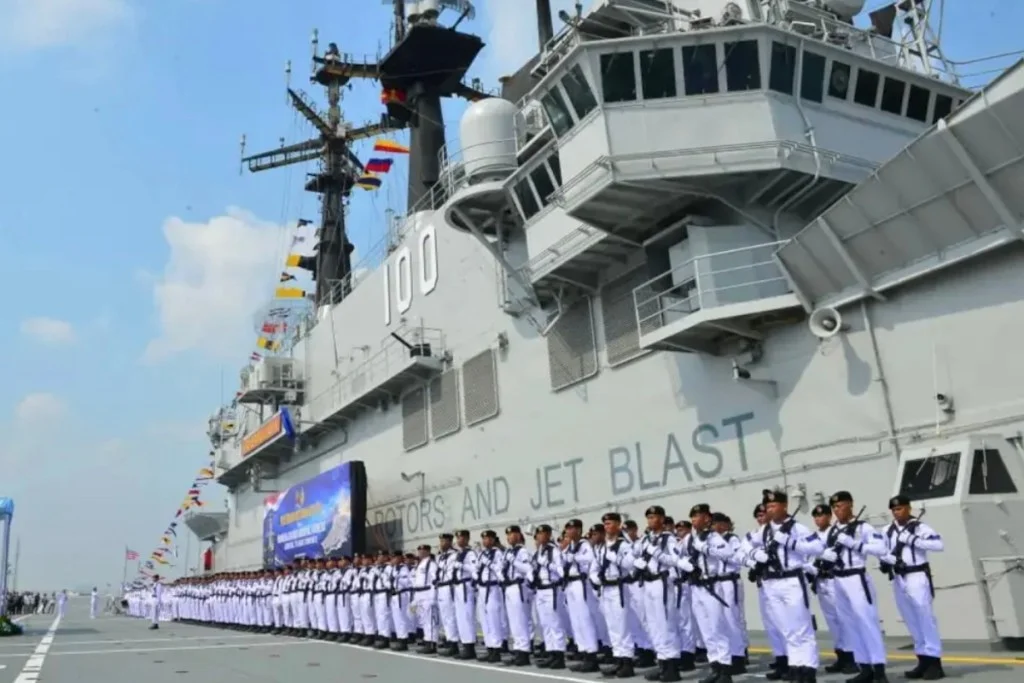
Among the most notable acquisitions are the Rafale fighter jets, which are now being integrated into service, and a significant contract for 48 KAAN fighters from Turkey. The naval forces have also seen upgrades with the addition of two Italian PPA warships and the commissioning of the KRI Sriwijaya, formerly the Italian aircraft carrier Giuseppe Garibaldi.
Further bolstering its marine capabilities, Indonesia is developing two Scorpene submarines domestically, benefitting from French technology transfers. The procurement of BrahMos cruise missiles is underway, along with Turkish drones which are significantly enlarging Indonesia's UAV fleet. New airlift capabilities are being introduced with the A400M airlifter, complemented by upgraded air-defense radar systems.
The Financial Backbone of Military Modernization
The financial commitment to this military expansion is striking. Defense spending is projected to rise sharply, soaring from 125.8 trillion rupiah (about $7 billion) in 2021 to 190.3 trillion in 2024, with expectations of 245.2 trillion for 2025 and an ambitious 337.4 trillion for 2026. The government's narrative frames this spending not just as a means to acquire hardware, but also as an investment in maintenance, infrastructure, and the domestic defense technology industry.
From Acquisition to Integration
While Indonesia's arms procurement looks impressive on paper, the real challenge lies ahead. Transforming these advanced platforms into a coherent military force is the next pivotal step. Modern military effectiveness hinges not solely on the quantity or sophistication of weaponry but on the ability to integrate various components into a unified operational force. This includes enhancing capabilities in sensing, decision-making, communication, striking, maneuvering, and sustaining operations.
The Defense Ministry and the National Defense Council have recognized these challenges, sponsoring a forum that focused on interoperability and network-centric warfare paradigms. Officials underscored a crucial shift: success in modern warfare depends increasingly on integrated systems rather than sheer numbers.
Strategic Rationale Behind the Arms Procurements
This procurement drive goes beyond mere arms acquisition. For instance, the Rafale's introduction offers the Air Force a versatile platform equipped with state-of-the-art sensors and extended-range weaponry. The A400M significantly enhances its logistics capabilities, while the KAAN program aims to provide a stepping stone toward fifth-generation fighter technology and opportunities for the local defense industry to participate.
Indonesia's naval strategy reflects similar ambitions. The new PPA warships, including KRI Brawijaya and KRI Prabu Siliwangi, are equipped with advanced armaments that far exceed older fleet members. The long-term impact of the Scorpene submarines is particularly promising, as they are being constructed at PT PAL, coupled with extensive training for Indonesian engineers through technology transfer initiatives.
The country's embrace of drones marks a considerable shift in operational strategy, moving toward heightened reliance on unmanned systems for surveillance and offensive operations. Data from the S. Rajaratnam School of International Studies highlights a substantial increase in contracts for Turkish drones, contrasting sharply with Indonesia's previous limited engagement with Chinese drone technology.
The Complexity of Diversification
Diversification in arms sourcing engenders a strategic advantage, allowing Indonesia to cultivate military capabilities across various nations, including France, Italy, Turkey, India, the United States, and South Korea. This strategy reflects Jakarta's historical inclination towards strategic autonomy. However, this diverse supply chain introduces complexities, as each supplier imposes distinct systems for communication, maintenance, and logistics, complicating tactical integration.
Recognizing this challenge, Indonesia's defense community has initiated forums focusing on the complexities of adopting a coherent command and control system. The pursuit of interoperability extends beyond merely integrating different hardware; it encompasses personnel, doctrines, data sharing, and operational procedures across platforms.
Testing Institutional Capability: The Sriwijaya
The commissioning of the Sriwijaya represents Indonesia's first venture into carrier operations. While this platform primarily serves as a command center and a vessel for humanitarian missions, it signifies a crucial step in developing maritime capabilities. However, the gap between acquiring the vessel and mastering the associated operational capabilities remains significant.
The larger task surrounding a carrier includes establishing trained personnel, operational protocols, maintenance capabilities, and effective integration with other naval assets. This scenario emphasizes that the real measure of success is not merely possessing advanced platforms but demonstrating proficiency in utilizing them effectively within a larger operational context.
Integrating Modernization with Readiness
As Indonesia embarks on this extensive modernization path, the emphasis must shift from sheer procurement figures to a focus on operational readiness. Key metrics will include aircraft availability, pilot training hours, ship deployment durations, maintenance turnaround times, and logistical capabilities to sustain military operations. These factors are critical in determining if Indonesia can transition from merely owning advanced systems to effectively deploying them.
Furthermore, while the defense budget for 2026 signifies significant financial commitment, sustained operational capabilities will demand continuous investment. The ongoing costs associated with maintenance, training, and operational readiness must be factored into long-term strategic planning.
To achieve true self-sufficiency, Indonesia must go beyond simply assembling foreign technology. Mastery in design, operational procedures, and sustainability remains essential. The modernization of the C-130H by domestic industry exemplifies the budding capability to maintain and support an existing force, laying a foundation for future autonomy.
Ultimately, the central challenge for President Prabowo Subianto’s defense policy will require a transition towards integration, ensuring that the advanced systems acquired can be operated in a synchronized manner. Indonesia's advancements in military capability are commendable, but success will hinge on transforming its military into a cohesive combat-ready entity rather than merely a collection of sophisticated assets.
Discussion
Sign in to join the discussion.