Trump’s proposed $5,000 payouts for voters raise questions about tracking consumer spending and plausibility, as skepticism grows among political analysts.
The Trump administration has yet to clarify how it would enforce a proposed initiative to distribute $1 trillion to American citizens in exchange for their support in the upcoming midterms. The president mentioned a $5,000 payout per adult American during a GOP event in Dallas and reiterated this at a recent rally in Nebraska.
At the rally, Trump included a stipulation that the funds must be spent domestically. “The only caveat is the $5,000 you have to spend the money in the United States of America,” he stated, presenting this plan almost as a challenge to lawmakers. However, this proposal has drawn sharp criticism from Democrats, who have labeled the initiative as a bribe, and from some Republicans and analysts who worry about its feasibility, particularly regarding support from fiscally conservative members of Congress.
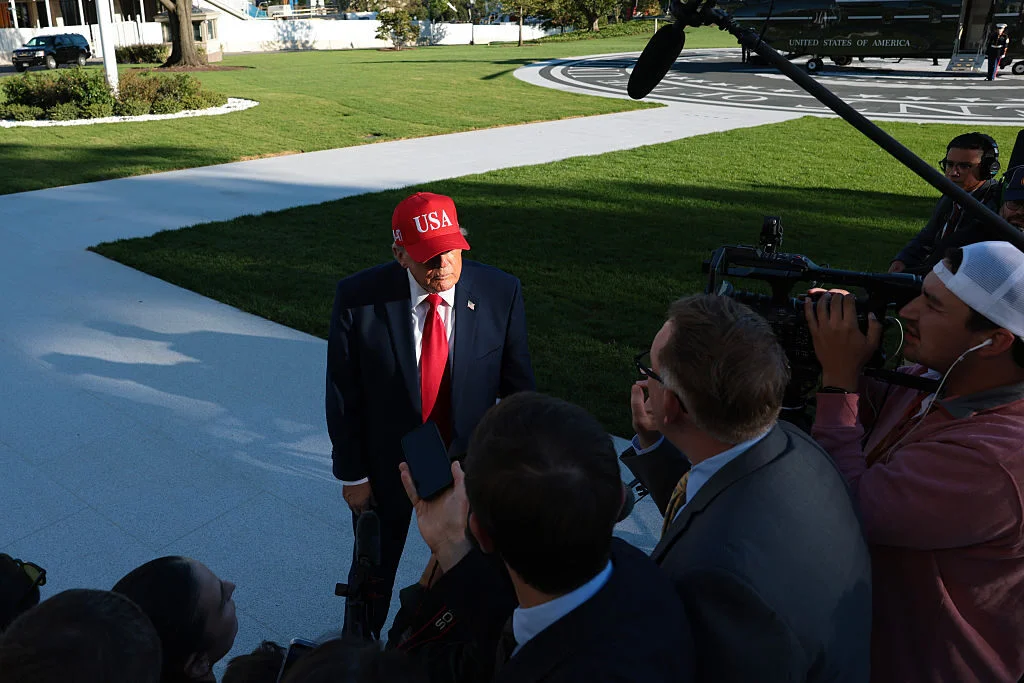
For the initiative to advance, Trump would require mechanisms to track and ensure that the payouts are used as intended. As he returned from a speech in Baltimore, he was asked by CQ Roll Call about how tracking these consumer expenditures would work but did not provide a detailed answer. “Well, we’re gonna be able, it’s not going to be a big problem,” Trump responded, implying that the logistics were manageable. He added that Democrats’ failure to implement tariffs would lead to economic issues if they gained control after the midterm elections.
A spokesperson for the White House addressed the initiative but stuck to broad political claims rather than outlining a specific plan. “President Trump has consistently proven his doubters wrong,” wrote Davis Ingle, emphasizing the president's prior successes while contrasting them with perceived Democratic failures in handling inflation and immigration policy.
Critics like G. William Hoagland, a veteran of GOP leadership and budget affairs, expressed skepticism about the payout plan's practical execution. He noted, “There is no way on God’s green Earth that he can guarantee the checks.” He further highlighted that even if the payments materialized, enforcing their exclusive use for domestic purchases would be virtually impossible due to the fungibility of money. Hoagland questioned if Trump understood basic economic principles, suggesting that the proposal was unrealistic.
Political Implications and Public Skepticism
During a recent congressional panel, Richard E. Neal, the ranking member of the House Ways and Means Committee, described Trump's promise of “fake checks” as just another gimmick from the White House instead of a meaningful legislative proposal. Neal pointed out that Trump had failed to deliver on a prior commitment to distribute $2,000 checks funded by tariffs, further undermining trust in the current proposal.
Compounding the issue, polling data from YouGov and The Economist recently indicated a growing lead for Democrats in the generic congressional ballot, reflecting an 8-point advantage—the largest this election cycle. With this trend, doubts about Trump’s promise of dividends may further erode his support among undecided voters.
Speaker Mike Johnson, while affirming the need for Congress to address the issue, stopped short of committing to a swift allocation of funds if Republicans retain control. On NBC’s “Meet the Press,” he stated, “I commit that Congress will work through it and find consensus on that, like I have to do everything else,” without making promises regarding the timing of the proposal’s implementation.
Johnson clarified his intention to support Trump while emphasizing the complexities involved: “I’ll work with the president hand in hand, as I do all the time. And we’ll deliver for the American people.” Nonetheless, his cautious tone indicates an understanding of the political hurdles ahead.
Adding to the skepticism, Larry Kudlow, who previously served as the chief economic adviser, referred to the dividend idea as “a little hokey” during his appearance on Fox News. He questioned the viability of such promises and suggested, instead, that Congress should focus on genuine tax relief initiatives. House Ways and Means Chairman Jason Smith, while not endorsing the payout plan, expressed the necessity for real tax relief that fosters support for American citizens, shifting the focus from temporary incentives to long-term solutions.
As discussions continue, the practicality of Trump's proposed $5,000 dividend remains in question, casting a cloud over its potential impact on voter sentiment and electoral dynamics.
Discussion
Sign in to join the discussion.