Senator Mark Warner urges a shift toward universal health care, advocating for expanded coverage as he prepares for reelection in Virginia's changing political climate.
Democratic Senator Mark Warner from Virginia is taking a definitive stance on health care expansion as he approaches what he has indicated will be his final term in office. This move marks a significant shift from his earlier centrist positions during his tenure in Congress.
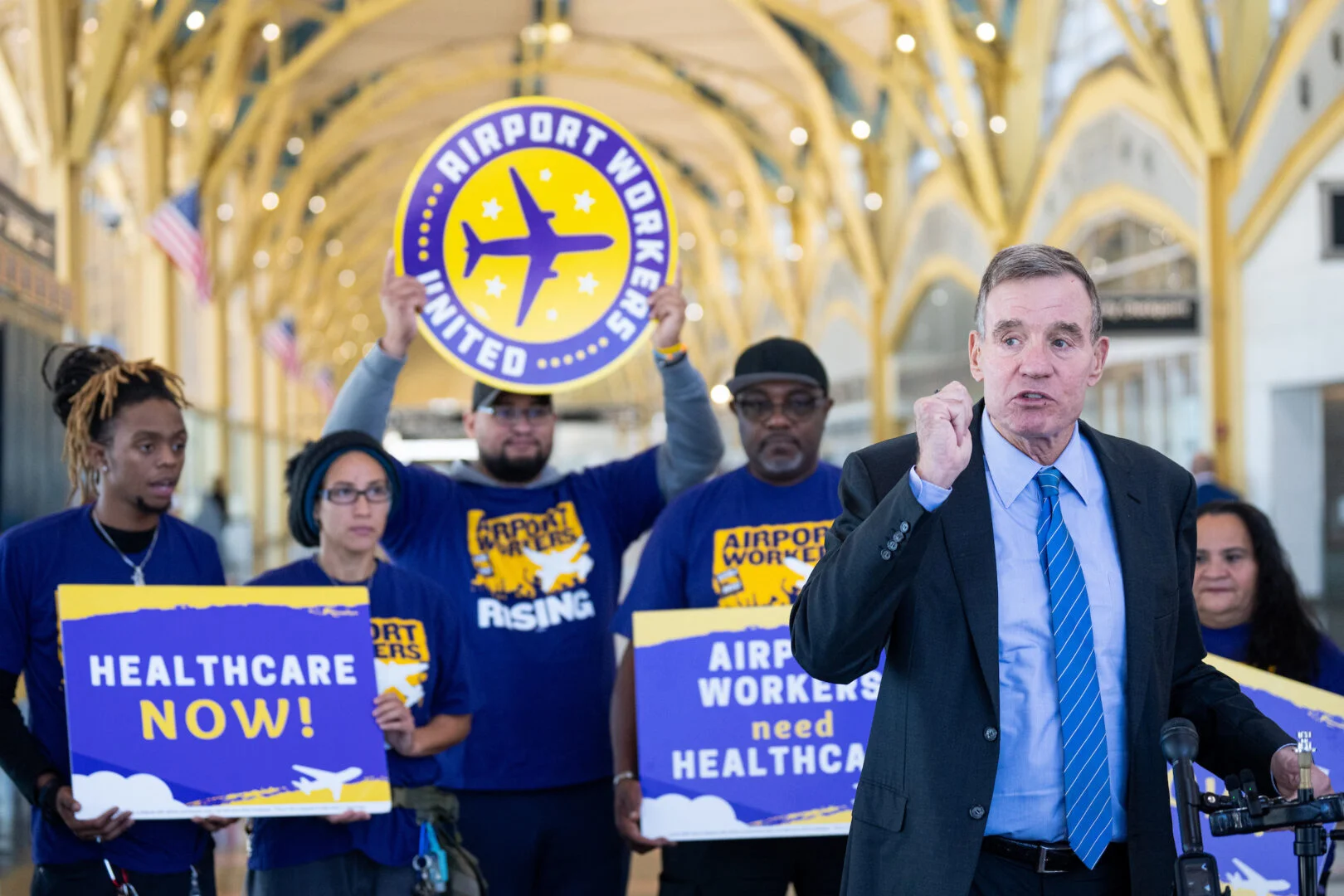
At a press conference at Ronald Reagan Washington National Airport, Warner expressed support for universal health care amid an ongoing debate regarding health coverage for airport workers in Richmond, Virginia. His remarks come in light of recent cuts to federal health aid enacted under the reconciliation law passed in July 2025.
“All these workers go without health care when they get sick,” Warner stated. “They’re going to show up for the emergency room and those costs—the most expensive place to access health care—are going to be simply passed on to those of us who have private insurance. It doesn’t make sense.” His comments reflect a growing concern over affordability and accessibility in health care, especially for vulnerable worker populations.
Support for Uninsured Workers
Warner’s engagement comes as part of broader efforts led by the 32BJ SEIU union, primarily advocating for state-level legislation aimed at improving conditions for airport service workers. Many of these workers—including wheelchair agents, ramp workers, and baggage handlers—currently lack adequate health care coverage or face the threat of losing it.
A recent survey revealed that 44 percent of airport service workers at both Dulles International and Reagan National reported having no health coverage, with a significant percentage relying on government programs like Medicare and Medicaid. Warner's attendance underscored the urgency of these issues, particularly with the midterms approaching.
One worker present at the event, Cameron Hansberry, described his situation as dire. As a double liver transplant recipient, he faces losing his insurance coverage soon. “The fact that you have—everyone’s lives depend very heavily on you guys—you would think that they would give us more than a check and a smile,” he lamented, highlighting the essential role of these workers in aviation safety and operations.
Legislative Challenges and Cuts
The recently enacted reconciliation law outlines new Medicaid work requirements and establishes stricter eligibility rules set to take effect on January 1. Warner pointed out that these cuts were strategically delayed until after the elections, saying, “They made the cuts to Medicaid only effective after the election because voters are totally against these cuts.”
Projected Medicaid spending cuts under the GOP law are estimated to total approximately $1 trillion over a decade. Additionally, the lapse of expanded tax credits for purchasing health insurance through the Affordable Care Act (ACA) exchanges is expected to shrink subsidies by another $350 billion within the same timeframe.
In response, Warner introduced legislation last month aimed at reversing these cuts and restoring the ACA premium tax credits. He warned that hundreds of thousands of Virginians could lose their health coverage as a result of the recent changes.
Shift in Political Landscape
Warner's outreach and revised stance on health care come amid a shift in voter sentiment since his last reelection campaign in 2014, when he narrowly defeated Republican Ed Gillespie. This evolving political landscape has favored stronger government involvement in health care, a trend Warner seems to be embracing in a bid to align with his party’s growing demands for accessible health care.
While Warner previously took a more cautious approach—supporting the ACA but withholding endorsement for a public option—his recent legislative proposals reflect a willingness to align with calls for an expansive government program. Among his new initiatives are provisions to create a low-cost public option, retroactively apply higher federal matching for Medicaid, and expand coverage for Medicare beneficiaries.
- Establishing a requirement for the Department of Health and Human Services to create a “low-cost” public option.
- Reinstating the ACA's higher federal match for states expanding Medicaid, applying it retroactively.
- Increasing Medicaid assistance for economically distressed states and territories.
- Including hearing aid coverage within Medicare provisions.
- Broadening the scope of prescription drugs eligible for Medicare price negotiations.
In a recent Substack post, Warner emphatically stated, “It’s time for America to move towards universal health care,” emphasizing the need for “real change” and a commitment to achieving universal coverage.
As Warner gears up for reelection against Republican candidate Bert Mizusawa, a retired Army major general, his pivot to a more progressive health care agenda could resonate with an electorate increasingly concerned about coverage accessibility. This shift highlights not just Warner’s adaptation to the political climate but reflects broader societal pressure on lawmakers to address the realities of health care affordability in the contemporary landscape.
Discussion
Sign in to join the discussion.