Dambe's rise to global prominence brings both opportunities and challenges, emphasizing the need for community voices in its evolving narrative.
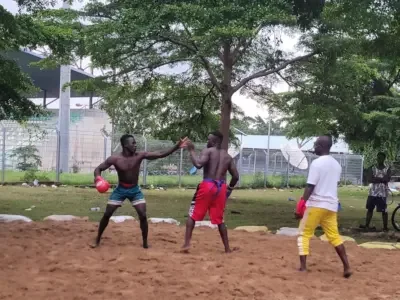
As Dambe gains international traction, who shapes its future policies and practices?
Originally published on Global Voices
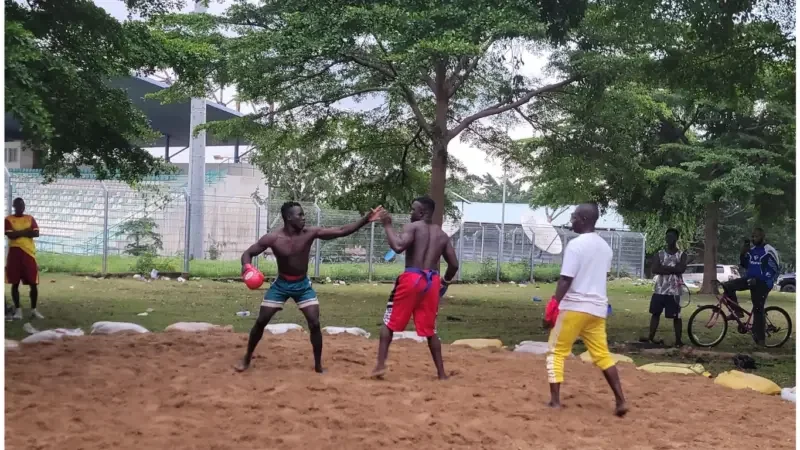
Dambe fighters at the National Open of the Traditional Sports Tournament in Nigeria. Photo by Nshua Cali-Dibang, used with permission.
By Nshua Cali-Dibang
This post is part of Global Voices’ August 2026 Spotlight series, “Indigenous Rights.” This series offers insight into the lives and experiences of Indigenous peoples to build connections across regions, center Indigenous experiences, and share the stories of leaders, activists, community members, and more.
Dambe, a traditional combat sport from Nigeria, is rooted in the cultural practices of the Hausa people. Initially a local activity among butchers and tradesmen, often associated with festivals and rites of passage, the sport is now seeing a surge in global visibility and popularity. This transition, fueled in part by social media platforms like YouTube, has transformed local competitions into internationally viewed events.
Dambe's Global Appeal
The sport's wider reach presents a unique opportunity for fighters to gain recognition and create new income streams. As reported by BBC Sport, the online surge in interest for Dambe could elevate it beyond its regional confines. Yet, with this increased exposure comes the challenge of defining the essence of Dambe as it transitions into the mainstream. Who will hold the narrative?
Spiritual Connections in a Modern Context
The rituals that accompany Dambe reflect a deep spiritual connection for many of its practitioners. Fighters often engage in fortification rituals and wear amulets, incorporating beliefs deeply rooted in their heritage. As seen in reporting from Al Jazeera, these traditions signify that the sport involves far more than mere competition; they encompass an entire cultural ethos that outsiders may misinterpret if not contextualized.
Professionalization and Its Impacts
Modern competition formats are evolving with attempts to enhance safety and fairness—think of three-minute rounds and established points systems, as noted by BBC Sport. While these adaptations might seem like encroachments on tradition, they could also lead to better financial opportunities and sponsorships for fighters. However, this modernization prompts critical questions: What aspects of Dambe's heritage should be preserved, and who is the gatekeeper of that heritage?
The Governance Dilemma
As commercial interests begin to influence the sport, the governance of Dambe comes into focus. Decisions affecting the future direction of the sport could stem from various entities: government regulators, private promoters, sports organizations, or the traditional communities that have perpetuated Dambe for generations. Each of these parties might have divergent views on how the sport should evolve, risking cultural dilution if community voices are not prioritized.
Preserving Cultural Heritage and Empowering Communities
Cultural heritage is dynamic and should be an evolving dialogue, not merely a static display. The real question isn't whether Dambe should change but rather whether the communities carry the agency to decide that change. As it steps onto global stages, from local arenas to digital platforms, participation of the fighters, elders, and other stakeholders is essential in conversations about commercial viability, representation, and cultural integrity.
Ultimately, the future of Dambe does not have to compromise its cultural foundation for commercialization. The sport can mature and gain wider acclaim while still staying true to its roots, but it's vital that the communities who own this tradition are not relegated to mere spectators in determining its path forward. The stakes are high, and the narrative around Dambe must be shaped by those who have long upheld its legacy.
The essence of Dambe today hinges on a critical question: Who gets to decide its future? Only through community engagement can a balance between tradition and modernity be achieved, ensuring that the sport remains a vibrant and meaningful expression of cultural identity.
Discussion
Sign in to join the discussion.