Ghanaians are increasingly turning to traditional plant remedies as an affordable and accessible alternative to expensive Western medicine.
In rural Ghana, traditional plant knowledge thrives, driven by accessibility, cost-effectiveness, and cultural familiarity.
Originally published on Global Voices

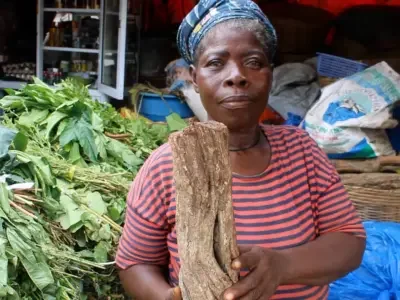
Vendor Yaa Akpe sells a branch of African Rosewood (Latin name Dalbergia Saxatilis) at her stall in Accra, Ghana. Photo by Jeslyn Lemke. Used with permission.
Rising Appeal of Traditional Medicine
The appeal of traditional medicine in Ghana goes beyond mere cultural significance; it’s a pragmatic response to the increasing costs associated with Western healthcare. As many Ghanaians grapple with financial constraints, they're increasingly turning back to remedies rooted in their Indigenous practices. This shift is particularly pronounced among those belonging to the Ga and Twi tribes, who rely heavily on knowledge passed down through generations. In a landscape marked by high hospital bills and expensive pharmaceuticals, the accessibility of traditional medicine offers a solution.
The use of Indigenous remedies underscores a complex relationship between modern and traditional healthcare systems. There’s a growing recognition that what may be dismissed as "alternative" could be the very backbone of health practices for a significant portion of the population. This presents both challenges and opportunities for health policymakers and professionals who must navigate between the two worlds. The balancing act calls for respect towards Indigenous medicinal practices while ensuring that patients receive safe and effective treatments.
Dr. Kofi Donkor, deputy director of the Center for Plant Medicine Research, highlights the invaluable contributions of traditional healers, who have safeguarded centuries of botanical wisdom. Advocating for the scientific validation of this traditional knowledge is not only a way to preserve cultural heritage but also to integrate valuable indigenous practices into modern health systems. It’s a methodology that could potentially enhance healthcare outcomes for many, particularly in underserved regions.
For traditional medicine practitioners, this is more than just a profession; it's a time-honored legacy, integral to their identity and culture. Much of our botanical research depends on their expertise, as we aim to scientifically validate their traditional knowledge.
Economic Impact of Plant-Based Medicine
The market for plant-based medicine is not merely an alternative; it’s a burgeoning economy. In rural areas, women typically rise early to harvest medicinal herbs from local forests, carefully selecting the best specimens to sell. These herbs find their way to bustling stalls in Accra, teeming with customers who seek both healing and affordability. This grassroots economic activity illustrates how intertwined health and commerce are when it comes to traditional medicine in Ghana.
The Center for Plant Medicine Research, established by the government in 1976, plays a pivotal role in this ecosystem. By bridging traditional knowledge with modern medical practices, the center treats approximately 16,000 patients monthly through its outpatient clinic. This facility not only provides essential medicinal care but also serves as a hub for research, integrating indigenous knowledge into contemporary healthcare frameworks.
Current estimates suggest that around 60 to 70 percent of Ghanaians rely on traditional medicine for healthcare, according to a recent study. These figures hint at a broader trend within developing nations, where traditional practices can account for about 80 percent of primary healthcare. The implications of such reliance strongly advocate for a shift in health policy, one that acknowledges the critical role of traditional medicine in achieving goals like universal health coverage.
This reliance on traditional medicinal practices is largely driven by their accessibility and affordability. Rural Ghanaians, often living in close proximity to these plants, possess the knowledge to address common health issues directly from their surroundings. Consequently, many view visits to herbal practitioners as unnecessary for treating routine ailments, opting instead to treat themselves with familiar herbs.
Often, when facing illness, individuals won’t go to a traditional healer for medication. They’ll turn to the herbs they know—this one for malaria, that one for typhoid—and treat themselves right from their backyard.
Researching West African Flora
Ongoing scientific inquiries at the Center for Plant Medicine Research focus on various native plants to validate their medicinal benefits. For instance, a green shrub known as croton membranaceous shows promise as a potential treatment for prostate cancer. Exploring such plants provides crucial data that could enhance our understanding of health treatments—it’s more than just botanical curiosity.
Yet, Dr. Donkor warns consumers to tread carefully when purchasing plants in Accra's vibrant markets. While many vendors offer correctly identified herbs, improper dosages can lead to negative effects. This emphasis on accurately applied knowledge speaks volumes about the complexity of herbal medicine—being well-informed is key to unlocking its benefits.
The accompanying video highlights Patience, a skilled herbalist based in Accra, who shares her techniques for treating various ailments with traditional plants. This includes using the common mother-in-law tongue plant (Dracaena trifasciata) in therapeutic baths, which she claims promotes not just physical health but also spiritual protection. This melding of tradition with empirical inquiry reinforces the validity of Indigenous practices, making them more credible as alternatives to conventional Western medicine, especially against the backdrop of rising drug prices and access challenges in Ghana.
Shaping the Future of Healthcare in Ghana
The growing reliance on plant-based medicine in Ghana represents a significant shift that could reshape healthcare dynamics. Traditional practices aren’t just surviving; they’re gaining respect in spheres that once disregarded them. By integrating Indigenous knowledge with contemporary research, there’s potential for developing new treatments grounded in both tradition and science.
If you're working in this space, consider the broader implications of embracing Indigenous practices. Collaboration between traditional healers and modern medical practitioners could unearth novel insights, leading to cost-effective, culturally relevant healthcare solutions. As the global healthcare community grapples with issues like accessibility and affordability, Ghanaian traditional medicine offers a compelling model worth examining.
What this means for the future of healthcare in Ghana is profound. In a country where Western healthcare is often financially out of reach for many, the path forward may rely on harmonizing conventional and traditional approaches. The narratives surrounding Indigenous practices must evolve, moving from being seen merely as alternatives to becoming integral components of a national health strategy.
Discussion
Sign in to join the discussion.