An assault on transgender sex workers in Palermo has drawn public condemnation as investigators seek to identify those responsible.
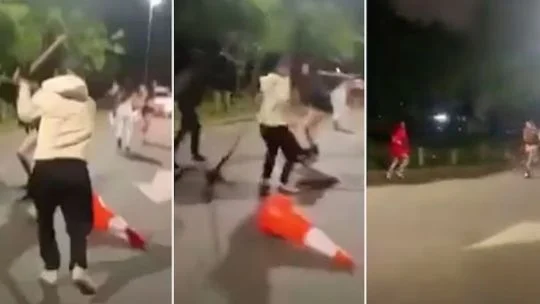
The attack on transgender women working in Buenos Aires’ Palermo neighbourhood has become a test of whether authorities can identify perpetrators whose own videos may provide evidence. City officials say an investigation is under way, but no arrests had been reported at the time of publication. The footage has drawn public attention to the assault; the harder measure will be whether investigators can turn online boasts and witness accounts into a clear record of who took part.
Videos and witness accounts shape the investigation
The assault took place Monday night in Bosques del Palermo, near Avenida Figueroa Alcorta. Witness accounts and footage circulated online indicate that verbal abuse came first, followed by a larger group armed with sticks, branches, stones, traffic cones and a tyre. The range of objects described suggests a confrontation that escalated well beyond verbal harassment, though the available accounts don't establish how the group assembled or who directed it.
The attackers filmed the pursuit and assault, and some clips appeared online with captions mocking the women. That material could help establish the sequence of events and identify participants, but footage can be incomplete, misleadingly edited or difficult to connect to a particular person without other evidence. Here's the thing: recording an assault doesn't automatically make the people in the video easy to identify or hold accountable.
Estimates of the group’s size vary. Transgender activist Gabriela Ivy put the number at 50 to 60 young people, while María Rachid, president of the Federación Argentina LGBT+ (FALGBT), said reports described more than 100 attackers. The gap is substantial, and the accounts may reflect different sources or different ways of counting people present. Rachid called the episode an organised “hunt” and said some participants had identified themselves online while boasting about it.
Rachid said six or seven people were injured and that the victims were left with psychological trauma. The reported injuries describe only part of the harm: being pursued and attacked in a public space can also make returning to work feel unsafe. They have little choice but to return to the area, she said, because it is their only source of income. A livelihood tied to the site of an assault leaves the women with few easy options.
City police arrived after both the attackers and victims had left. That timing may complicate the immediate collection of evidence, while the circulating videos and witness accounts give investigators material to examine. The difference between having evidence and establishing responsibility will depend on whether those sources can be corroborated.
City pledges action as prosecutor opens inquiry
Buenos Aires City Mayor Jorge Macri said midweek that he wouldn’t let “crimes go unpunished.” He said he had directed the city’s justice and security ministries to begin an immediate investigation and identify those responsible, who would face “the full force of the law.” The statement sets a public expectation for action, but it doesn't itself show what investigators have established or how quickly they can identify suspects.
Prosecutor Andrea Scanga, whose work focuses on discrimination cases, has opened an investigation, Rachid confirmed. The online footage and posts may help investigators identify people involved, though the article reported no arrests. Posts that appear to show participants claiming involvement could provide leads, but investigators still need to verify who posted them and whether the content corresponds to the assault.
This is more significant than it looks: when perpetrators record violence themselves, the footage can expose both the assault and the way participants chose to present it. It can also leave victims to encounter humiliating material about their own attack as it spreads online. For investigators, the task is to preserve and assess that material; for the women, the circulation can extend the harm beyond the night itself.
Artists condemn violence ahead of Pride March
The assault drew condemnation from musicians Tini Stoessel, Lali Espósito, María Becerra, Emilia Mernes and Nicki Nicole, as well as television presenter and transgender activist Flor de la V. Becerra called the footage a disturbing display of hatred and violence and urged broader support for LGBT+ rights. Their statements brought the incident to a wider audience, though public attention alone can't establish who was involved or ensure that the victims receive support.
Espósito faulted media outlets for giving the attack less attention than her wedding the previous weekend. “I see some mainstream news outlets more outraged by the size of a wedding cake than by the fact that 50 young men go out into the streets to HUNT DOWN trans women,” she wrote on Instagram. Her criticism puts the question of media attention alongside the investigation: how much coverage an attack receives can shape what the public sees as urgent, even if it doesn't determine the outcome of a case.
De la V said she hadn’t seen attacks of this kind for many years. The incident comes days before Buenos Aires’ annual Pride March, scheduled for Saturday, November 7, sharpening calls for the investigation to deliver accountability while the women continue to face the consequences of the assault. If you're working in this space, the immediate question is whether officials can maintain attention after the initial public reaction fades. The victims still have to return to the area to earn a living.
What accountability will require
The investigation now faces two related tests: identifying those who took part and responding to the reported injuries and trauma. Public videos, online posts and witness accounts may help, but each source needs to be assessed against the others. A large crowd can make individual roles harder to distinguish, even when some participants appear to have documented the attack themselves.
And yet, the footage may also make it harder for the episode to be dismissed as an account with no traceable evidence. That matters. The inquiry’s progress will show whether officials can translate the material already in circulation into verified findings, while the women continue to bear the practical and emotional costs described by Rachid.
Discussion
Sign in to join the discussion.