Disputed claims of China's in-orbit satellite refueling highlight a crucial evolution in space tactics, raising concern for U.S. defense operations.
The recent claims regarding China’s supposed in-orbit refueling of satellites have amplified the ongoing competition in space technology. This development is becoming central to the growing complexities of counterspace operations, reflecting a shift from traditional methods of satellite maintenance to more aggressive and dynamic techniques.
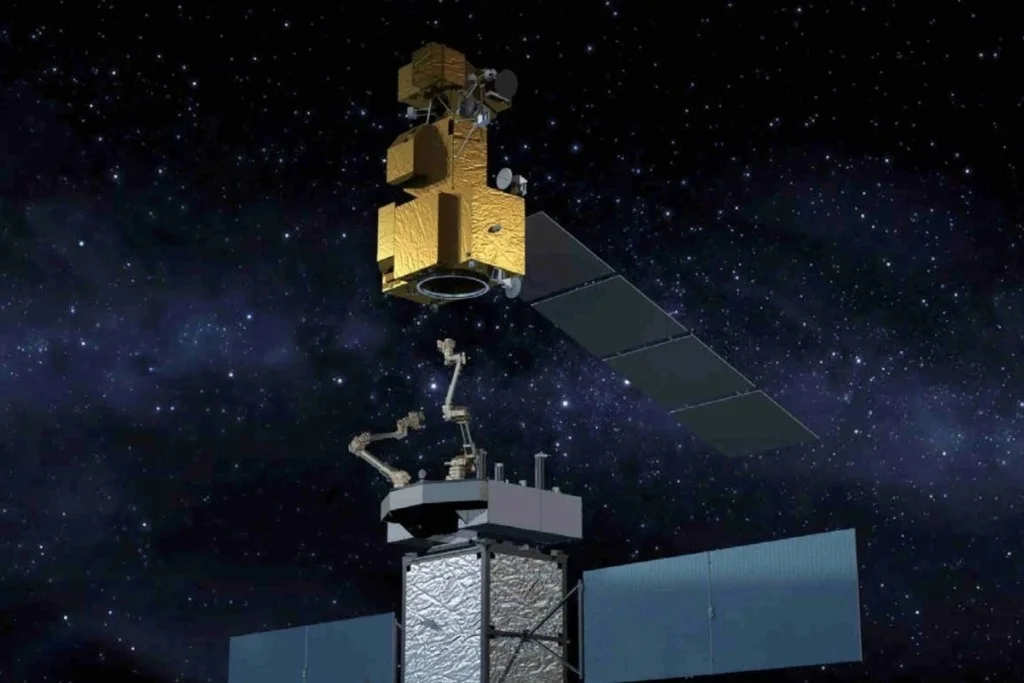
According to the South China Morning Post, Chinese researchers assert that an operational success was achieved in February 2025, wherein the servicing spacecraft Shijian-25 allegedly transferred approximately 142 kilograms of propellant to the BeiDou-2 G7 navigation satellite. This act purportedly extended the satellite’s operational lifespan by an estimated eight years.
However, skepticism surrounds these claims, as evidence compiled by the U.S. Space Force casts doubt on the event's occurrence. Independent astrophysicist Jonathan McDowell has indicated that the two satellites were approximately ten longitudinal degrees apart during this claimed operation, rendering an undetected docking highly improbable. The ability to fully track such maneuvers remains critical, especially as the boundaries between civilian and military capabilities blur amidst this rivalry.
Implications of In-Orbit Servicing
The significance of in-orbit refueling technology cannot be understated. If China has truly developed this capability, it could fundamentally alter the nature of satellite operations in conflict. As highlighted by military scholars Paul Szymanski and Calogero Bonasia, traditional satellites typically lack sufficient fuel reserves for extensive evasive maneuvers, curtailing operational longevity.
In practice, adversaries could exploit this limitation by approaching a satellite with demonstrative aggression, causing it to expend its fuel reserves for defensive actions, thereby making satellites more vulnerable to future interceptions. The tactic lies in using perceived threats to drain the operational reserves of defending satellites without direct confrontation.
The introduction of refuelable satellites changes this equation dramatically. A white paper from Novaspace emphasizes how such capabilities can offer military spacecraft continuous mobility, allowing them to conduct numerous unpredictable maneuvers. This versatility not only aids in evasive actions but also in conducting reconnaissance operations close to adversarial assets.
Strategic Movements in Orbital Warfare
China’s operational strategy appears increasingly oriented toward tactical versatility in space. Norbert Pouzin and Pierre Sauveton’s analysis outlines that China's methods of gradual space control and interdiction do not rely on creating debris from kinetic strikes, which both powers are keen to avoid due to the risks of space debris escalations.
Instead, the Chinese tactic hinges on employing satellites that can maneuver and conduct inspections or jamming without resorting to the destructive tactics that generate long-term orbital hazards. The Shijian program, particularly the Shijian-21 and Shijian-25 satellites, showcases advances capable of serving both scientific objectives and military ambitions.
Shijian-25, equipped with refined robotic systems for transferring propellant, illustrates China's dual-use strategy encompassing both enhancement of operational capabilities and counterspace potential. These advancements allow China to maintain a competitive edge through capabilities capable of executing close-quarters engagements and inspections.
Western Responses and Preparing for Future Conflicts
In light of these developments, the U.S. is ramping up its resistance to China's expanding capabilities in space. The U.S. military has initiated the deployment of ground-based electronic warfare systems and is developing covert unmanned space vehicles designed for several operative roles, including engaging in close-proximity operations.
The joint U.S.-British maneuvers near Chinese satellites demonstrate an increasing focus on deterrence capabilities through posturing and readiness rather than direct confrontation. A planned missile defense system, dubbed Golden Dome, may also transition into offensive capabilities designed to disrupt enemy formations preemptively.
This evolving scenario underlines the critical need for both nations to secure their respective interests in space while navigating the intricate dynamics of strategic ambiguity. As nations refine tactics that straddle the line between civilian and military actions, the resulting confrontations are likely to remain covert, with significant repercussions for broader international security.
Ultimately, the race for superiority in satellite refueling and maintenance will define how future engagements play out in space. The nation that can effectively manage sustained, maneuverable satellite capabilities will likely have significant leverage in dictating the terms of engagement before conventional conflicts arise on Earth.
Discussion
Sign in to join the discussion.