Taiwan's new F-16V Block 70 jets bolster its air defense but face immense challenges against a rapidly modernizing Chinese military.
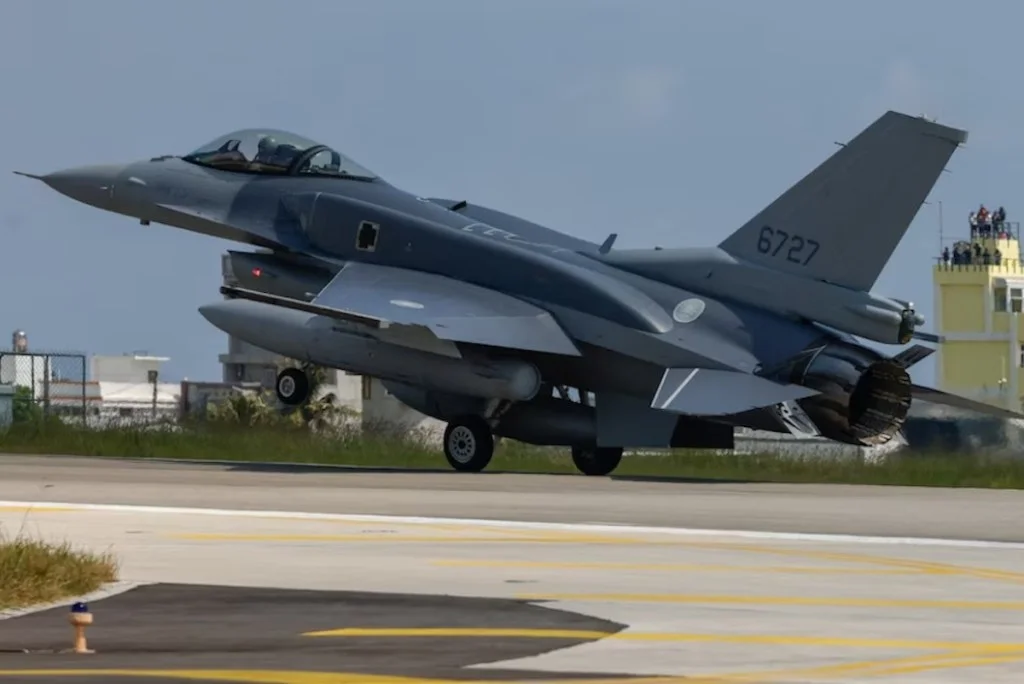
Taiwan's introduction of new F-16V Block 70 fighter jets from the U.S. comes at a pivotal moment, offering the island temporary relief against escalating Chinese military pressure. These jets, which landed at Taitung’s Chihhang Air Base on October 2, are the first of 66 units intended to modernize Taiwan's air force at a cost of $8 billion.
The arrival follows a series of delays due to supply chain disruptions and technical obstacles tied to the aircraft's electronic warfare systems. Their deployment aims to enhance Taiwan’s defensive posture in response to increasing air incursions from China, which recorded an alarming rise in military activities near Taiwan's airspace.
While the F-16V jets help fill a critical gap, their effectiveness in combat scenarios remains dubious. Taiwan faces not only numerous daily air incursions but also a rapidly growing fleet of advanced Chinese stealth fighters. Reports from The War Zone indicate that by mid-2026, China may operate around 500 J-20 stealth fighters, posing a significant challenge to any air operations Taiwan could mount.
The F-16V jets, powered by General Electric F110 engines and equipped with advanced radars, signify the first new combat planes for Taiwan in 25 years. They are intended to replace aging F-5 fighters and enhance the Republic of China Air Force's (ROCAF) operational capabilities. Yet, their survivability in a potential conflict scenario against an adversary like the People's Liberation Army (PLA) is still being debated among defense analysts.
Usage Challenges and Strategic Implications
Taiwanese air defense strategy now hinges on these F-16s. Analysts warn, however, that constant engagement could deplete their operational readiness. As incursions escalate, the ROCAF is at risk of falling into a cycle of attrition that could exhaust its resources, pilots, and aircraft before any conflict even begins.
The F-16V's structural lifespan of 12,000 hours is a significant upgrade over older models, potentially allowing the ROCAF to maintain air patrols without rapidly exhausting its fleet. This is crucial as Taiwan aims to demonstrate its resolve against invasive Chinese air activities by conducting air patrols and interception missions to deter further incursions.
Modern Threat Environments
Despite the advantages the F-16Vs provide, their capabilities might not withstand the realities of modern warfare. Analysts emphasize the increasing importance of fifth-generation fighter jets, like the F-35, which are becoming the expected standard in contested airspace. The danger is that Taiwan's F-16s, while effective in peacetime air policing, may struggle against more advanced threats in a wartime scenario.
Royal Air Force Air Vice-Marshal James Beck noted that the rise of integrated air defense systems and advanced drone technology has significantly altered the operational landscape. Combat performance in modern conflicts has shown that controlling the skies at the onset is essential to avoid costly losses, as demonstrated by recent conflicts in Eastern Europe.
As Taiwan’s fleet of F-16s continues to grow, it must grapple with the critical need for effective ground-based defenses and air support systems to bolster its warfighting capability. Experts highlight the need for Taiwan to develop a multi-faceted defense strategy that includes rapid response units and drone deployments to disrupt enemy operations and enhance air defense effectiveness.
Geographic Vulnerabilities
The geographical layout of Taiwan presents challenges for its air force. Analysts suggest that Chinese missile capabilities could effectively neutralize Taiwan's air defenses by targeting critical airfields, limiting the operational ability of the new F-16V jets before any conflict escalates.
Importantly, Taiwan plans to conceal these aircraft in mountain bunkers during potential conflicts to safeguard them from missile strikes. However, if critical runways are destroyed, the F-16s might remain trapped, unable to take off, underscoring a strategic vulnerability in Taiwan’s defense approach.
To summarize, while Taiwan's F-16V Block 70 fighters serve as a vital deterrent against daily air incursions and coercive tactics from China, their effectiveness in a high-stakes conflict remains uncertain. The determination of Taiwan's defense will depend on more than just new aircraft; it will require a comprehensive strategy that integrates advanced ground defenses, rapid repair capabilities, and unmanned systems to effectively counter the growing Chinese threat.
Discussion
Sign in to join the discussion.