North Korea's recent hypersonic missile tests signal a direct warning to Japan as it considers reshaping its nuclear defense policy.
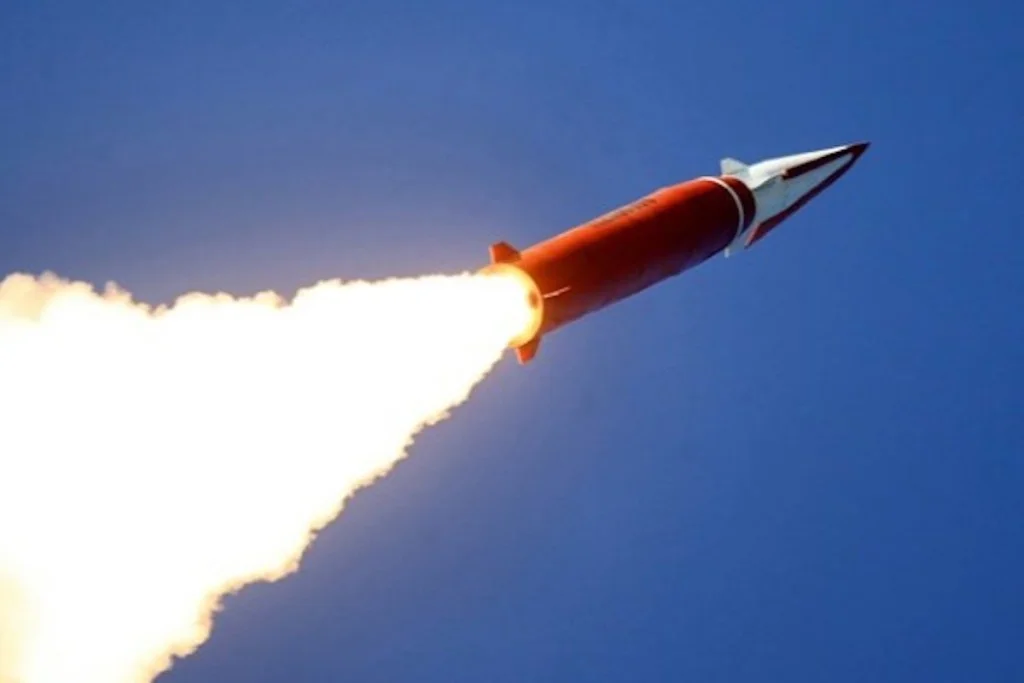
North Korea's latest hypersonic missile test underscores its evolving military strategy, showcasing capabilities specifically aimed at deterring Japanese influence in the region. The launch, personally supervised by Kim Jong Un, serves as a stark reminder of North Korea's intent to counter Japan’s growing nuclear discourse, which is unfolding amid regional tensions and evolving alliances with Russia and China.
Kims' Supervision and Military Innovation
Recent media coverage highlights that Kim oversaw the testing of an upgraded hypersonic missile system, known as the “Hwasongpho-11Ma-1,” launched from Wonsan. This isn't just another missile launch; it's a clear message. The system is strategically designed to evade modern missile defense mechanisms, responding to both international diplomatic outreach and perceived threats from the U.S. and South Korea. By personally overseeing the test, Kim emphasizes the regime's commitment to enhancing its military capabilities, showcasing a blend of personal political stake and national defense.
Design and Tactical Features of the Hwasongpho-11Ma-1
The missile's design features a hypersonic glide vehicle (HGV) capable of low-altitude maneuvers, making it difficult for interceptors to track and neutralize. This isn't merely a technical achievement; it's a significant leap in missile technology that plays into North Korea's broader military ambitions. The North Korean state media outlet, KCNA, declared that the missile represents an "irresistible force" poised to inflict considerable damage on its adversaries. While such language is often hyperbolic, it reflects how the regime seeks to bolster morale domestically and project strength internationally.
Operational Range and Strategic Implications
During recent flight assessments, North Korean authorities reported that the missiles flew between 440 and 600 kilometers, achieving altitudes of up to 70 kilometers. South Korean intelligence sources indicate that the potential operational range could extend to about 908 kilometers. This suggests a concerning capability for strikes deep into the region, including major Japanese cities and military installations. If you're working in this space, you'll recognize how this ability could reshape military strategies not just for South Korea and Japan, but for the United States as well.
Strategically, the Hwasongpho-11Ma-1 is presented as more than a conventional weapon; its significance lies in its potential role as a delivery system for nuclear warheads, further complicating the security dynamics in Northeast Asia. The missile's precision and low-altitude flight trajectory enhance its effectiveness against regional defense strategies. It poses not just a threat, but a deterrent as North Korea seeks to protect its regime from what it views as existential threats.
Japan's Nuclear Debate
As discussions intensify within Japan regarding re-evaluating its post-war commitment to non-nuclear principles—evidenced by public discourse around acquiring nuclear-powered submarines—North Korea is positioning itself as an asymmetric counterforce. This military posturing sends an unmistakable signal, reflecting deep concerns about Japan's potential shift toward nuclear capabilities. The implications are multilayered: Japan's rearmament could provoke an arms race, not just with North Korea but also with China and Russia, who are closely monitoring these developments.
Regional Security Dynamics
This pattern of behavior from North Korea is not occurring in a vacuum. Its missile tests act as proxy warnings for both China and Russia, who perceive Japan's defense modernization as a threat to the regional balance. China employs diplomatic tactics to counter Japan's military expansions, while Russia strengthens its military ties with North Korea. These dynamics create a triangle of military posturing that could escalate tensions significantly. It's a desperate attempt by North Korea to assert its relevance while also serving as a buffer for its larger allies.
North Korea's Broader Military Objectives
The focus on hypersonic technology aligns with North Korea's broader objectives: accelerating short-range ballistic missile (SRBM) production while simultaneously miniaturizing its nuclear stockpile. Recent analysis indicates that North Korea has ramped up its production capabilities, intending to accelerate the development of tactical nuclear delivery systems that can effectively penetrate allied defenses. This is a critical aspect of Pyongyang's strategy that speaks to their intention to remain a formidable adversary.
Expansion of Tactical Capabilities
Recent reports underscore the expansion of North Korea's military capabilities, revealing plans to enhance the production of tactical nuclear projectiles. Observations indicate a significant ramp-up in missile manufacturing alongside the operation of multiple uranium enrichment facilities that significantly bolster North Korea's nuclear arsenal. This includes a newly opened facility at Yongbyon, which could produce enough high-enriched uranium for several additional warheads annually. That said, this escalation demands scrutiny from the international community; failure to address it might only embolden Pyongyang.
Future Outlook and Regional Implications
The implications of these developments are profound. As North Korea fortifies its technological base and increases its arsenal, the potential for regional conflict escalates. Furthermore, as Japan’s defense policy continues to evolve, North Korea's hypersonic capabilities not only serve as a direct threat but also a calculated strategy designed to achieve regional dominance and deter any moves toward Japanese nuclear armament. What this means for you, if you're monitoring international relations or military developments, is clear: the stakes are rising.
North Korea’s recent hypersonic missile advancements represent a core element of its military strategy against Japan. With Beijing and Moscow's tacit support, North Korea aims to reinforce its security posture while simultaneously counteracting Japan’s potential nuclear ambitions. As this situation unfolds, the world watches closely. The geopolitical environment in Northeast Asia is increasingly tense, and how countries navigate these developments will shape the future of regional security dynamics.
Discussion
Sign in to join the discussion.