An exploration of how local knowledge and community participation can reshape urban planning and housing justice, as highlighted at the Common City Conference.
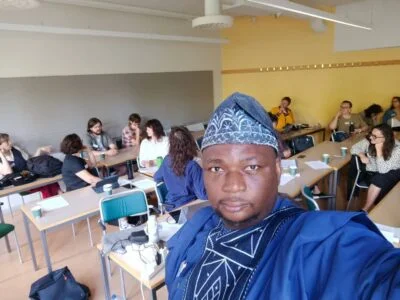
The right to adequate housing is recognized under international law
Originally published on Global Voices
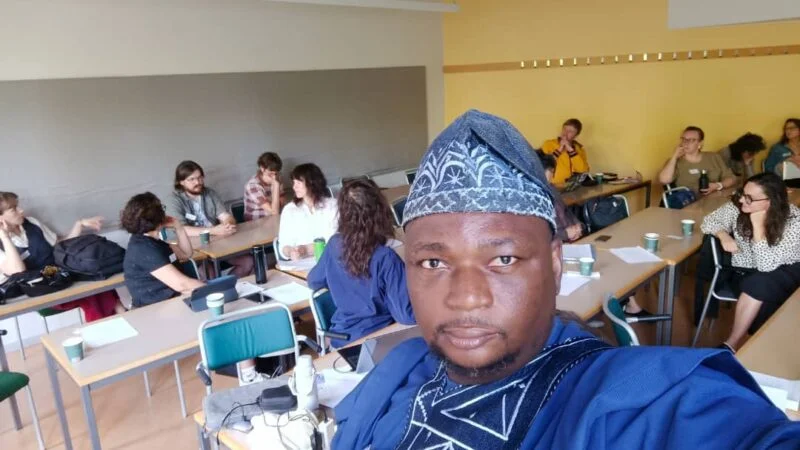
Kehinde Adegboyega, co-founder and executive director of Human Rights Journalists Network at Housing Rights conference. Photo used with permission.
Urban growth in many African cities often overlooks the needs of the most vulnerable residents. This has manifested in forced evictions, the displacement of informal settlements for commercial projects, and a lack of meaningful public engagement in land-use decisions. In cities like Lagos, Cape Town, and beyond, these patterns raise pressing questions about urban governance: Who has the authority to determine the future of our cities, and whose insights and experiences are valued in that process?
This crucial dialogue was front and center at the Common City Conference in Uppsala, Sweden. The gathering brought together a diverse array of scholars, activists, and grassroots leaders to confront issues such as housing justice and the rights of urban residents. Among them was Kehinde Adegboyega, co-founder and executive director of the Human Rights Journalists Network Nigeria (HRJN), who facilitated a panel on “Resisting Authoritarian Urbanism in Sub-Saharan Africa.”
During this session, participants explored community responses to forced evictions and the encroachment of unequal urban development. The emphasis was on how local knowledge, often ignored in policy discourse, could be harnessed for accountability and advocacy, rather than merely serving as fodder for outside analysis.
In a conversation with Global Voices, Adegboyega reflected on his experiences at the conference, including the connections drawn between the discussions in Sweden and the pressing realities faced by displaced communities in Nigeria.
Jean Sovon (JS): What motivated you to participate in this international meeting on housing rights, and what do you hope to gain from it?
Kehinde Adegboyega (KA): I'm here at the Common City Conference to engage in dialogue with global colleagues on housing, urban justice, and the right to the city. My role as a panel organizer for ‘Resisting Authoritarian Urbanism in Sub-Saharan Africa’ has enabled me to share insights from Nigeria and learn from the experiences of others grappling with similar issues.
For me, this conference offers a chance to integrate our Nigerian experiences into a worldwide conversation while extracting practical strategies for grassroots mobilization, documentation, and the generation of knowledge to better support communities facing housing insecurity.
JS: How do the discussions at the conference reshape your understanding of housing as a human rights issue?
KA: What has struck me most is the realization that housing encompasses far more than just the physical structure of a home. It's intertwined with dignity, security, community engagement, familial relationships, and one's sense of belonging in a city. When individuals are forcibly removed from their homes without adequate consultation or recourse, it transcends the economic implications and leads to significant human rights violations that impact their relationship with the state.
This perspective underscores the necessity of framing housing rights within a broader human rights context. International law recognizes this, as evidenced by Article 11 of the International Covenant on Economic, Social and Cultural Rights. Understanding this is especially crucial when urban development tends to prioritize profit over people, often viewing low-income communities as obstacles.
JS: In light of Nigeria's challenges, including inequality and forced displacement, how do you see the parallels between the conference discussions and the realities on the ground?
KA: There's a strong resonance between the themes discussed in Uppsala and the conditions in Nigeria. Despite differing political and economic climates, both contexts grapple with questions about who truly has the right to shape urban development and whose knowledge is acknowledged.
In Lagos, for instance, informal settlements face significant threats of eviction and displacement. Often, community experiences are reduced to statistics or narratives constructed by external parties, yet these communities possess critical insights about their environments, histories, and survival strategies.
What we call counter-knowledge is essential; our advocacy shouldn't just focus on documenting violations. It's about amplifying community voices, enabling them to share their experiences and narratives to demand accountability.
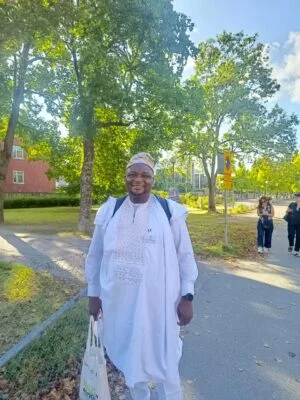
Kehinde Adegboyega. Photo used with permission.
JS: Was there a specific idea or experience from the conference you believe could be relevant to Nigeria?
KA: Absolutely. One pivotal idea advocated is leveraging community-generated data for advocacy purposes. Too frequently, research surrounding vulnerable communities is conducted without their input, leaving them out of the narratives that discuss their lives.
Approaches that involve local residents in documentation efforts—such as mapping, storytelling, and evidence collection—could redefine how we advocate for housing rights in Nigeria.
To illustrate, a collaborative model among journalists, researchers, and affected communities could enable the creation of documentation that represents evictions, living conditions, and access to basic services while integrating participatory methods. Technology and documentation should empower communities, enhancing their ability to influence decision-making processes around urban development.
JS: International conferences can inspire valuable discussions, but to measure impact, what do you plan to implement back in Nigeria?
KA: I aim to bring back three critical elements: knowledge, networking, and new methodologies.
The conference has broadened my understanding of housing justice as an intersectional human rights issue. It also helped me forge connections with others tackling similar challenges worldwide, enriching future collaborations in research and advocacy.
Moreover, our approach to documentation will evolve. At HRJN, we’re committed to documenting rights violations and amplifying marginalized voices. By integrating housing rights into our efforts more explicitly—through enhanced documentation of evictions and training journalists on these rights—we can connect personal experiences to systemic urban governance issues.
JS: From your perspective as a journalist and human rights advocate, how can international exchanges bolster efforts to document and defend housing rights in Nigeria?
KA: International exchanges offer critical insights by framing local issues within a global context.
A journalist might initially view an eviction in Lagos as a singular event, but interacting with peers from cities like Cape Town or Dublin can reveal recurring patterns in land, displacement, and governance. This broader perspective sharpens journalistic inquiry: Who benefits from development? What alternatives are available, and whose voices are sidelined?
Additionally, these exchanges empower civil society groups with stronger evidence for advocacy and connect them with peers tackling similar challenges. For me, participating in these dialogues transcends merely attending conferences; it’s about returning home with fresh methodologies and perspectives that inform local practice.
JS: After your Uppsala experience, what key message will you take back to Nigeria, and why could it impact vulnerable communities?
KA: The paramount message is the necessity for community involvement in shaping urban development.
Development should not require communities to relinquish their homes, histories, or social networks without meaningful engagement and adequate protections. We need to shift our perception of vulnerable communities from mere recipients of aid to active contributors and key stakeholders in the evolution of their cities.
By promoting community engagement, bolstering documentation practices, and enhancing access to information, we can reconfigure the power dynamics inherent in urban planning. The essence of housing justice lies not just in providing roofs over heads but ensuring dignity, security, agency, and a voice in the urban future.
Discussion
Sign in to join the discussion.