A year after Nepal's Gen Z protests, survivors recount their physical and mental scars, highlighting ongoing struggles for justice and healing.
Many young people left the September 2025 protests in Nepal with scars — both physical, emotional, and financial
Originally published on Global Voices
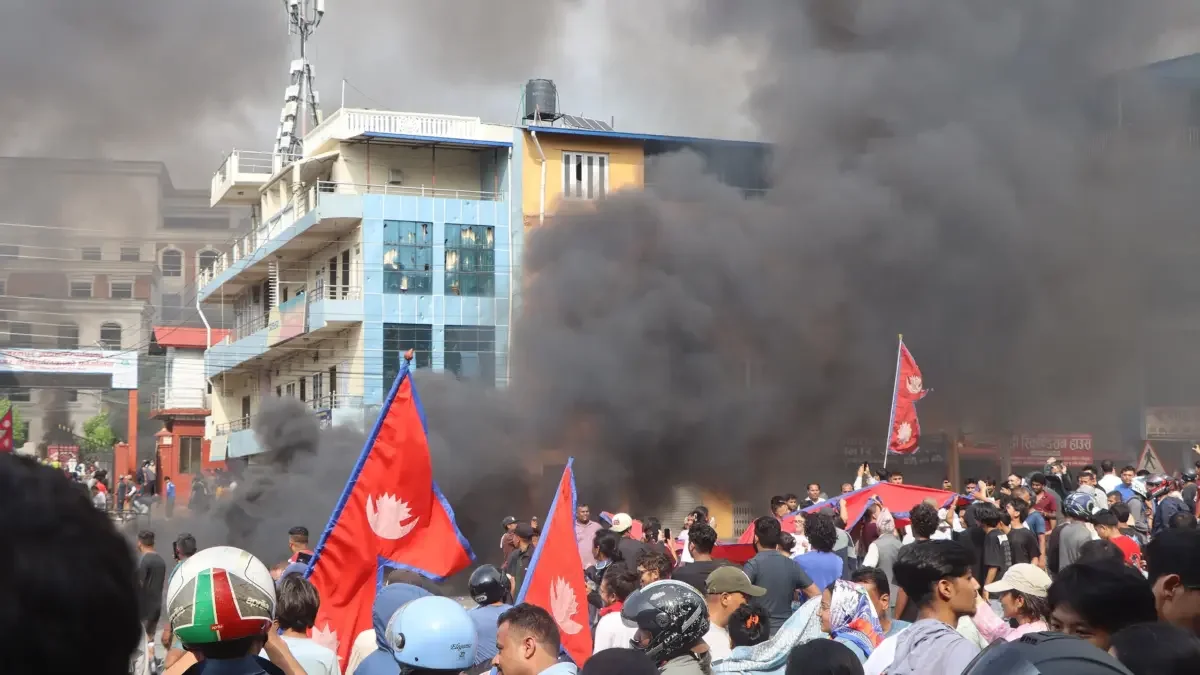
Nepal's Gen Z protests against corruption in Bharatpur, south-central Nepal. Image via Wikipedia by Himal Subedi. CC BY-SA 4.0.

Nepal recently marked its first Gen-Z Martyrs’ Day on September 8, 2026, commemorating the year since youth-led protests reshaped the country’s socio-political landscape.
The unrest began in September 2025, ignited by a government ban on social media. This sparked a leaderless uprising reflecting deep-seated frustrations over corruption and government inefficiency. Nepali youth organized spontaneous protests against not merely curbs on expression but also the misuse of public funds and inequality visible in the lifestyle of political families. The movement escalated into violent confrontations with the police, leading to unlawful use of force and grave human rights abuses.
Stories from the Protestors
Liza Adhikari's Journey
One notable survivor, Liza Adhikari, aged 21, was shot during the protests while standing near the Parliament Secretariat. A bullet tore through her body, inflicting injuries that require extensive treatment and rehabilitation.

Liza Adhikari, taken on a stretcher to the National Trauma Center Hospital in Kathmandu—half an hour after she was shot. Image via Liza Adhikari. Used with permission.
As a final-year business student at Kathmandu University, Liza’s experience has upended her education. She has faced not only physical pain but also emotional trauma stemming from her injury. She sought help on social media to fund her treatment and eventually underwent brachial plexus surgery in India—a necessary intervention to restore movement in her injured arm.
In a candid interview from her hospital bed, Liza spoke about the uncertainty of her recovery. “I’ve been told my chances of full recovery are slim, yet I haven’t lost hope,” she shared. Despite the hardships following the event, she reflects with regret about participating in the protests, wishing she had heeded her parents' warnings.
The Experience of Shantanu Dhakal
Shantanu Dhakal, an 18-year-old student from Itahari, experienced similar trauma. The protests reached his locality with devastating consequences. On the day of the demonstration, his initial enthusiasm turned to horror when the situation escalated from peaceful protest to chaos.
“For the first hour, everything seemed fine. Then, it erupted into violence, and next I realized I had been shot,” Shantanu recalled. The bullet entered his jaw and caused extensive damage before passing through his body.

Shantanu during the treatment in Biratnagar. Image via Shantanu. Used with permission.
What followed was a harrowing path to recovery involving surgeries and ongoing medical care. The physical scars he bears are contrasted by the mental toll of the violence he experienced. “There are days when the memories feel fresh and painful, but I’m learning to cope with it,” he mentioned.
Riya's Perspective
Riya, a police constable on duty that day, also carries memories of the protests. “It began peacefully, but things changed very quickly,” she explained, recalling how she was injured by rocks thrown during the unrest. Despite being on the enforcing side of the conflict, she felt the fear common among her peers that day.

Riya getting treatment in a clinic. Image by Riya. Used with permission.
Despite her injuries, Riya maintains a pragmatic outlook on the past, stating, “Whatever happened, it’s done. I can't change it.” Yet, the uncertainty of what the future holds for Nepal hangs heavily on her mind.
Seeking Justice and Accountability
The protests resulted in significant political changes, including the establishment of an interim government aimed at addressing the demands of the protesters. However, the path to accountability remains fraught with challenges. Investigations into the violence have seen recommendations for prosecuting former government officials but have stumbled on legal technicalities.
A recent inquiry suggested accountability for several top leaders, but conflicting reviews have stymied efforts to prosecute them, igniting a debate over justice in the wake of the protests. As Liza, Shantanu, and Riya reflect one year later, their stories illuminate the deep scars that persist long after the events of September 2025.
Each survivor approaches the anniversary with differing feelings. Liza feels trapped by regret, Shantanu seeks to move forward while confronting daily reminders of his ordeal, and Riya has chosen to focus on the present. Their resilience showcases the broader narrative of a generation grappling with the aftermath of a tumultuous chapter in Nepal's history, seeking healing in their shared fight for justice.
As these young voices continue to resonate, the need for accountability and resolution remains paramount, underscoring the importance of these personal stories in the ongoing quest for justice in Nepal.
Discussion
Sign in to join the discussion.