Argentina's economy shrank by 0.6% in Q2, impacted by reduced consumption and investment, while unemployment reaches a concerning 7.9%.
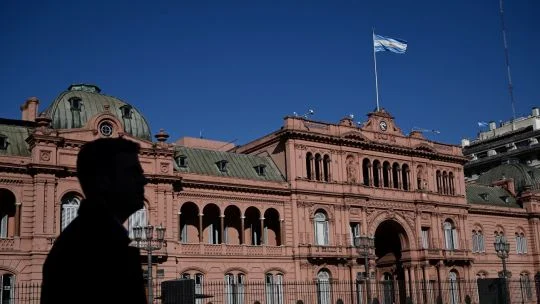
Economic Contraction in Q2
The latest data from Argentina reveals a 0.6% contraction in the economy during the second quarter of the year when compared to the first quarter. The drop is largely attributed to declines in both private and public consumption, alongside reduced investment activity. To put this into context, contractions such as this often serve as indicators of deeper structural issues within an economy, particularly in a country like Argentina, which has a well-documented history of economic volatility. Frequent economic contractions can prompt consumers and investors to tighten their belts, which usually exacerbates the downturn.
Annual Growth Perspective
Despite the quarterly downturn, annual growth remains at 2%, according to the INDEC national statistics bureau. This figure aligns with the government’s forecast of a 3% growth for the entire year, indicating a potential for recovery as the fiscal year progresses. However, relying on annual growth projections in the face of quarterly declines can be misleading. If you're working in this space, you know that a strong annual figure can mask underlying issues like irregular consumption patterns or waning investment confidence. The expectation of recovery may hinge on factors that have yet to materialize, complicating the outlook.
Consumption and Investment Trends
Private consumption fell sharply by 2.4%, while public-sector consumption also experienced a decline of 2.3%. Investment saw a more moderate decrease of 0.8%, reflecting the tightening financial landscape for both consumers and businesses. This contraction signifies consumers are likely facing constraints, possibly due to shrinking disposable income or rising inflation. The absence of strong investment signals reluctance among businesses to capitalize on potential growth opportunities. It's a crucial reminder that consumer confidence and investment go hand-in-hand; when one falters, the other often follows suit, worsening the economic climate.
Unemployment Challenges
Unemployment has climbed to 7.9%, the highest rate since 2021, with informal employment now comprising 45% of the workforce. This trend toward informal employment is alarming and reflects a shift in the labor market that could have long-term ramifications. Informal employment typically lacks benefits and job security, making it precarious for workers. The increasing rate signifies widespread job insecurity, which tends to impact consumer spending negatively, thereby fueling a cycle of economic decline. (And this is the part most people overlook: informal jobs may seem better than no jobs at all, but they can create instability in the overall economy.)
Political Context and Reforms
President Javier Milei links the surge in informal employment to the prevailing uncertainty surrounding Argentina's political environment, especially with elections looming in 2027. He emphasizes that without confidence in consistent reforms, businesses are hesitant to commit to long-term hiring strategies. “If there is uncertainty over whether the process [of reforms] is permanent or not, they will not make permanent decisions,” Milei stated recently, highlighting the critical relationship between economic policies and employment decisions. The political instability can lead to vacillation in policies, discouraging foreign investment and making local enterprises reluctant to expand. In economies like Argentina's, where political and economic climates are often intertwined, the hesitation to hire reflects more than just immediate financial concerns — it signals a broader fear of unpredictability.
Implications and Future Outlook
Looking ahead, the mixed signals from Argentina's economy suggest that while there may be room for recovery, significant challenges remain. The contraction in Q2, combined with rising unemployment and escalating informal employment, paints a stark picture. This isn't just a temporary dip; rather, it's indicative of systemic issues that could plague the economy for years. Policymakers will need to focus on creating a stable environment that encourages both consumer and business confidence. The political landscape will undoubtedly play a pivotal role in shaping these economic policies. If there’s a failure to instill confidence in lasting reforms, the result could be stagnation or even deeper economic woes.
Ultimately, the economic indicators we see today are not just numbers. They represent the livelihoods of millions. Argentina is at a crossroads, where mission-oriented governmental strategies need to align with tangible improvements in the economy to stave off further declines. This might mean more than reforms; it could necessitate a wholesale change in how economic policies are communicated and perceived by the populace. The need for a stable, clear vision from the government has never been more pressing.
Discussion
Sign in to join the discussion.