Pope Leo XIV’s Buenos Aires visit drew 2.5 million people and focused on abuse survivors, disability inclusion and workers’ rights.
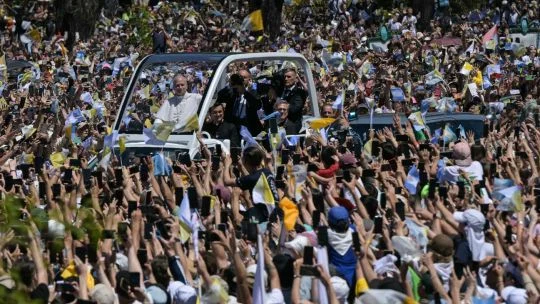
Pope Leo XIV’s visit to Argentina put social concerns at the center of a papal tour: after celebrating a Mass before an estimated 2.5 million people in Buenos Aires, he met clerical abuse survivors and called for greater protection of people on society’s margins.
The Monday Mass in Palermo was the largest gathering of Leo’s papacy so far. Crowds filled a kilometer-long stretch of Avenida del Libertador, with many arriving from across the country. The 71-year-old pope had undergone lung cancer surgery less than a month earlier, but kept his packed schedule intact.
Mechanic Héctor Solis travelled in a three-car convoy and joined a vigil that began at midnight. “We were at the vigil last night, from midnight, and were surprised by how many people were already there,” he told AFP. Carlos Fuentes, who had come 1,500 kilometres, described the atmosphere as one of “great emotion.”
Argentina’s first papal visit in decades also took on the character of a homecoming for many: Leo paid tribute to his predecessor, Pope Francis, who never returned to Argentina after his election. Leo called Francis “our beloved” Pope, drawing an emotional response from the crowd. Teacher Gonzalo Trejo said the visit highlighted the social doctrine Francis had championed.
Meeting survivors and pressing for protection
Leo held a private audience with five people who had suffered abuse by clergy or in Church institutions in Argentina. The meeting came amid criticism from a network of survivors, who say the Church has not fulfilled its promises of “zero tolerance” for abusers.
The Vatican said Leo expressed a “commitment to strengthening measures for protection” within the Catholic Church. He also conveyed his closeness to victims he could not meet in person.
Disability and dignity at the center
Earlier in the day, Leo visited Pequeño Cottolengo, a home for people with disabilities in Claypole, outside Buenos Aires. He argued that a country’s progress should be measured by how it treats its most vulnerable residents, a message with added resonance as disability organisations and Church leaders criticise the human costs of President Javier Milei’s austerity policies.
Resident Marta Torres, who is blind and has cerebral palsy, told the pope she had spent years searching for “a place to live.” At Cottolengo, she said, “they helped me stop feeling rejected. Here, I feel so happy.”
Leo said disabled people are “not a burden on society” but “a blessing.” He praised communities that uphold the dignity and inclusion of people often pushed to the margins, saying: “Places like this have much to say to our societies, which are often driven solely by the pursuit of economic success or the cult of outward appearance.”
Founded by an Italian saint, the 50-hectare Cottolengo complex is among Argentina’s best-known Catholic charitable institutions. The Vatican has described it as a “city of charity.”
Unions and precarious work
Leo also met business leaders, workers and trade union representatives. Unions are angry over Milei’s labour reforms, which limit the right to strike. The pope called unions “indispensable” when they “defend those who have no voice and resist the commodification of labour,” and urged them to support precarious workers.
About 45 percent of Argentina’s workers hold informal jobs without pension contributions or formal labour protections. Leo’s remarks added a labour rights focus to a 12-day South American tour that began in Uruguay, continued in Argentina and was set to take him to Peru, where he spent nearly two decades before becoming pope.
For a visit defined by an immense public gathering, Leo’s clearest message came in the encounters around it: the Church’s standing will depend in part on how it protects abuse survivors and treats people who have little power or security.
Discussion
Sign in to join the discussion.