The AIM-424 Malice missile enhances US carrier defense by targeting enemy aircraft and their support networks, shifting focus to long-range air battles.
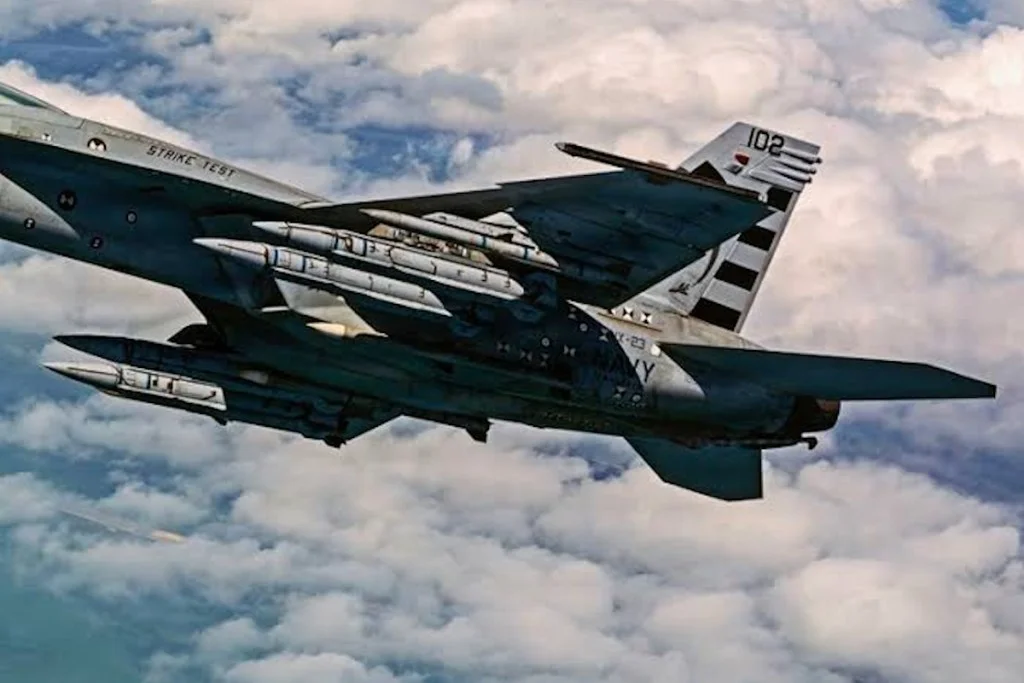
Introducing the AIM-424 Malice Missile
The US Navy has unveiled the AIM-424 "Malice," a next-generation Long-Range Air-to-Air Missile (LRAAM) developed by Raytheon. This advanced weapon is specifically designed to counter Chinese threats in the Indo-Pacific, particularly the carrier-killer aircraft that pose a risk to US carrier strike groups.
Specifications and Capabilities
Announced at the Tailhook Symposium in August 2026, the AIM-424 weighs 680 kilograms and measures 4.11 meters in length. With an impressive range that surpasses 463 kilometers, it effectively fills the void left by the retired AIM-54 Phoenix missile. The missile boasts a two-stage solid-propellant structure, ensuring exceptional terminal maneuverability at long distances, which allows it to engage bombers, airborne early-warning platforms, and refueling tankers before they can launch anti-ship missiles.
Integration and Compatibility
One significant advantage of the AIM-424 is its adaptability across current and future aviation platforms. Recent flight tests confirm its compatibility with stealthy F-35C fighters and F/A-18E/F Super Hornets, with plans for integration with sixth-generation aircraft. This broad compatibility signifies a generational leap in air dominance, extending the engagement range and giving US forces the upper hand in long-range confrontations.
Strategic Implications
The AIM-424 missile isn’t just about intercepting anti-ship missiles; it aims to disrupt the very networks that enable long-range strikes against US carriers. The focus is on targeting platforms such as the Chinese H-6J strategic bomber, which can carry six YJ-12 supersonic anti-ship missiles with a range of 460 kilometers designed to operate beyond the reach of conventional defenses.
By engaging these bombers and their support systems, the AIM-424 could preemptively neutralize threats before they can culminate in an attack against US naval forces.
Targeting Critical Nodes
This missile’s utility extends to targeting critical nodes within Chinese military frameworks, notably airborne warning and control system (AWACS) aircraft such as the KJ-3000, which plays a vital role in network-centric warfare. By eliminating these radar platforms, the AIM-424 can inhibit the coordination of long-range anti-ship missiles, thereby enhancing the safety of US carriers.
In scenarios where AWACS platforms are lost, Chinese bombers would rely heavily on their onboard sensors, bringing them potentially within range of US combat aircraft, thereby presenting new tactical opportunities.
Complementing Existing Systems
The AIM-424 aligns with the already established AIM-260 Joint Advanced Tactical Missile (JATM) program. While the AIM-424 focuses on long-range engagements—optimized for disrupting enemy kill chains—the AIM-260 serves as the next standard for tactical air dominance, ensuring US forces can maintain 21st-century technological superiority.
Adversarial Developments
China's military modernization, illustrated by the PL-17 missile with its 402-kilometer range, underscores a similar strategy: employing extended-range capabilities to threaten vital support aircraft. Such developments reflect the increasing reliance on integrated networks for effective command and control in air and maritime operations.
The Shift in Defense Focus
The evolution of air defenses is apparent as the ability to intercept missiles becomes more challenging. The AIM-424 reflects a strategic pivot back to the Outer Air Battle doctrine of the Cold War: neutralizing launch platforms and their supporting networks before they can strike. This change prioritizes proactive engagement over reactive interception, which has become increasingly complex due to rapid technological advancements in missile systems.
Navigating New Challenges
While shipboard systems—like electronic warfare, chaff, flares, and interceptors—remain crucial for defense, they face heightened challenges against long-range threats. The AIM-424’s design indicates a recognition that the future of naval warfare lies more in disrupting adversary capabilities than merely engaging missiles post-launch.
The Paradox of Extended Engagement
Yet, this extended engagement also presents a paradox. As the US pushes its combat range further, it heightens its dependency on critical sensing and communication networks that adversaries like China aim to dismantle. The challenge ahead lies less in missile range than in maintaining a coherent battle management architecture capable of overseeing these engagements.
Conclusion: A New Tactical Era
As noted by military analysts, platforms like the E-2 Hawkeye and U.S. destroyers equipped with Aegis systems are vital to US air operations and their loss could significantly impair operational effectiveness. Thus, the upcoming age of combat will likely be defined by the ability to protect these assets while maximizing the engagement reach provided by new systems like the AIM-424—winning the air battle before it expands into a missile exchange.
Discussion
Sign in to join the discussion.