Bethwel Kibet Chumba clinched victory at the Buenos Aires Marathon, finishing in 2:08:23, amid strong international competition.
Chumba Claims Victory
At the Buenos Aires International Marathon on Sunday, Kenyan runner Bethwel Kibet Chumba finished the 42.195-kilometre race in an impressive time of 2 hours, 8 minutes, and 23 seconds. This victory adds another commendable achievement to Chumba's portfolio, a testament to his disciplined training routines and strategic race planning. Such times aren't just numbers; they speak to the relentless work ethic that elite marathoners put in, training in various conditions and often at high altitudes to optimize their performance on race day.
Podium Finishers
Following close behind was Rwanda’s John Hakizimana, who crossed the line in 2:08:39, while Kenya’s Felix Kiptoo Kirwa secured third with a time of 2:10:24. The proximity of these finish times underscores the high level of competition seen at this marathon and highlights a trend where runners are pushing their limits, often shattering personal bests. In races like this, it’s usual to see runners from East Africa dominate, and it begs the question: what training methodologies or environments contribute to this consistent success?
Race Statistics
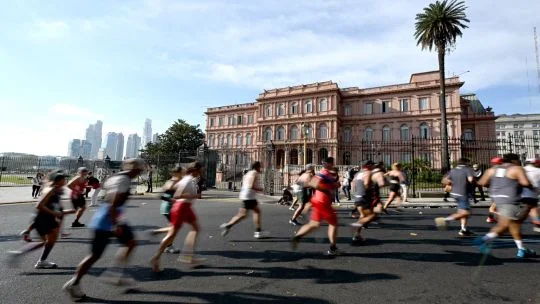
This 42nd edition of the marathon commenced at 7am from the junction of Figueroa Alcorta and Dorrego avenues, drawing a remarkable 16,384 runners to one of South America’s premier road-running events. Mass participation events like this not only promote health and fitness but also unite diverse communities, making running a universal language. Among the participants, 10,615 hailed from Argentina, and 5,769 were international competitors representing 64 countries. Notably, 5,246 participants were women, indicating a strong female presence that has markedly grown in distance running in recent years. Every province in Argentina had at least one athlete in the mix, showcasing the race's ability to pull from local talent while also inviting international participation.
Course and Challenges
The marathon route wound through iconic Buenos Aires neighborhoods such as Palermo, Recoleta, and Retiro, passing numerous landmarks, including the Obelisk and Casa Rosada. While these sights add beauty to the race, they also present unique challenges to runners. The combination of differing surfaces, turns, and elevation changes can significantly affect performance. This extensive course significantly disrupted city traffic, with road closures impacting access to major avenues and the Illia motorway. While such disruptions can be frustrating for locals, they also emphasize the scale and importance of the event within the city, with many residents rallying behind runners cheering them on.
International Elite Participation
The organizers presented a strong international field, drawing elite runners from Kenya, Ethiopia, and Rwanda, enhancing the competitive atmosphere. It's not uncommon for major marathons to attract internationally recognized athletes looking to clock fast times or make a mark on the global stage. That said, it raises concerns about the potential overshadowing of local athletes who might not have had the same exposure or opportunities. The presence of elite runners certainly elevates the stakes, but it can make it even more challenging for local competitors to achieve recognition.
Women's Race Highlights
Kicking off later, the women's division saw Kenya's Rebecca Kangogo Chesir emerging victorious with a time of 2:23:36. The top three were rounded out by her compatriots Rodah Jepkorir Tanui at 2:24:49 and Emmah Cheruto Ndiwa at 2:26:55. These finishing times demonstrate the growing competitiveness in women's distance running and highlight how the field is progressively leveling up. More focus and investment in women’s events are paying dividends, creating pathways for new runners yet to break into the elite category.
Latin American Achievements
In the top results for Latin American contenders, Chile’s Ricardo Rojas finished seventh overall in 2:14:47, followed by Colombia’s David Gómez González at eighth and Argentina’s Ignacio Erario in ninth with times of 2:15:23 and 2:16:42, respectively. Erario's performance also crowned him as the Argentine national champion, finishing the marathon in 2:16:42. Following him on the national podium were Ignacio Reyes from Río Negro and Esteban Angulo from Salta. The emergence of these athletes signals a potential shift in the running culture in Latin America, where homegrown talent is starting to surface more prominently in competitive environments.
Women's Championship Results
In the women's national championship, Misiones-born Chiara Mainetti took the title with a time of 2:38:25, followed by Anahí Castaño and Mercedes Piredda, who finished in 2:44:21 and 2:48:11, respectively. Mainetti ranked as the highest-placed Latin American woman overall, finishing 48th out of all participants. This raises questions about the visibility and support for women in this sport. If you're working in this space, consider how these events can inspire and motivate younger female athletes to pursue running seriously. Their success stories are critical, yet they often go underreported compared to their male counterparts.
Implications for Future Events
This marathon's results are more significant than they might initially look. Indications of rising performance levels among Latin American athletes suggest a shift. Competitors are not only striving for personal bests but are also starting to challenge more established elites. Race organizers will need to take note: perhaps it's time to consider additional incentives or support systems for emerging local talent to level the playing field. Those behind critical event decisions should think about how to nurture this growth in an sustainable way, ensuring the marathon remains a source of national pride for all participants.
– TIMES/AFP/NA
Discussion
Sign in to join the discussion.