Javier Milei and Pedro Sánchez will attend the Madrid summit’s main events, weeks after trading political barbs. No bilateral meeting is planned.
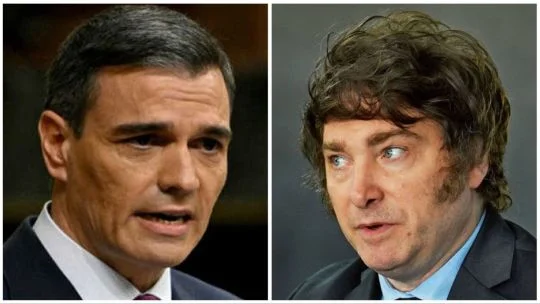
The Ibero-American Summit will put Argentine President Javier Milei and Spanish Prime Minister Pedro Sánchez in the same rooms as their public feud continues. Their scheduled appearances bring the two leaders into close proximity, though officials say they have no bilateral meeting planned. That distinction matters: sharing a stage creates a public encounter, but it doesn't amount to a negotiated exchange or signal that either side intends to lower the temperature.
For a summit built around cooperation among countries with historical and political ties, the absence of a private meeting is itself part of the story. The leaders will have to navigate the optics of appearing together while their governments remain at odds in public. Any greeting, visible distance or pointed remark could attract attention, even if the formal agenda proceeds as planned.
Summit appearances, no formal talks
Milei is due in Spain on Tuesday night for the November 4–5 forum. He and Sánchez are expected at the opening ceremony, plenary sessions and official group photograph. Diplomatic sources told the Noticias Argentinas news agency that the two leaders have no private meeting on their schedules.
Those events put the presidents in the same official setting, but they don't tell us whether they’ll speak informally. Group photographs and plenary sessions are designed to bring delegations together, not necessarily to settle disputes. In this case, the organizers’ agenda will place the two leaders near one another while leaving the substance of their relationship unresolved.
Their shared appearances follow repeated attacks by Milei on Sánchez and his Socialist-led government. During an earlier visit to Spain, Milei called the Spanish leader a “dictator.” The insult gives the encounter a sharper edge than a routine disagreement over policy: it personalizes the dispute and raises the stakes of any public response.
That history also makes silence potentially conspicuous. If neither leader addresses the feud during the summit, that may help keep the formal proceedings on track, but it won't erase the comments already made. If one does speak, the setting could amplify the exchange beyond the summit’s planned business.
Election rhetoric sharpens the dispute
Sánchez added to the tension on Monday at a political forum in Barcelona, saying: “Spain is governed from Spain, not from Washington, Tel Aviv, Moscow or Buenos Aires.” The remark came during campaigning ahead of Spain’s November 29 general election. By naming Buenos Aires alongside several global capitals, Sánchez drew a clear line between his government’s authority and what he presented as outside political influence.
The statement also links the bilateral quarrel to domestic campaigning. Sánchez wasn’t speaking only about Milei; he was addressing Spanish voters and defining the political stakes as he sees them. That’s a familiar feature of election rhetoric: disputes with foreign leaders can become a way to make a broader argument about national autonomy and political identity.
The prime minister has sought to associate the conservative Partido Popular (PP) and far-right Vox with Milei’s political agenda. In Catalonia, he accused what he called the “far-right international” of building alliances to weaken Europe from within. “For the far right, conflict and confrontation are not merely a means of attaining power; they are an end in themselves,” he said.
Those claims are Sánchez’s political framing, rather than a description of an agreed summit position. They place Milei’s presence in Spain inside an argument about Spanish parties, European politics and international alliances. The connection may be useful to Sánchez’s campaign, but it also ensures that the visit will be read through the lens of his domestic contest.
Here’s the thing: a diplomatic forum and an election campaign reward different kinds of speech. Summits tend to depend on shared language and carefully managed encounters; campaigns reward clear divisions and memorable lines. The two leaders’ schedules bring those incentives into the same space.
Argentina’s agenda in Madrid
Milei will travel with his sister, Presidential Chief-of-Staff Karina Milei, and Foreign Minister Pablo Quirno. Argentina’s delegation is expected to make contact with Spanish government representatives and pursue initiatives to strengthen the country’s ties with Europe, NA reported. That stated agenda gives the visit a working purpose beyond the headline dispute, though the report doesn't specify which initiatives are under consideration or what outcomes the delegation hopes to secure.
The distinction is useful for reading the trip. A delegation can pursue contacts across government even when its two most prominent leaders aren't scheduled for a private meeting. Such contact may keep channels open, but it shouldn't be mistaken for evidence that the political relationship has improved. The source describes an effort to strengthen ties, not a completed agreement.
If you're working in this space, the practical question is whether the summit produces any concrete follow-up between the delegations. Public appearances will be easy to document; progress on ties is harder to assess without details of the contacts or initiatives. For now, the reported plan leaves that question open.
What the encounter could signal
The summit’s agenda includes economic cooperation, sustainable development and challenges posed by artificial intelligence. These topics give the leaders and their delegations common ground in principle, but the schedule alone doesn't show how much attention they’ll receive or whether Argentina and Spain will announce any shared work. The gap between broad themes and specific commitments is often where summit outcomes become difficult to judge.
With both leaders attending the same official events and no talks arranged, their public remarks may set the tone for the encounter. This is more significant than it looks: when a private meeting is absent, public language can carry more weight as a signal of how each side wants the relationship understood. A cordial appearance could indicate an effort to contain the dispute, while renewed criticism would keep it in view. Neither outcome, by itself, would establish a change in policy.
And yet, the summit’s wider agenda still matters. Economic cooperation and relations with Europe are the stated interests Argentina’s delegation plans to pursue, while Spain’s campaign rhetoric is focused on the political meaning of Milei’s presence. The competing agendas may coexist without resolution during the forum. A photograph, a speech, and the absence of a meeting: enough to shape headlines, not enough to settle the argument.
Discussion
Sign in to join the discussion.