Pope Leo will visit a Buenos Aires care home as Argentina debates disability support in its 2027 Budget.
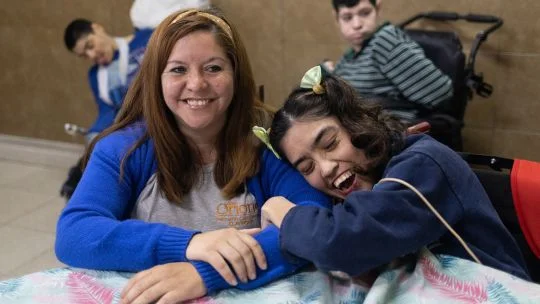
Pope Leo XIV’s planned visit to Cottolengo Don Orione will bring Argentina’s disability care debate into sharp focus. The 45-minute stop at the residential centre in Claypole comes as Congress considers disability benefits during discussions on the 2027 Budget. The setting gives the debate a human scale: residents live there, work in workshops and rely on ongoing care, while the government’s proposed changes concern how the state defines and supports that care.
The Milei government has proposed loosening the framework for state support. Patients, sector organisations and opposition figures argue the change would amount to a concealed cut in funding. The Catholic Church has also challenged an approach that treats care primarily as a budget question. That disagreement is about more than the language of a budget. It reaches into the practical question of what support people with disabilities can expect from public institutions.
A community preparing to host
Cottolengo Don Orione houses 410 adults with disabilities, many requiring ongoing care. Its grounds include 16 residential homes, workshops, a chapel, a central square and a cemetery. Founded in 1936, the centre is run by the congregation named for Italian priest Don Orione, who devoted his life to helping others. The range of facilities suggests a community built around daily routines as well as accommodation: residents can work, gather and worship within the same grounds.
Staff are preparing cameras and logistics for the official broadcast from the chapel. Coordinator Luciana Ponce said the team was carrying on with its work while residents awaited the visit. Esteban, a 44-year-old resident, said he hoped to meet the Pope as he shaped a cup in a ceramics workshop. The detail is modest, but it puts the visit in the setting where residents spend their time, rather than presenting the centre only as a backdrop for a public ceremony.
Other residents have been making bread, painting and dancing. Cottolengo employs 380 people, some of whom have been praying for Leo’s health since he had a cancerous lung tumour removed in mid-October. The operation prompted speculation that he might cancel the trip, but preparations continued. For staff and residents, the visit is both a major event and an interruption to ordinary work; the preparation has to fit around the care and activities that make up the centre’s routine.
Care beyond the budget debate
Leo’s visit is part of a South American tour that includes Uruguay and Peru. Its message echoes an encyclical he published in May, which calls for “the poor, the sick, the migrants, the little ones” to serve as “cornerstones” of a “solid and welcoming common home.” The language places people who need support at the centre of a social vision, rather than treating them as an afterthought to public spending decisions.
In September, the Church’s Social Pastoral ministry published a document titled “The Fragility That Makes Us Human.” It questioned why disability care was being discussed solely through its cost, arguing: “In the face of vulnerability, the state’s response must not be reduced to a mathematical equation.” The criticism points to a familiar tension in debates over public services: budgets require choices, but a financial accounting can obscure what those choices mean for people who depend on care. That doesn’t settle the argument over funding. It does challenge officials to explain what their policy measures are meant to protect.
Residents at the centre of the ceremony
The chapel ceremony will be broadcast to people outside the residence. Leo is expected to bless those present and hear testimony from two residents. Organisers plan to remove the pews to make room for wheelchairs. “We want people with disabilities to be the protagonists,” said Brother Jorge Silanes, the home’s director. The change to the chapel’s layout gives that intention a practical form: access shapes the event itself, not just the message delivered from the front.
Screens will let thousands of expected worshippers follow the event from outside the grounds. They will also have a chance to greet Leo as the Popemobile travels the kilometre to the residence. Away from the cameras, he is due to visit a ward for residents who are bedridden. That private stop matters. Public ceremonies tend to favour people who can appear and speak; a visit to the ward acknowledges residents whose needs may keep them out of the crowd.
Cottolengo takes its name from Saint José Benito Cottolengo, who opened a home for sick and marginalised people in Turin in 1928. The congregation now operates homes in Argentina, Uruguay and Paraguay, housing about 1,300 people. This is more significant than it looks: a papal visit can draw attention to care that usually happens out of public view, though attention alone can’t answer the funding dispute.
What the visit can—and can’t—settle
The visit will put a human face on the debate; the choices in the 2027 Budget will determine how disability support is framed in policy. A ceremony can show what residential care involves, but it won’t specify how the proposed changes would affect patients, organisations or providers. That detail remains central to the argument over whether loosening the framework is a policy adjustment or, as critics say, a cut by another name.
If you’re working in this space, the distinction to watch is between the stated design of a benefit and the support people can actually access under it. (And this is the part most people overlook.) A change described in technical terms can still alter the conditions under which care is delivered. The numbers here are underwhelming as an answer to that question: the article sets out the scale of this community, but not the proposed benefit rules or their likely effects. The debate will turn on those choices.
For now, the visit offers a pointed public image: residents in their own community, with access and care shaping the event. A policy debate often reduces disability to eligibility criteria and expenditure. Here, the people those rules concern will be in the chapel, in the workshops and in the ward. Seen up close.
Discussion
Sign in to join the discussion.