Chacarita and Nueva Chicago meet with relegation on the line, as a long history of fan violence adds tension to a pivotal Primera Nacional match.
A narrow path to survival
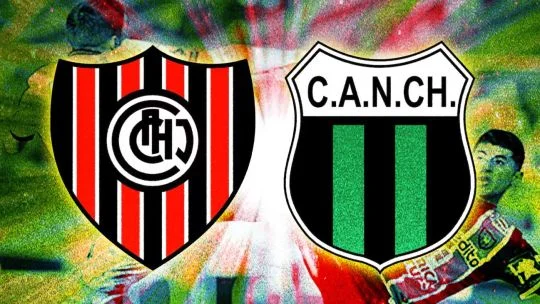
Chacarita Juniors and Nueva Chicago meet on Monday with a place in Argentina’s second tier at stake. The match may come a day after Boca Juniors and River Plate play the Superclásico, but for followers of the lower leagues, its consequences are sharper: one club could be pushed toward the B Metropolitana. The contrast is hard to miss. Argentina’s biggest derby commands the broad audience, while this fixture carries the kind of pressure that’s measured directly in the table.
Chicago sit second from bottom in Zone B, above already-relegated Güemes. They’re level on points with Patronato but behind on goal difference, and two points shy of 15th-place Chacarita. Chicago travel to San Martín for the 3pm kickoff, while Patronato visit Atlético de Rafaela. With multiple clubs still connected through the standings, the outcomes elsewhere matter almost as much as the match itself.
A defeat would leave either Chicago or Patronato facing relegation. A draw in San Martín would keep Chicago’s hopes alive only if Patronato also lose. That’s a narrow route, and it gives Chicago little control over its fate: even a result of its own may not be enough. With the Primera Nacional season nearing its end, the arithmetic leaves little room for either side to recover.
The fixture lands during the penultimate round of the Liga Profesional de Fútbol Clausura, whose top flight is also narrowing the field for 16 playoff places. Sunday’s Boca-River derby will draw the wider attention, but this Monday match carries a more immediate threat for the clubs involved. A place in a playoff race is one kind of pressure; the prospect of dropping a division is another.
Rivalries beyond the pitch
Chacarita and Chicago have each built reputations for intense support and recurring trouble. Neither counts the other as its principal rival: Chicago’s fiercest enmity is with Atlanta, while Chacarita’s is with Almirante Brown. Other clubs, including Quilmes, Boca, Morón, Vélez, Tigre and All Boys, also feature in the two fanbases’ rivalries. Still, years spent crossing paths in the lower divisions have left little warmth between them. That history gives the fixture a sharper edge, even if it isn’t the defining rivalry for either club.
Chicago’s supporter groups have clashed with one another as well. After violent internal disputes in the early 2000s, the club assigned separate stands at its Mataderos ground to the official Perales group, the rival Antena faction and supporters seeking to avoid the conflict. The arrangement hasn’t prevented occasional violence, amid competition between the groups over the business surrounding club support. It also shows the limits of managing tensions through separation: dividing groups can reduce contact in one setting, but it doesn’t settle the disputes behind it.
The club also became the setting for a major shift in matchday policy. After a riot following Chicago’s 2007 relegation playoff defeat left a Tigre supporter dead, away fans were barred from most lower-league matches, with a few exceptions. The decision changed the conditions under which many lower-division fixtures were played. It remains a stark reminder that football’s consequences can extend well beyond the result on the field.
Chacarita’s record of sanctions
Chacarita supporters have faced repeated sanctions, turning the prospect of a three-point deduction into a familiar joke among Argentine football fans. The joke points to a serious feature of the club’s history: discipline and crowd behavior have repeatedly become part of the story around its matches. For a team already close to the relegation places, any deduction would carry obvious sporting weight, even if the current stakes rest on the points in the table.
The club’s troubled 2009–10 top-flight campaign produced one especially surreal episode: during a match against Estudiantes, rioting fans took a fire hose and played beneath the spray. The image is absurd, but the setting wasn’t; it came amid disorder during a difficult campaign. Episodes like this help explain why the clubs’ histories can overshadow the football itself when they meet.
What Monday’s match represents
Now both sides face a result with consequences beyond local bragging rights. Their supporters’ history adds a volatile edge to an already high-stakes fixture, while the league table offers a simple measure of what’s at risk: a place in the second tier. The tension isn’t only about who wins. Chicago’s position depends in part on Patronato’s result, while Chacarita sit close enough to the danger zone for the match to matter to them directly.
This is more significant than it looks from outside the lower divisions. Relegation turns a single match into a test of a club’s immediate standing, and the margins here are thin enough that another team’s result could shape the outcome. If you’re working in this space, the useful detail isn’t the spectacle of a famous rivalry; it’s how tightly the table links clubs that are playing separate games.
And yet, the fixture’s history can’t determine what happens on Monday. The clubs bring their rivalries, sanctions and past violence with them, but the standings make the immediate stakes plain. One result, alongside the match in Rafaela. That’s the narrow frame in which Chicago and Chacarita meet.
Discussion
Sign in to join the discussion.