The Vatican says Pope Leo’s November trip to Uruguay, Argentina and Peru will go ahead as scheduled after his lung surgery.
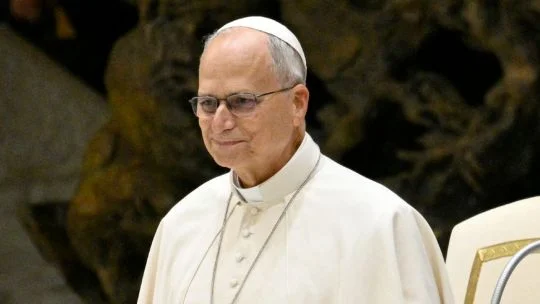
The Vatican’s confirmation that Pope Leo XIV will travel to South America in November puts his first major trip after lung-cancer surgery back on the calendar. The 71-year-old pontiff is due to visit Uruguay, Argentina and Peru from November 6 to 17, 2026, following an operation in Rome less than a month before departure. The timing makes the itinerary more than a sequence of diplomatic and religious engagements: it’s also a public test of how the Vatican judges his capacity to resume demanding travel while recovering.
“The Apostolic Journey of Pope Leo XIV to Uruguay, Argentina, and Peru, scheduled for 6–17 November 2026, will proceed according to the programme previously published,” the Holy See Press Office said Monday. That wording signals that the published plan remains in place, even as the Vatican has described a recovery process that includes medical input and rest. It doesn’t, by itself, establish how much the schedule might change in practice if his condition or doctors’ advice requires adjustments.
Leo underwent surgery on October 13 at Rome’s Gemelli hospital to remove a cancerous tumour in the lower part of his right lung. He left hospital four days later. His surgeon, Stefano Margaritora, described his clinical condition as “absolutely satisfactory” and said there were no medical reasons at that point to cancel the trip.
The qualification matters. A surgeon’s assessment at one point in recovery is not a guarantee that a lengthy trip will be easy, and the Vatican has already shown that medical advice can alter the pope’s appearances. The clearest facts available are the operation, the recovery update and the decision to keep the South American visit on the calendar.
Recovery shapes the schedule
The announcement follows some uncertainty over whether the itinerary would change. The Vatican said Leo would skip a planned October 27 visit to Assisi on his doctors’ advice. It also reported that tests showed the cancer was localised and that he would need no further therapy. Those updates offer reassurance about the diagnosis while also making clear that the pope’s public schedule is being managed around his health.
He has gradually returned to work, with the Vatican saying his daily schedule is being adjusted in consultation with his doctors to support his recovery while he carries out his duties. Rest remains part of that plan. That approach reflects a practical tension: the pope’s role brings a steady stream of public obligations, while recovery after surgery calls for limits that can’t be judged by the itinerary alone.
For readers trying to gauge what the confirmation means, the distinction is straightforward: the trip is proceeding as planned for now, but the Vatican has not presented the schedule as independent of medical advice. If you're working in this space, that’s the point to watch. The itinerary shows what’s expected; subsequent health updates will show whether the pace remains manageable.
Leo said he was looking forward to returning to a continent where he had spent significant parts of his life. He served as a missionary in Peru for two decades. The Vatican said he anticipated the journey “with great joy and enthusiasm,” and that he was grateful for prayers and messages of support. His personal connection gives the trip a different weight from a purely ceremonial tour, though it doesn’t answer questions about the physical demands of the schedule.
Argentina itinerary spans four days
Argentina is scheduled to host Leo from November 8 to 11. He is expected to arrive at 4:30 p.m. at Jorge Newbery Airport in Buenos Aires, flying in from Uruguay. That evening, he is due to meet President Javier Milei at the Casa Rosada and give a speech at Palacio Libertad. The first day combines a head-of-state meeting with a public address, leaving the visit with both political and civic dimensions from the outset.
On November 9, the itinerary takes him to Cottolengo Don Orione in Claypole, Buenos Aires Province, followed by Mass at 11:30 a.m. at the Monumento de los Españoles in Palermo. The sequence moves between a care institution and a large public religious gathering. Such stops give a papal visit its local texture, but they also mean travel and public appearances are built into a day already carrying more than one formal commitment.
The next day, Leo is set to travel to Córdoba for a 10 a.m. Mass at the Military Aviation School, then return to Buenos Aires for a youth vigil in Palermo. The itinerary therefore includes a city-to-city journey and a return before another public event. It’s a tightly arranged day on paper, and the published times make clear how much depends on the schedule holding together.
His final day in Argentina includes a visit to Devoto Prison and a closing Mass at the Basilica of Luján. He is scheduled to leave from Ezeiza Airport at about 2 p.m. for Lima. The sequence links a prison visit, a major religious service and onward international travel within the same day. For the Vatican, keeping those engagements in the programme means preserving the planned shape of the visit; for Leo, it leaves little visible slack in the timetable.
What the confirmation signals
With the trip now confirmed, the published itinerary remains the clearest measure of how the Vatican is balancing Leo’s recovery with his travel and public duties. This is more significant than it looks: the decision keeps a substantial international journey in view after surgery, while the skipped Assisi visit shows that medical advice can still take precedence over an earlier plan. The two decisions together suggest a schedule that is firm in outline but subject to the pope’s health.
And yet, an itinerary is a plan, not a report on how the trip will feel or unfold. The Vatican’s updates will matter as much as the calendar, particularly because the journey includes repeated public appearances and travel between cities. What this means for you is that the confirmation answers one question — whether the South America trip remains scheduled — while leaving the practical question of pace to be answered as the visit approaches. (And this is the part most people overlook.)
For now, the clearest takeaway is modest: Leo intends to make the journey, the Vatican says it will proceed according to the published programme, and his recovery remains under medical guidance. A demanding schedule. That combination leaves room for confidence in the plan without mistaking it for certainty about every stop.

Discussion
Sign in to join the discussion.