Argentina plans to sell its 90% stake in Buenos Aires water operator AySA to a consortium, advancing Milei’s privatisation agenda as other deals stall.
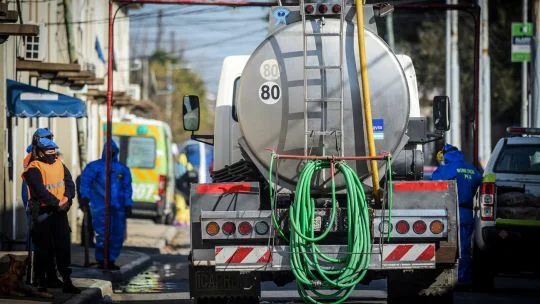
The planned US$340-million sale of Argentina’s 90 percent stake in Buenos Aires water and sewage operator AySA gives President Javier Milei a significant privatisation win. The government said Thursday it had selected a consortium of Argentine and Brazilian companies, with the contract due to be signed next month. The announcement marks progress toward transferring a major public utility to private owners, though the deal’s practical significance will depend on whether it reaches signing and how the new ownership is put into effect.
AySA’s size and public role make this a more visible test than a sale of a smaller state asset. Water and sewage services are part of the infrastructure residents rely on every day, so a change in ownership carries questions that go beyond the purchase price. The source provides no details about the consortium’s operating plans or the terms of the contract; for now, the selection is evidence of a prospective transaction, not proof that the handover is complete.
AySA and the policy reversal
AySA carries particular weight because its history reflects the policy reversal Milei wants to undo. In 2006, then-president Néstor Kirchner withdrew the water licence from a French-led operator and created the state-owned company. Argentina later lost an international arbitration case over the utility, settling in 2019. That history makes the planned sale more than a change in ownership: it revisits an earlier decision to put the service under state control, after a dispute that remained unresolved for years.
For Milei, selling the stake is a high-profile test of whether private operators will return to a sector once brought under state control. The political message is clear, but delivery is harder to judge from an announcement alone. The contract’s signing and the details of the transfer will show whether the government can move from a broad privatisation pledge to a completed transaction in an essential service.
A mixed record for privatisation
The AySA agreement follows a setback in freight rail. A day earlier, Grupo Mexico SAB, controlled by Mexican billionaire Germán Larrea and backed by US interests, withdrew from the race to take over a state-owned rail network. The conglomerate had raised concerns about the operating model proposed by Milei’s government. That decision underlines how execution and deal structure can shape investor appetite, even as the government tries to attract private buyers.
Here’s the thing: a willing seller and a stated price don’t guarantee a deal that investors will accept. In infrastructure, the operating model can matter as much as the asset itself, because buyers have to assess what responsibilities come with taking control. The rail withdrawal is a reminder that the government’s ability to attract bidders will depend in part on the terms it offers, not only on its stated commitment to privatisation.

Milei made privatisation a core part of his economic programme after taking office. But lawmakers blocked plans in 2024 to sell several major companies, including oil producer YPF SA, the national airline and the state bank. The government has completed a smaller set of transactions: it sold engineering firm Impsa and is breaking up energy company Enarsa through individual asset sales. In June, Enarsa sold its stake in power grid operator Transener for US$356 million.
The record so far is uneven in scale and method. Some assets have changed hands or are being sold individually, while the planned sales of prominent companies met resistance in Congress. That distinction matters: a government can complete transactions without establishing that it can sell every asset it names. AySA could strengthen the case that larger deals are possible, but one agreement would not settle the broader political and commercial questions around the programme.
Public listings remain elusive
AySA was once expected to go partly public through an initial public offering, but that plan fell away in favour of the current sale. Public share offerings have been scarce under Milei: earlier this month, investors in power generator YPF Luz also abandoned an IPO in favour of a private sale. The pattern points to a preference, or at least a practical route, for private transactions when public listings do not proceed.
An IPO and a private sale can take different paths to transferring ownership, and they offer different ways for investors to participate. The details provided here don’t establish why either listing was abandoned, so the shift shouldn’t be treated as proof of a single cause. Still, the repeated retreat from public offerings leaves a clear question: can the government attract buyers through direct deals while its plans for broader public participation remain unrealised?

What the AySA deal will signal
AySA’s sale therefore offers a clear measure of progress, while the rail withdrawal and abandoned IPO plans show the limits of the current push. The next test is whether the selected consortium signs on schedule and whether the government can turn this deal into a repeatable model for other state assets. This is more significant than it looks: a completed transaction would show that privatisation can advance in a politically sensitive public utility, while a delay or a change in terms would expose the gap between announcing a sale and completing one.
If you’re working in this space, the practical signal to watch is whether the process produces a signed contract and a credible path from selection to transfer. That’s the point at which AySA becomes a precedent rather than a headline. And yet, even a completed deal would offer only one data point; Argentina’s mixed record suggests future sales will still depend on each asset’s structure, political support and appeal to buyers.
The test is execution.
Discussion
Sign in to join the discussion.