China is absorbing Ukraine’s drone warfare lessons quickly, while centralized command limits the PLA’s ability to match battlefield improvisation.
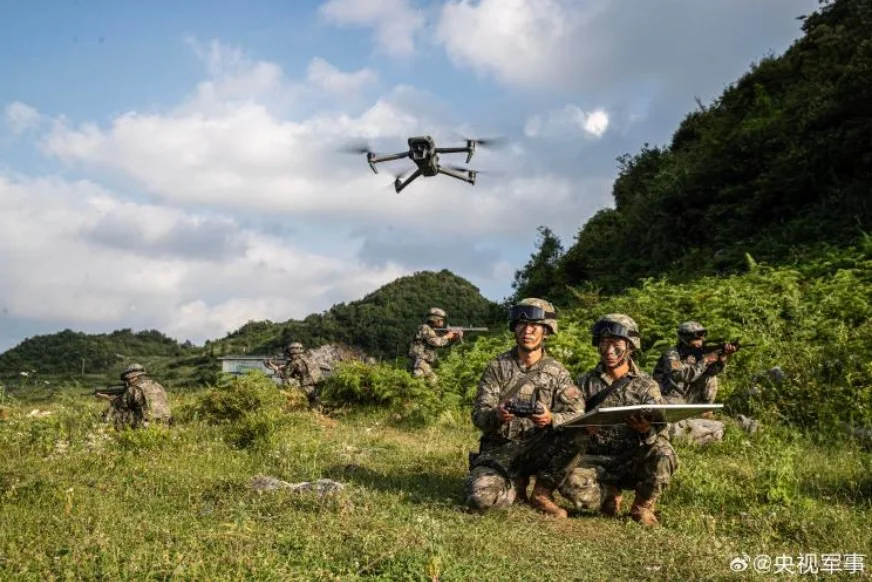
China’s military is moving quickly to absorb lessons from the Russia-Ukraine war, especially in drone warfare. The harder task is organizational: the People’s Liberation Army (PLA) is trying to prepare for fast, fluid combat while preserving a command system built around tight central control. That tension could shape how effectively its new capabilities work in a real conflict.
A Center for Strategic and International Studies report, based on more than 90 Chinese military and defense-industry publications issued from mid-2022 to mid-2026, describes a brisk cycle of observation and adaptation. Chinese defense institutes, the study says, identify emerging battlefield tactics in about four months and turn those findings into hardware and training within a year.
That pace suggests the PLA is treating the war as an ongoing source of operational data. It can study battlefield methods, adjust procurement and revise training without committing Chinese forces to combat. The emphasis, though, is on preparing to defend against threats China sees as relevant to its own bases and forces.
Drone defense takes priority
Chinese analysis has focused in part on Ukraine’s attacks at sea and on Russian airfields. The PLA has responded by accelerating work on interceptor drones, directed-energy weapons and electronic jamming systems. It is also studying Russian approaches to linking reconnaissance with strikes, along with fiber-optic first-person-view drones that resist electronic interference.
China’s effort to prepare for large-scale uncrewed warfare reaches into training and industry. In 2025, it restructured military academies to train specialized drone commanders, while drawing on the country’s commercial manufacturing base for components. The combination gives the PLA ways to expand the supply of equipment and personnel. It does not, by itself, settle how commanders will use them when plans break down.
Here’s the thing: Ukraine’s battlefield record shows how relatively inexpensive uncrewed systems can impose serious costs on a larger force. In the Black Sea, Ukrainian explosive sea drones and unmanned minelayers, used alongside anti-ship missiles, helped undermine Russia’s naval position. The attacks damaged or sank warships, contributed to Russia moving key vessels from Sevastopol to ports farther away, including Novorossiysk, and helped reopen grain-export routes from Odesa.
For Chinese planners, the implication is direct. In a Taiwan conflict, the United States and its allies could use sea drones to threaten Chinese naval vessels and amphibious transports. Taiwan’s Endeavor Manta drone boat is one example of a platform that could support relatively low-cost attacks in the strait. Drones launched from motherships could extend the threat farther into contested waters.
Such systems could make it harder for Chinese forces to maneuver or assemble for an amphibious landing. Their effect would come not only from successful strikes, but from forcing ships to account for repeated, uncertain threats across a wide area. That uncertainty can complicate operations even when individual drones are intercepted.
Airfields are another exposed point
Ukraine’s Operation Spiderweb offers a parallel lesson about attacks far from the front. As described in reports by The War Zone and its coverage of the operation, operatives used civilian trucks to launch more than 100 first-person-view drones inside Russia. The targets included strategic bomber bases, where the attack damaged or destroyed dozens of Soviet-era aircraft.
For PLA observers, the operation demonstrates how small, expendable drones can bypass layers of conventional air defense and cause substantial damage to valuable assets. It also challenges the assumption that a country’s rear bases are safe simply because they sit far from the fighting. Airfield protection now has to account for physical access, hardened shelters and electronic countermeasures against drones.
China has invested heavily in airfield protection. A January 2025 Hudson Institute report said China had more than 800 hardened aircraft shelters, double its number from the 2010s, as well as 2,300 unhardened shelters. The report said this capacity could protect most of China’s combat aircraft.
Forward airfields in the South China Sea present a different problem. They sit beyond the immediate reach of mainland fighter patrols and surface-to-air defenses, and artificial islands offer little natural cover or room to absorb a large raid. Their garrisons rely on lighter steel hangars rather than mountain bunkers, while limited apron space can leave aircraft exposed outside. Those conditions could make the sites more vulnerable to attacks involving drones and missiles.
Technology moves faster than command culture
China is also studying how Russia organizes dedicated drone forces. An April 2026 Institute for the Study of War report noted that PLA Daily commentaries have praised Russia’s Rubicon Center for Advanced Unmanned Technologies. Chinese coverage has highlighted Rubicon’s centralized coordination, battlefield record in Kursk and quick feedback between drone operators and developers.
Chinese sources describe dedicated uncrewed warfare units as an emerging feature of modern conflict, and the PLA is considering similar formations. Yet the qualities that make such units effective can be difficult to reproduce within China’s military. The ISW report points to politicized leadership, centralized authority and a reluctance to accept risk as barriers to the frontline initiative associated with Rubicon’s approach.
That tension has prompted debate over “mission command,” a concept that gives subordinate commanders room to act within a superior’s intent. An October 2025 RAND report frames the question around future “intelligentized” warfare, where data-heavy operations may move faster than centralized decision-making. Advocates argue that delegation can preserve speed, flexibility and communications resilience while keeping political control anchored in the commander’s intent.
But the institutional obstacles are substantial. The RAND analysis says Communist Party orthodoxy favors firm control, senior leaders question officers’ competence, and military organizations may prefer artificial intelligence or networks that skip command levels while retaining oversight from the center.
In a May 2025 Proceedings article, Milan Vego argues that mission command cannot simply be transplanted between militaries. Its German roots, he writes, include a tradition of “thinking obedience”: officers may need to depart from an order when circumstances change, while still pursuing the commander’s broader purpose. That approach depends on a well-trained officer corps, trust between ranks and tolerance for decisions that do not follow a script.
China’s likely path, according to RAND, is uneven adoption. Strategic forces may remain tightly controlled while selected naval and special operations units get more authority to act. My read is that the PLA can continue to absorb new technologies at speed, but its performance will depend on whether commanders can adapt in the moment. Until that changes, the force may field advanced drone defenses and still lose time when operations outgrow their plans.
Discussion
Sign in to join the discussion.