Long, unpredictable blackouts are disrupting work, health and education across Venezuela, prompting protests as the power system struggles to meet demand.
Venezuela’s electricity crisis has become a daily constraint for most residents, and a growing source of public anger. Outages lasting as long as 15 hours have been reported in several regions outside Caracas, disrupting businesses, schools, health care and sleep. Protests have followed in cities across the country as residents demand relief.
The strain is especially visible in Zulia state, where heat makes each outage harder to endure. Yanira, a 33-year-old artist and designer in Maracaibo, recently described losing power for 11 hours one day and seven the next. She lives with her 73-year-old father, whose health is already fragile. For the family, blackouts affect more than convenience: they complicate care, work and basic routines.
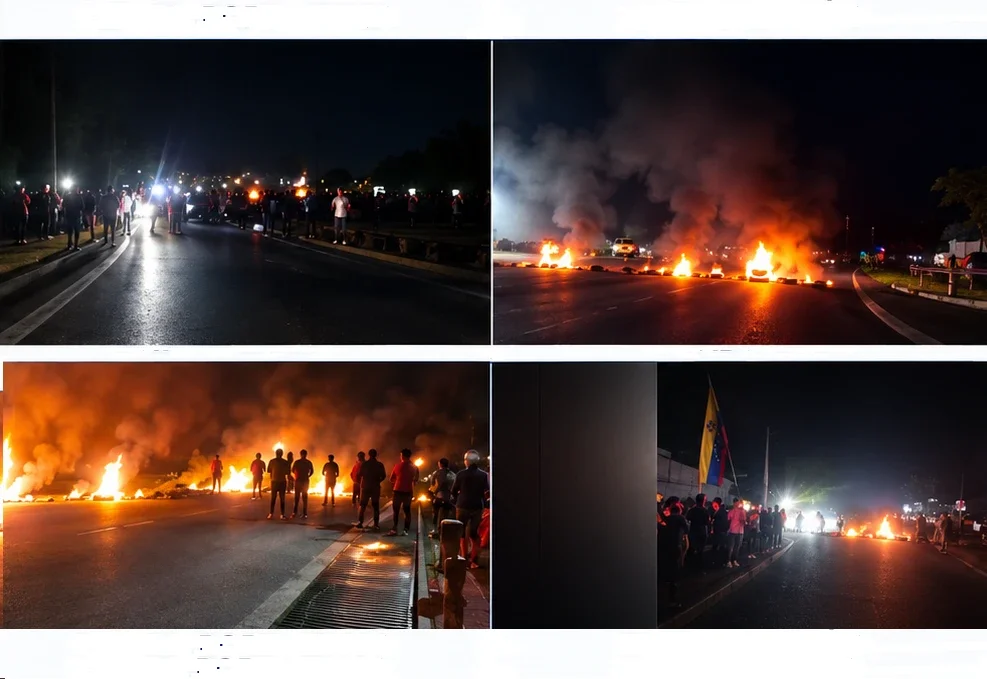
Screenshots of protests in four states in Venezuela (Zulia, Lara, Portuguesa and Falcón) amidst power cuts across the country, taken from the YouTube video by NTN4 “Venezuelans can’t endure power cuts anymore and take to the streets in protest,” published on September, 3, 2026. Fair use.
Yanira’s work has suffered alongside her sleep and well-being. Blackouts made it difficult to find a job or work remotely, so she turned to small businesses at home, selling sandwiches and cepillados zulianos, local shaved-ice treats. Keeping ingredients frozen and drinks cold is difficult when electricity can vanish without warning. At night, the heat makes sleep difficult without air conditioning; open windows offer some relief but let insects in. Yanira says the disruption became severe enough that she started taking sleeping pills.
Her experience reflects how widely outages have spread. Venezuela’s 2025 Living Conditions Survey found that only about 10 percent of people live without power cuts. For everyone else, unreliable electricity is a routine condition, not an occasional interruption.
Outages reach beyond the home
Electricity rationing is also reshaping work and commerce. Authorities have shortened working hours for some public sector employees and agreed with shopping malls to reduce consumption. In several regions, scheduled cuts reportedly last from six to 15 hours a day, while Caracas has largely been excluded from the rationing described in those reports.
Businesses face a double bind: they lose productive hours during an outage and may lack the fuel needed to run backup generators. In Puertos de Altagracia, Zulia, Sara Hernández works for a bottled-water company that has a generator, but fuel is not always available. With power potentially disappearing more than once in a day, planning operations becomes difficult.
The Maracaibo Chamber of Commerce reported that 38 percent of businesses had closed during the year, citing the combined effect of power failures and broader economic hardship. That figure captures the commercial damage, though the disruption reaches far beyond shop floors. Workers struggle to keep schedules, students lose classroom time and families can’t count on basic services.
In Maracay, resident Kellys Gallardo said she receives text alerts from state electricity company Corpoelec about planned outages, but sometimes the warning arrives after the power has already gone. Gallardo works at a printer-ink cartridge manufacturer and experiences cuts both at work and at home. Her children’s schooling is also affected when rationing interrupts classes.
The health consequences can be immediate. A power failure at a dialysis unit in Barquisimeto left 42 kidney patients without treatment, according to a report by NTN24. In Zulia, doctors have warned that outages can damage medicines and affect public health. These are the stakes when a system can’t reliably supply electricity to homes and essential services.
Protests turn blackouts into a public demand
In August, residents in Turmero and Valencia took to the streets at night as authorities expanded rationing. Demonstrations and road blockades have also been reported in El Tocuyo, Caja Seca, Calabozo, Zaraza and Valle de la Pascua, among other places. The protests make visible a frustration that many households had previously endured in private.
The electricity emergency is part of a broader rise in public demonstrations. The Venezuelan Observatory of Social Conflict (OVCS) recorded more than 4,000 protests from January through August 2026, three times the number in comparable earlier periods, according to coordinator Marco Antonio Ponce. August alone averaged 22 demonstrations a day. Persistent blackouts ranked among the grievances driving public action.
The timing matters: a blackout is no longer just a loss of light. It can mean spoiled food, missed work, interrupted lessons, sleepless nights in extreme heat or a delayed medical procedure. When disruptions are unpredictable, residents also lose the ability to plan around them. That uncertainty helps explain why complaints have moved from homes and workplaces into the streets.
A long-running system shortfall
Weather has intensified the current strain, but it doesn’t explain the underlying weakness. The government has pointed to El Niño, which has brought drought and unusually high temperatures. At the same time, a major failure at the Guri hydroelectric plant removed a turbine that had generated 770 megawatts. Venezuela’s power system has also faced years of underinvestment, poor maintenance and allegations of corruption.
The crisis recalls the 2019 nationwide blackout, when severe drought lowered water levels at the Guri reservoir, a major source of the country’s electricity. The present emergency is unfolding after years of deterioration. Venezuela has about 30,000 megawatts of installed generation capacity but is producing less than half of that, leaving little room to meet demand during periods of heavy use.
Authorities have announced projects intended to restore capacity. In June 2026, the government signed an agreement with U.S.-based General Electric to recover 1,000 megawatts over two years, followed by plans for another 5,000 megawatts over the next four years. Officials also announced an agreement involving the Tocoma hydroelectric project, under construction since 2007 but never completed.
Those plans describe a long repair effort; they don’t answer the immediate question facing residents when the next outage begins. For families, businesses and clinics, the measure of progress will be whether electricity becomes predictable enough to support ordinary life. Until then, each blackout is likely to renew the same pressure: lost hours at home, lost capacity at work and another reason for people to take their demands into public view.
Discussion
Sign in to join the discussion.