The US and China are intensifying their focus on orbital warfare capabilities as both nations prepare for potential conflict over Taiwan, reshaping military strategies.
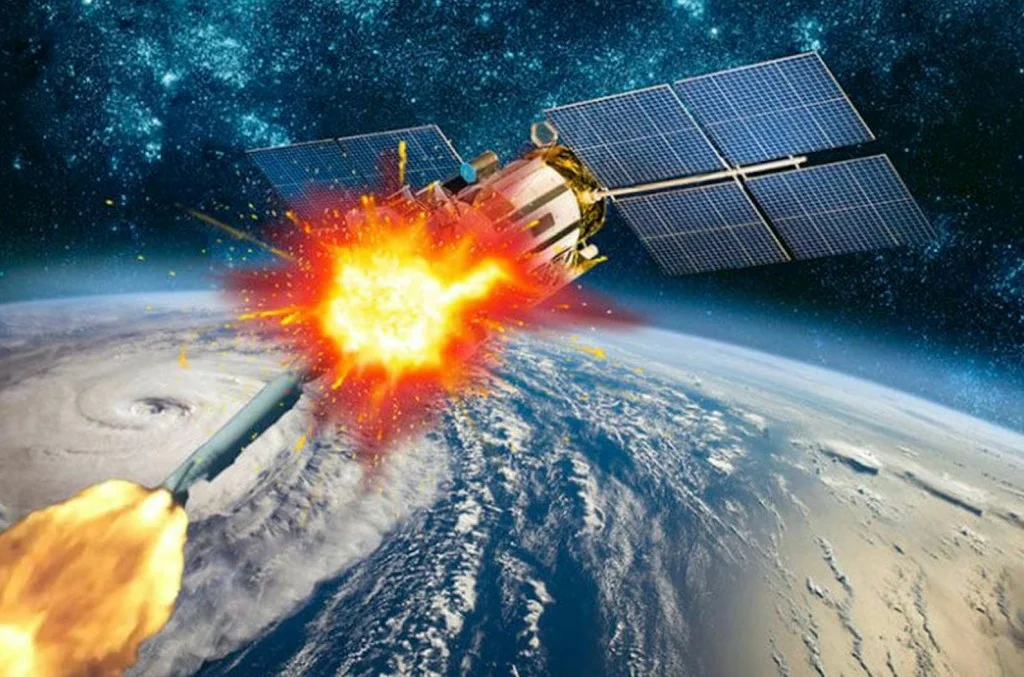
The increasing competition between the United States and China in space is pressing both nations to redefine their military strategies, particularly regarding orbital capabilities. As tensions over Taiwan grow, the battlefield may extend hundreds of kilometers above the Earth, where both superpowers are hastily gearing up for possible space warfare.
Recent reports indicate a shift in attitude toward outer space, with the US and China no longer viewing orbital spacecraft solely as tools for intelligence gathering. Instead, they are beginning to see these assets as active participants in potential combat scenarios. The development of unmanned spaceplanes that can deploy secondary payloads alongside maneuverable "hunter" satellites highlights the urgency behind this evolving strategy.
Joint Operations and Countermeasures
In a pivotal moment last September, combined forces from the US and the UK conducted their first joint orbital operation, maneuvering near China’s Shiyan 12-01 satellite. This action was seen as a demonstration of allied capabilities and a message of deterrence to potential adversaries.
Both nations are aware of the growing threats posed by each other's advancements. US defense officials, including outgoing Chief of Space Force General Chance Saltzman, have emphasized China's ongoing development of counterspace systems—tools that can disable satellite functions and disrupt ground forces through jamming and directed-energy weapons. To address these challenges, the US military is implementing its own ground-based electromagnetic weapons and advocating for the deployment of orbital interceptors designed to protect their satellite infrastructure.
China's Assertive Approach
China's official stance maintains that its space initiatives are geared toward peaceful exploration. However, an analysis of military patents and procurement activities suggests a more aggressive agenda aimed at mastering autonomous technologies, including those capable of grappling and capturing enemy satellites. This approach reflects a broader trend toward orbital warfare, in which controlling the space domain hinges on effective maneuvering in orbit, a concept elaborated by Gabriel Elefteri in a recent report commissioned by the Council on Geostrategy.
Elefteri distinguishes orbital warfare from the broader category of space warfare, which could include ground strikes against orbital assets. His focus on orbital engagements emphasizes the critical need for nations to maneuver, position, and control space assets proficiently, effectively transforming orbit into an active battlefield.
The Role of Maneuverable Satellites
Maneuverability is rapidly becoming a decisive factor in orbital confrontations. As identified by Simone Montandon, high-thrust, autonomous spacecraft are enabling military operations that can evade detection, shadow critical assets, and execute close-proximity missions without revealing their intentions. Such capabilities are essential for intercepting mission-critical communications and neutralizing defense networks during the early stages of conflict.
The impact of these maneuvers extends beyond satellites themselves. Bharath Gopalaswamy underlines the importance of the orbital infrastructure regarding modern AI-enabled warfare systems. His analysis of Operation Epic Fury suggests that core targeting functions are inherently linked to reliable satellite networks for imaging, navigation, and signals intelligence. A breakdown in this orbital architecture can render advanced targeting systems ineffective, showcasing the vulnerability inherent in reliance on space assets.
The Taiwan Conflict Context
The orbital landscape becomes even more significant when considering a possible conflict over Taiwan. Zachary Burdette notes that China now operates over 1,000 satellites, including nearly 500 dedicated to reconnaissance, significantly challenging the historical US advantage in space. This crowding of the orbital sphere elevates the stakes for both parties should hostilities erupt.
In the scenario where the US must respond to a Chinese invasion of Taiwan, orbital communication, navigation, and surveillance are critical for orchestrating effective responses to amphibious assaults, often planned from outside Chinese A2/AD zones. Conversely, China is equally reliant on its satellite capabilities to undermine US military presence in the region, targeting critical infrastructure and command centers.
Strategizing for Dominance
One potential strategy for the US would involve preemptively targeting China's orbital infrastructure. Matthew Smokovitz suggests that adaptations of the Golden Dome missile defense system could be transformed into offensive tools to disrupt Chinese military networks, targeting reconnaissance satellites and command structures simultaneously. This proactive approach aims to sever China’s complex "kill webs" before conventional strikes commence, creating confusion and disarray within the People’s Liberation Army (PLA).
China appears to be developing similar concepts. In projections for a Taiwan conflict, Kenneth Bell outlines a rapid counterspace operation designed to blind US surveillance systems within the first 24 hours of conflict. This plan could involve a combination of direct-ascent missile strikes, cyber warfare, and advanced orbital platforms equipped to disable US satellites, thereby leaving US forces disoriented and reactive.
Preparing for the Future of Orbital Warfare
The overarching strategy for both nations revolves around controlling the orbital battlespace before combat begins. As Paul Szymanski highlights, rapid and agile orbital maneuvers can gain a strategic edge, making it essential to pre-position key capabilities and attack adversarial communications and data relay satellites early in the conflict.
In this new paradigm of warfare, adaptability in orbit might become more significant than sheer numbers of spacecraft. The capability to rapidly reposition assets and alter operational strategies could determine superiority in space. As both the US and China continue to refine their orbital warfare capabilities, those who can dictate the tempo of operations may gain the upper hand in future conflicts.
Discussion
Sign in to join the discussion.