Uzbekistan's confirmed purchase of Chinese J-10CE fighters reshapes Central Asia's defense landscape, challenging Russia's long-standing dominance.
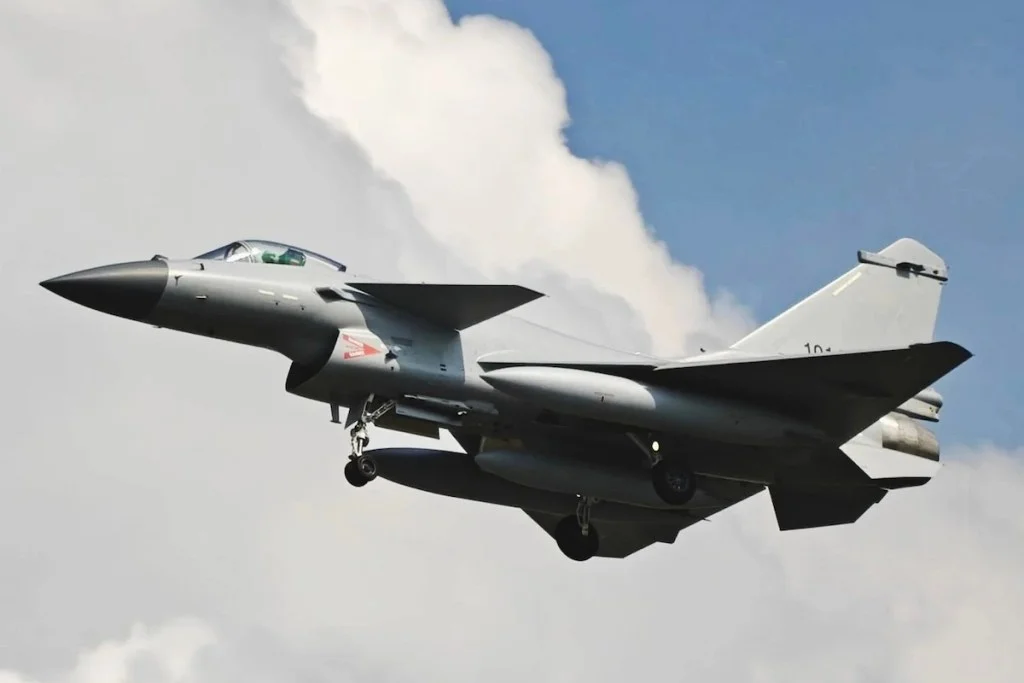
Uzbekistan has officially acknowledged the deployment of Chinese J-10CE fighter jets in its air force, confirming months of speculation regarding its military modernization efforts. This move not only upgrades Tashkent's aging air fleet but also marks China's entry into a critical defense market long dominated by Soviet and Russian aircraft.
Now the second foreign operator of the J-10CE after Pakistan, Uzbekistan showcased at least six aircraft during the recent Independence Day celebrations, providing undeniable proof of the acquisition. However, the implications extend beyond mere procurement; it signifies a substantial shift in the region’s defense procurement practices.
Breaking Away from Tradition
Uzbekistan’s aerial capabilities have historically relied on Soviet-designed MiG-29s, Su-27s, and Su-25s. The introduction of the J-10CE introduces a new supplier, different operational protocols, and a new ecosystem for weapons and maintenance, which contrasts sharply with its Soviet-era roots. This transition raises the question of whether China can establish itself as a credible alternative in the competitive global arms market.
China's initial breakthrough in arms exports came through Pakistan, which began integrating the aircraft into its air force in 2022. Uzbekistan's purchase now presents a unique challenge and opportunity, marking a significant venture into a market that has preferentially relied on Russian military hardware for decades.
China’s Strategic Advantages
Central Asia has traditionally been under Russia's influence, as Soviet-era military equipment has fostered sustained reliance on Russian-manufactured parts, maintenance, and training. However, recent geopolitical shifts have opened doors for diversification. In light of the events surrounding the Ukraine conflict, Russian arms exports diminished between 2016-2020 and 2021-2025, pushing countries to consider alternatives.
While Russian equipment remains entrenched in Central Asian militaries, China's strategic engagement in defense and economic relations with Uzbekistan bodes well for its prospects as a supplier. The J-10CE deal enhances these existing ties, expanding into more specialized military realms.
The Influence of Pakistan
The successes of the J-10CE in Pakistan offer Uzbekistan a valuable reference point for potential operational efficacy. Continued assessments of the fighter's performance—especially during the May 2025 India-Pakistan conflict—have attracted international interest, although claims of losses remain politically contentious and should be treated cautiously.
Crucially, the procurement of advanced aircraft isn't merely a transaction of airframes; buyers look at operational support, integration with existing systems, and long-term maintainability. This growing operational visibility functions as a marketing tool for the J-10CE, thereby enhancing its appeal to prospective buyers, including Uzbekistan.
Future Prospects Beyond Central Asia
Attention is now focused on other potential markets for the J-10CE, notably Bangladesh, which is considering acquiring the fighter as it works to modernize its military. Bangladesh already operates a variety of Chinese military equipment, making this transition relatively smooth and signaling China's capacity to expand its reach beyond Central Asia.
If the J-10CE successfully finds buyers in diverse environments like Pakistan, Uzbekistan, and Bangladesh, it could demonstrate China's ability to compete across differing defense landscapes, which would increase pressure on Russian manufacturers traditionally seen as dominant in those markets.
A Changing Arms Market
While it's unrealistic to anticipate China simply replacing Russia in Central Asia's arms market, the trend is clearly shifting toward diversification. Countries like Turkey are making significant strides in defense capabilities, particularly through drone technology, further complicating the existing dynamics where Russia enjoyed historical monopolies.
Uzbekistan's acquisition of the J-10CE contrasts sharply with previous tendencies; while China has already supplied various military equipment to Central Asia, delivering a sophisticated fighter jet signifies a landmark evolution in regional procurement strategies.
For Uzbekistan, diversifying suppliers means enhanced choices for military modernization. For Russia, this signals a new competitive landscape where its historical advantages may no longer secure future contracts. For China, the J-10CE sale to Uzbekistan represents more than just a fighter sale; it illustrates an entry into previously Soviet-dominated markets, laying the groundwork for potential growth beyond a narrow scope of strategic partnerships.
If future sales expand into other nations, the J-10CE could transition from a simple export success story to a verifiable contender in the global arms market.
Saima Afzal is a researcher specializing in South Asian security and regional geopolitics across the Middle East, Afghanistan, and the Indo-Pacific. She is a research scholar at Justus Liebig University in Germany.
Discussion
Sign in to join the discussion.