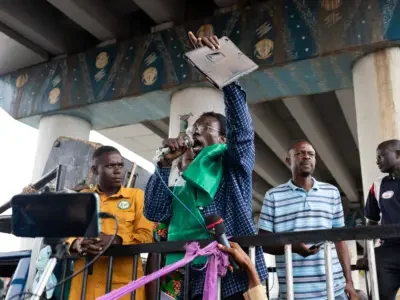
Amidst a backdrop of censorship and fear, Mozambican youth are turning to music as a powerful medium for political expression and social critique.
Political Silence and the Role of Music
In Mozambique, the promise of freedom of expression clashes with reality. While the Law on the Right to Information No. 34/2014 and Article 48 of the Constitution ensure the right to share opinions, the risk of discussing issues like corruption, police violence, and inequality looms large, particularly for the youth. This dissonance underscores a gap between the ideal of democracy and the lived experience. The gap resonates even more when juxtaposed against the fervent activism found in communities, highlighting a divide between what is constitutionally protected and what is practically experienced on the ground. With ongoing struggles against governmental authority, a vibrant culture of music becomes a vital outlet for expression.
Hip-Hop as a Medium of Resistance
Over the past two decades, hip-hop has emerged as a significant outlet for young Mozambicans to articulate their frustrations and challenges, especially in cities like Maputo. Artists are not just musicians; they are chroniclers of a generation facing high unemployment and rampant distrust in government institutions managed by the ruling FRELIMO party. This demographic, often disenchanted by a political system that seems indifferent to their plight, finds their voice through verse, rhythm, and performance. Hip-hop provides a platform because it inherently challenges the status quo, allowing artists to merge personal narratives with broader societal critiques.
Musicians like GPRO and Azagaia use their songs to comment on everyday realities, as demonstrated in Azagaia's thought-provoking track “O ciclo da Censura” (Cycle of Censorship). His question, “Who said that in this country there is freedom of expression?” encapsulates the frustrations many feel. This line does more than question; it serves as a litmus test for the health of democracy in Mozambique. The lyric reflects a deep sense of betrayal among the youth who have grown up with the promise of freedom yet face numerous obstacles to realizing that potential.
Rethinking Citizenship
The youth in Mozambique are redefining political engagement beyond traditional party lines, exploring avenues via feminist groups like the Woman’s Forum, governance monitoring platforms, and artistic collectives. This shift signifies that the younger generation rejects a narrow view of political participation limited merely to elections. Instead, they seek to engage with issues that resonate on a personal level, such as gender equality, economic opportunity, and social justice. This redefinition of citizenship reflects their desire to create a political environment that reflects their lived realities, moving beyond the rigid confines of established political systems.
However, this evolving approach often clashes with an administration that views protests as disturbances. An example is the 2016 protests against the ban of miniskirts in schools, which was framed as a response to sexual harassment but shifted blame onto students’ attire. The protests highlighted deeper societal issues, revealing that women's autonomy and identity are frequently under threat in societal discourse. The government’s crackdown on these movements can be seen as an attempt to suppress voices that challenge its rigid norms.
The Political Weight of Silence
In recent years, official censorship in Mozambique may not always be overt, yet fear and self-censorship persist. Azagaia noted in a 2010 interview that economic insecurity is a more significant barrier to free expression than overt threats from authorities. With many jobs tied to political allegiances, young voices often hesitate to speak out. It’s this dynamic that creates an environment where silence becomes a protective shield—an unconscious survival mechanism for many.
This leads to what can be termed an "economy of silence," where journalists, artists, and activists self-censor as a means of self-preservation. As many navigate their precarious situations, protest music emerges as a critical voice, breaking the silence and fostering a community where experiences of injustice can be shared. In this space, art becomes not just a method of expression but a lifeline. The struggle for voice fuels creativity, and in turn, that creativity offers hope for collective resistance.
The Illusion of Freedom
While the Mozambican Constitution guarantees freedom of expression, true democratic engagement depends on real conditions enabling that freedom. The disparity between the written promise of freedom and the actual environment further complicates the scenario. Citizens are led to believe in their right to speak freely, even as economic barriers and informal surveillance systems curtail their participation. It’s a classic case of misalignment, one where official narratives often conflict with grassroots realities.
For young activists and artists, increasing visibility comes with heightened risk. Intimidation and economic sanctions loom large, creating a paradox where those who seek to amplify their voices must also navigate growing threats to their well-being. Their efforts to amplify marginalized voices signal a critical shift in the political narrative. The narrative is shifting, yes, but at what cost to the individuals pushing for change?
Creativity as Hope
Despite numerous obstacles, youth are carving out fresh avenues for political expression through art, music, and digital platforms. For them, citizenship transcends legal definitions; it's an everyday exercise of engagement and resistance. The key issue for Mozambique isn’t whether young people can voice their thoughts; it’s whether they can do so without jeopardizing their safety, employment, or public participation. This ongoing battle exemplifies the tension between expression and oppression.
This landscape of art and activism reveals that the ethos of free expression must evolve beyond legislation, promoting an environment where all voices can be heard and engaged without fear. If you're working in this space, it’s clear: the resilience shown by Mozambican youth indicates not just a desire for change but a commitment to forge a future where expression is both free and fearless. The roads may be fraught, but so is the resolve of those who walk them. After all, hope is crafted from creativity.
Discussion
Sign in to join the discussion.