Trump will now fund political TV ads through his super PAC rather than taxpayer dollars, responding to bipartisan backlash.
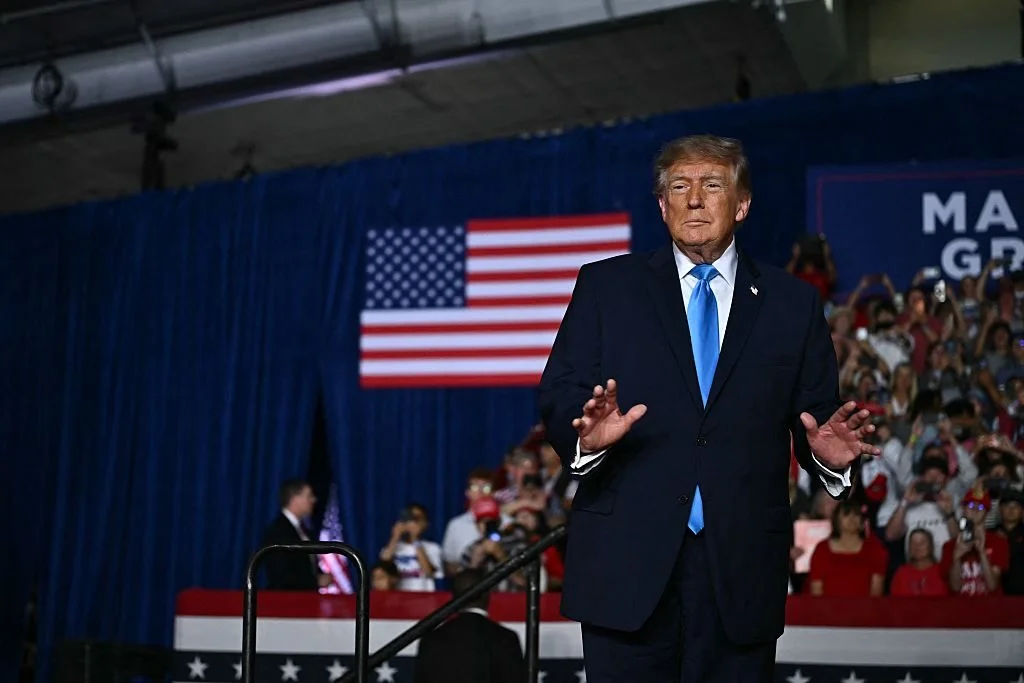
In a surprising turnaround, President Trump announced that political television advertisements promoting himself and his administration will no longer be funded by taxpayers. This shift comes after widespread criticism from lawmakers across party lines regarding the use of public funds for such ads.
Change in Funding Strategy
On his platform Truth Social, Trump revealed plans to finance the ads with contributions from his super PAC, MAGA Inc., instead of utilizing tax dollars. “The Radical Left is upset with the fact that I am taking Ads, which I consider to be a positive promotion for our Great U.S.A., and paying for them with U.S.A. money,” he stated, expressing his intention to continue these promotions. This pivot marks a significant departure from prior practices, where taxpayer funds played a notable role in advertising directed at promoting his political agenda.
This move raises questions about the ethics of political advertising, particularly when taxpayer money is involved. The reliance on private contributions through a super PAC could be seen as Trump's effort to distance himself from allegations of misuse of public funds. After all, super PACs are allowed to raise and spend unlimited amounts of money, pushing the boundaries of traditional campaign finance. This shift may also resonate with his base, particularly those who feel that government resources should not be spent on political promotions.
Legislative Backlash and Political Accountability
The government had previously funded the promotional content using resources allocated to the Department of Homeland Security under last year’s reconciliation law, an approach that faced significant pushback. Lawmakers Patty Murray (D-Wash.) and Christopher S. Murphy (D-Conn.) labeled the initial funding method as an “illegal and a shockingly corrupt misuse of taxpayer dollars” in a recent letter addressing the issue. This bipartisan criticism underscores the growing concern over how public funds are deployed, especially for what many perceive as political advertising rather than substantive public service announcements.
The backlash led to the introduction of legislation aimed at curtailing the use of taxpayer money for such endeavors. Democratic appropriators put forth measures to withhold funding from the Office of Management and Budget for advertising purposes. This is not just an attempt to legislate but also serves as an important statement about accountability in government spending. The potential passage of such legislation could set a precedent for stricter oversight of funds, echoing a broader demand for transparency in government practices.
The Nature of the Advertising Content
These ads bore the label “Paid for by the US Government” and aired during high-profile events like college football and NFL games. Among the content was an ad featuring UFC President Dana White, who praised Trump with the slogan, “America will never be a communist country.” Another advertisement closely mirrored messaging previously used in Trump’s 2024 campaign. This kind of content not only promotes Trump's brand but also positions it against a backdrop of political polarisation, underscoring a narrative that appeals to fears of governmental overreach.
It’s not just the content but the timing and placement that raises eyebrows. Airing ads during widely viewed events suggests a calculated effort to capture the attention of a diverse audience. These strategic decisions could spark discussions about the kinds of messaging that get airtime and the implications they have on public perception. If you're working in this space, you might find it troubling that political content is sliding into mainstream entertainment without clear boundaries.
Redirecting Taxpayer Funds
Notably, the administration redirected $20 million from funds intended for Customs and Border Protection into a designated account for “commemorative events” under the reconciliation law, which then financed the advertisements, as revealed in a Sept. 19 apportionment report. This redirection of funds raises significant ethical questions and sheds light on the administration’s approach to budgetary allocations.
This move could be seen as an attempt to obscure the original source of funding, further aggravating lawmakers who believe such actions contribute to a culture of impunity in governmental financial decisions. Whether this was a strategy aimed at appeasing critics or simply a way to circumvent legislative barriers remains to be seen. What this means for you is that the handling of taxpayer money will likely be scrutinized more than ever, particularly if politicians perceive a clear path to public backlash.
Future Outlook: Implications for Political Advertising
The decision to cease taxpayer funding for political ads poses significant implications for the future of political advertising in the U.S. As campaigns increasingly turn to alternative funding sources, there’s likely to be an evolution in how political messaging is presented. Candidates may rely more heavily on super PACs, enhancing the role of dark money in politics. The delineation between campaigning and governance could blur even further, enabling candidates to bypass traditional financing avenues.
Moreover, this pivot could lead to a rise in aggressive messaging strategies, driven by funding from entities that prioritize political loyalty over fiscal responsibility. The landscape of political campaigns will probably undergo a transformation as the influence of money from well-heeled donors becomes more pronounced in shaping narratives. This trend warrants caution as voters might be inundated with increasingly polarizing content that prioritizes spectacle over substantive discussion.
The ramifications might extend beyond the current administration. If this model proves successful or politically expedient, it could set off a broader movement among candidates across the political spectrum. The financial dynamics of campaign advertising in the U.S. may change permanently, with implications that aren't entirely predictable or beneficial for democratic discourse. And that's something every voter should be mindful of as we navigate this shifting terrain.
Discussion
Sign in to join the discussion.