Ukrainian small businesses, particularly those led by women, showcase resilience and adaptability amid ongoing war challenges, redefining economic survival.

Small enterprises often embody autonomy and resilience for households in Ukraine. This is reflected in the experiences of local entrepreneurs.
Originally published on Global Voices

Kramatorsk’s Pink Coffee Shop. Photo by Victoria Belim-Frolova. Used with permission.
The ongoing conflict in Ukraine significantly disrupts various sectors, with small businesses feeling the strain. Despite severe infrastructure damage, supply chain issues, labor shortages, and financing obstacles, a notable segment of these businesses—especially those led by women—has shown remarkable resilience.
A UNDP study highlights that a staggering 83% of small businesses have been adversely affected by the war. Interestingly, since the onset of the full-scale invasion, women have increasingly taken the entrepreneurial plunge, often due to circumstances such as displacement, loss of household income, and the need for flexible work—in many cases, coupled with caring for families.
Statistics reveal that nearly 60% of newly registered sole proprietors in the first quarter of 2026 were women, a significant rise from about 49% when the conflict began. By 2025, women were at the helm of 12,757 new businesses, constituting 34% of all startups during that year. Reports indicate that women now lead approximately 32% of registered businesses in Ukraine.

Victoria Belim-Frolova. Personal archive. Used with permission.
According to Viktoria Belim-Frolova, a journalist who has been actively reporting on the war and its impact on women, the challenges precipitated by the conflict have led to a fervent spirit of adaptation among local businesses. “War can destroy a business quickly, but it also creates a constant process of adaptation,” she notes.
Belim-Frolova emphasizes that many businesses have refused to capitulate. Instead, they are modifying operations by relocating, downsizing, or altering their offerings to thrive under extreme stress.
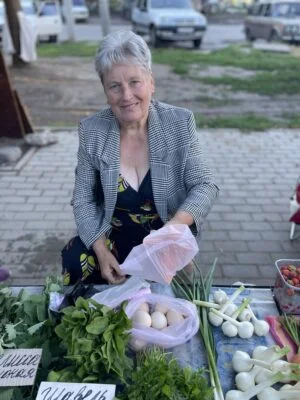
Kramatorsk’s Pink Coffee Shop. Photo by Victoria Belim-Frolova. Used with permission.
The Resilience of the IT Sector and Online Crafts
Despite the palpable economic strain induced by war, some sectors have displayed unexpected tenacity. The IT industry, previously a beacon of Ukrainian success, continues to adapt, showcasing resilience amidst turmoil.
Belim-Frolova also highlights the evolution of the online craft market, which has historically been female-dominated. Contrary to the belief that it might fade away, online commerce has provided small Ukrainian artisans a lifeline, granting them access to global customers, even when local markets have diminished. This growth presents unique opportunities for artisans producing ceramics, jewelry, and handmade goods, allowing them to reach markets far beyond Ukraine.
Nonetheless, logistical disruptions, power outages, and the psychological toll of operating a business amid ongoing war are notable challenges. The adaptability of these small-scale enterprises is noteworthy—they operate efficiently within these constraints, revealing the backbone of the economy amid chaos. Much of the conversation about Ukraine’s economic landscape tends to focus on larger metrics, but it is these smaller enterprises that signify grassroots resilience.
Community Dynamics and Social Infrastructure
Belim-Frolova's narratives underscore how crucial small businesses are to the social fabric of communities. For example, she recounts the story of Anastasia, an 18-year-old in Mykolaivka, who has become the last manicurist in her locality. This anecdote illustrates how small businesses can foster community ties and individual well-being amidst strife.
Women flock to Anastasia’s services, traversing perilous routes to indulge in this semblance of normality. These visits transcend mere cosmetic needs; they symbolize self-care and social connection, serving as essential outlets for women caught in a context of fear and uncertainty.
Belim-Frolova's observations shed light on the broader implications of decline in local businesses: places for connection, normalization, and social exchange vanish. The struggle for economic survival becomes intertwined with the diminishing capacity for community engagement and support networks.
Poverty, Mental Health, and the Burden on Women
The consequences of poverty during wartime extend beyond financial deprivation. They result in diminished choices and constricted horizons. Belim-Frolova eloquently articulates that as communities grow poorer, residents find their options severely limited—from postponing medical care to decreasing food quality.
Women often shoulder the extra burden, balancing home management and employment while coping with their partners serving in the military. They become primary caregivers while striving to maintain some semblance of financial stability, placing an increasingly overbearing weight on their shoulders.
The deterioration of community wealth takes a toll on mental health; as familiar spaces close and social interactions dwindle, the social fabric frays, further exacerbating isolation and despair.
Resilience Through Small Actions
Belim-Frolova expresses a nuanced perspective on hope, one rooted not in a distant endpoint but in the ongoing efforts of individuals navigating adversity. She emphasizes that in Kramatorsk, communal exchanges continue—people share resources and support each other, all while facing immense challenges.
The narrative of resilience in Ukraine is not simply about survival; it encompasses the small yet significant actions that enable ordinary life to persist. Despite the immense hardships, communities display a relentless spirit of resourcefulness—transforming small businesses into vital support mechanisms for families and neighborhoods.
In Belim-Frolova's view, these small-scale enterprises embody independence and survival, serving critical functions that go far beyond monetary value. As the war persists, it becomes increasingly clear that the resilience of Ukrainian women and their businesses remains a cornerstone in keeping hope alive for their communities.
Discussion
Sign in to join the discussion.