As governments intensify penalties against climate activists, the right to protest faces increasing pressure, threatening fundamental democratic freedoms.
Climate activists find themselves increasingly vulnerable to state suppression
Originally published on Global Voices
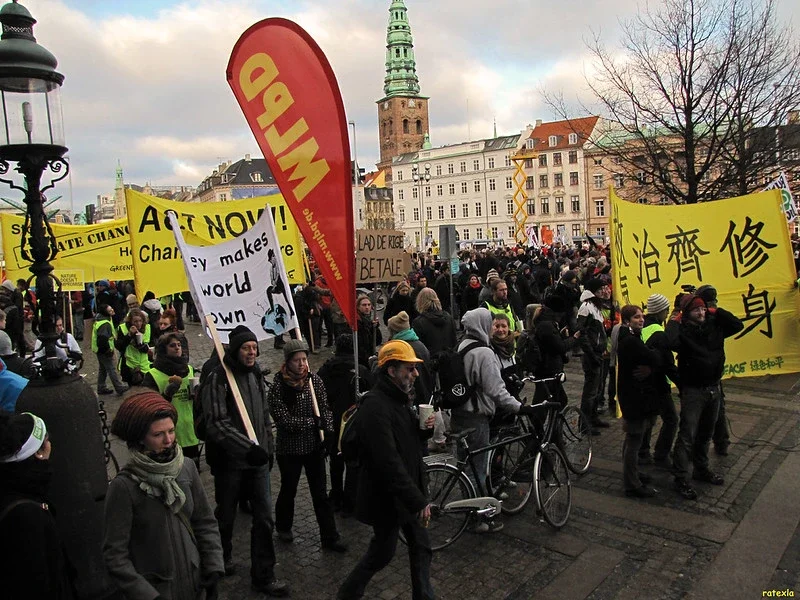
A climate protest in Copenhagen. Image from Flickr. CC BY-NC-ND 2.0.
This article is part of Global Voices’ September 2026 Spotlight series, “Protest in Democracy,” which examines the many forms of protest and the tactics states use to suppress them.
Criminalization of Protest: A Trend Across Europe
Recent analysis reveals a troubling trend: across Europe, governments are increasingly applying criminal laws against climate activists. This shift highlights a disturbing strategy among policymakers to quash dissent under the guise of maintaining public order. A comparative study released in late 2025 encompassing 14 countries from both the Global North and South confirmed that the repression of protests is part of a broader pattern. Arrests, new anti-protest legislation, and the abuse of existing laws are prevalent tactics employed by authorities. Activists face heightened surveillance, harassment, and public vilification, compounding the risks associated with their efforts.
The statistics reflect the gravity of this situation. For instance, protests in the UK have an arrest rate of 17.2%, significantly higher than the international average of 6.3%. Meanwhile, in Berlin, the public prosecutor initiated 5,681 legal proceedings involving the climate movement known as the Last Generation between January 2022 and October 2025, though almost half of those cases were ultimately dropped.
Recent Developments: Cases of Arrests and Convictions
The trend of criminalization appears to have accelerated in 2026. Notably, a French appellate court upheld the convictions of four environmental activists involved in an unauthorized protest against agricultural policies aimed at large water reservoirs in Sainte-Soline. Similarly, in Turkey, environmentalist Esra Işık was sentenced to over two years in prison after participating in a peaceful protest against coal mining expansion, following 42 days in pretrial detention. In Australia, the situation worsened when 138 protesters were arrested for obstructing a coal ship from docking, highlighting the growing global crackdown on climate activism.
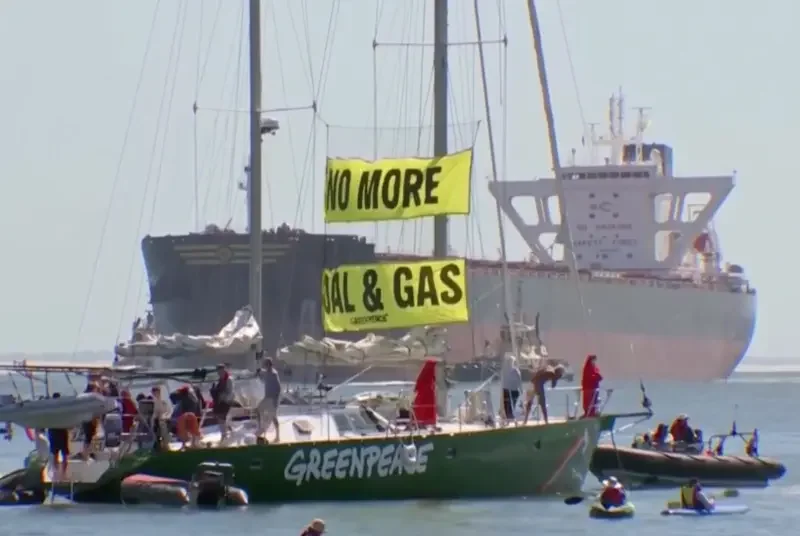
In Australia, 138 people were arrested for preventing a coal ship from docking at a busy port. Screenshot from YouTube.
International Human Rights Perspectives
Contrasting with these national-level crackdowns, international human rights advocates are pressing for greater protections for peaceful protesters. In October 2025, Michel Forst, the UN Special Rapporteur on environmental defenders, introduced Guidelines on the Right to Peaceful Environmental Protest and Civil Disobedience. These guidelines emphasize the need for states to respect civil disobedience and ensure that any sanctions against peaceful protesters are proportionate and necessary. Interestingly, support for these guidelines was reiterated in March 2026 by several Special Rapporteurs of the UN Human Rights Council.
The Role of the European Court of Human Rights
Amid this evolving context, developments at the European Court of Human Rights (ECtHR) warrant close scrutiny due to its critical role in shaping the standards for protest and political expression within Europe. The Court has previously ruled in cases like Bryan and Others v. Russia and Friedrich and Others v. Poland, affirming the rights of climate activists confronted by state repression. In contrast, the recent ruling in Ludes and Others v. France revealed a more complex landscape. This case involved activists who temporarily removed presidential portraits from town halls, arguing their actions symbolized climate inaction. Yet, the Court distinguished between their removal and retention of the portraits, allowing the activists' convictions to stand.
While the majority found that taking down the portraits constituted a communicative action, thus justifying potential penalties, dissenting judges warned against too readily applying criminal law against peaceful expression. Although the Court recognized the peaceful intent and political message behind the activists' actions, it still affirmed the legitimacy of criminal convictions, raising important questions about the extent of protections afforded to dissenting voices that disrupt social norms.
The Costs of Protest
Protest encapsulates fundamental democratic rights: the freedoms of speech and assembly. Yet its importance stretches beyond these rights; protest serves as a mechanism for citizens to challenge authorities and amplify issues that may be overlooked between elections. Protecting rights historically established through protest is essential for social progress, yet the ramp-up in criminalization signifies a worrying trend. A state can undermine the right to protest without outright abolishing it; the deterrent effect of potential arrest, fines, and lengthy legal battles can dissuade citizen engagement.
Since the mid-20th century, Europe has gradually fortified those protections for dissent and assembly. However, the present surge in criminalization may subtly erode this hard-won legacy. Sets of legal judgments like Ludes might seem isolated, focusing on a few activists, but their implications extend far, shaping future protest dynamics. The reality is that the ongoing criminalization of protest necessitates vigilance—not just in legislative actions, but also in how courts interpret and uphold principles supporting democratic dissent.
Discussion
Sign in to join the discussion.