Two hundred priests marched to the Vatican, urging acknowledgment of genocide in Gaza and calling for justice for affected children.
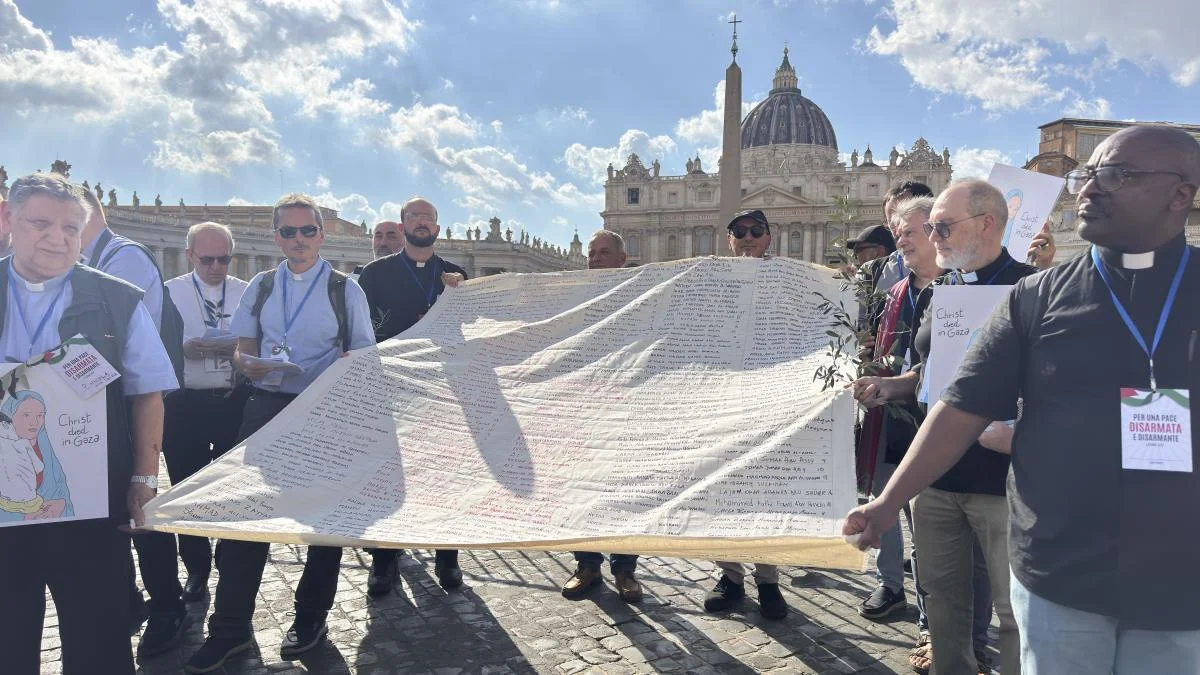
While the Vatican has treaded lightly around the term “genocide” regarding the violence in Gaza, recent events have prompted a bold stance from some clergy. Pope Francis once suggested the situation in Gaza might display "the characteristics of a genocide," yet hesitated to commit to definitive language. His successor, Pope León XIV, has similarly avoided the term despite advocating for international law adherence.
Clergy Take a Stand
This cautious approach to language reflects a broader trend in institutional religious responses to global conflicts, particularly those involving loss of civilian lives. The term "genocide" is laden with legal and historical implications, which can complicate diplomatic relations and influence public perception. By choosing their words carefully, Vatican officials tread a line between moral leadership and geopolitical diplomacy. It's a delicate balance, but some clergy are pushing for a more straightforward condemnation.
Against this backdrop, around 200 priests took a decisive stand just outside St. Peter's Basilica. During their demonstration on Via della Conciliazione, they recited the names of 309 children who lost their lives in Gaza, transforming mere numbers into a poignant reminder of individual suffering. This act of publicly naming the deceased is not only a form of mourning but also a powerful statement against indifference. Each name represents a loss, a family shattered — the priests sought to ensure that these lives were not forgotten.
The march, organized by the international network "Priests Against Genocide," wound through prominent areas of Rome, including stops at the diplomatic missions for Palestine and Lebanon. This wasn't merely a protest; it was a strategic move to raise awareness directly where policymakers operate, emphasizing that clerical voices are integral to the conversation surrounding international humanitarian crises.
The Symbolism of Olive Branches
Participants carried olive branches, donned Palestinian kufiyas, and wrapped a large white shroud emblazoned with the names of the lost children. Many held signs bearing the phrase “Christ has died in Gaza.” The olive branch, an ancient symbol of peace, juxtaposed against the reality of violence highlights the clerics' mission: to advocate for a cessation of hostilities while reminding the world of its moral obligations toward the helpless. The protest commenced with a prayer at Santo Spirito in Sassia Church, amplifying the urgency of their cause.
This combination of symbolism and ritual serves to elevate the message beyond mere protest. It transforms the event into a sacred observance, reinforcing the view that justice is not only social but deeply spiritual. The imagery employed during the demonstration pulls at moral and emotional strings, garnering wider sympathy and understanding while invoking a rich tradition within Christian Faith centered on compassion and justice.
A Call to Action Through Music and Prayer
A Musical Tribute
Among the demonstrators was Father Xavier Morlans from Barcelona, who composed a song dedicated to Taybeh, a Christian town in the West Bank. "We offer this prayer for all the children who died after the ceasefire. No to fear. May justice illuminate the leaders so they can abandon their deadly plans," he emphasized. His artistic contribution is emblematic of how clergy are embracing various forms of expression to convey their message. Music, often a unifying force, serves here to not only memorialize the children but also inspire collective action among the faithful.
Morlans condemned the actions of Hamas on October 7 but felt it imperative for the clergy to publicly address the ongoing situation in Gaza. "As priests of the Catholic Church—not driven by ideology but by the Gospel—we have a duty to proclaim this is genocide and to say enough is enough," he declared. This statement encapsulates a growing sense of urgency among clergy to confront the complex realities of violence, merging faith with action. It signals a shift from passive observation to active advocacy, where moral imperatives drive public discourse.
Highlighting the Arms Trade
The march ultimately concluded at the headquarters of Leonardo, a major Italian defense firm. Organizers chose this location to spotlight the role of arms production and trade in perpetuating violence. By directly confronting a significant player in the arms market, the priests made a bold statement about accountability and the moral responsibilities of states and corporations. The connection between arms sales and conflict is well-documented; this protest sought to expose the ethical dimensions of profit gained at the expense of human life.
Growing Movement and Broader Implications
The "Priests Against Genocide" movement has made significant strides since its inception a year ago, boasting over 2,500 members—including priests, religious leaders, and bishops across 67 countries. Participants aim not to incite division but to unify voices within the Church against the suffering of the Palestinian people and to call for justice in these turbulent times. This movement is increasingly relevant in an interconnected world where clergy across borders express solidarity against violence.
If you're working in this space, take note: the clerical push towards activism might resonate beyond religious circles. Their commitment to human rights could inspire other faith-based organizations to engage more concretely with secular movements for peace and justice. What's at stake here isn't just the suffering of one community; it's about redefining the role of religious institutions in global humanitarian efforts—an evolving conversation that challenges traditional boundaries.
The Future Outlook
This growing movement has potential ramifications that stretch well beyond the immediate concerns of the Gaza conflict. As religious leaders become more vocal in political matters, the potential for ecumenical support increases. Other faith traditions may find common cause, and the dialogue could expand into broader discussions about human rights, social justice, and peacebuilding efforts. This is significant territory for the Church, which has often been seen as conservative, to evolve actively. The clergy's public outcry might well be a harbinger of change, not just in rhetoric but in action.
And yet, the challenge remains: can they influence policy or merely raise awareness? Only time will tell. But one thing is clear—the stakes of this movement extend far beyond the borders of Gaza and touch upon the global fabric of human rights advocacy.
Discussion
Sign in to join the discussion.