Real Madrid's current season reflects tactical stagnation, revealing flaws in their strategy and execution since Mourinho's return.
Florentino Pérez, the president of Real Madrid, has placed significant faith in José Mourinho to revitalize a squad filled with star power, featuring talents like Kylian Mbappé, Vinícius Júnior, and Jude Bellingham. Yet, early season performances indicate a concerning trend: the team is struggling with tactical stagnation rather than merely issues of authority or motivation. This raises questions about Mourinho's ability to adapt his strategies to fit modern football dynamics.
Stagnation in Tactics
Real Madrid's current tactical framework has conspicuously remained grounded in a hybrid approach, leaning heavily on its offensive prowess while still emphasizing quick transitions. Historically, this blend produced remarkable success; during Mourinho’s first stint with the club in the 2011-2012 season, Madrid thrived primarily through rapid counterattacks, scoring an impressive number of goals in this manner. But now, over a decade later, that model appears stagnant, lacking the innovation needed to keep pace with evolving defending strategies across Europe. Opposing teams have become far more adept at countering high-pressure tactics, making Madrid's once-astounding counterattacks predictable and easily defendable.
Lack of Control in Play
The ongoing transition from legendary midfielders Toni Kroos and Luka Modric has left a significant void in playmaking capabilities within the squad. As a result, Madrid has found itself increasingly incapable of dictating tempo or maintaining meaningful possession in the midfield. While players like Bernardo Silva and Arda Güler have been brought in as potential replacements, their contributions have fallen short of expectations. The emphasis on rapid ball delivery to attacking players has further severed connections in the midfield, leading to disjointed offensive play and ineffective possession strategies. As of the seventh match of the season, Madrid has only managed to rank sixth in La Liga for possession, hovering around 52.3%. That's markedly lower than their historical averages and paltry when compared to rivals like Barcelona and Atlético Madrid.
Collective Pressing Failures
Another alarming aspect of Madrid's current performance is the lack of an organized pressing system, an area where Mourinho enjoyed considerable success during his first tenure. This return, however, isn't marked by improved teamwork in pressing; there seems to be a disconnect, particularly among forward players like Mbappé and Vinícius, who seem more focused on individual brilliance than on collective defensive responsibility. While there are moments when Madrid displays willingness to apply a high press, the execution lacks the consistency necessary to disrupt opponents effectively. Too often, rival teams can complete multiple passing sequences unchallenged, allowing them to dictate the rhythm of the game.
Weak Defensive Structure
The defensive side of Madrid's game is equally troubling. A lack of stability is evident through poor positioning and excessive gaps between defenders. This weakness was glaringly highlighted in a recent match following Huijsen’s expulsion, which created even more controversy and potential embarrassment for Mourinho. Teams have found it alarmingly easy to exploit these gaps, resulting in Madrid allowing an average of 12.7 shots per game, ranking them eighth in that category. This level of defensive frailty isn't acceptable for any team aiming to compete at the highest levels of football in Europe.
Easy Target for Quality Opponents
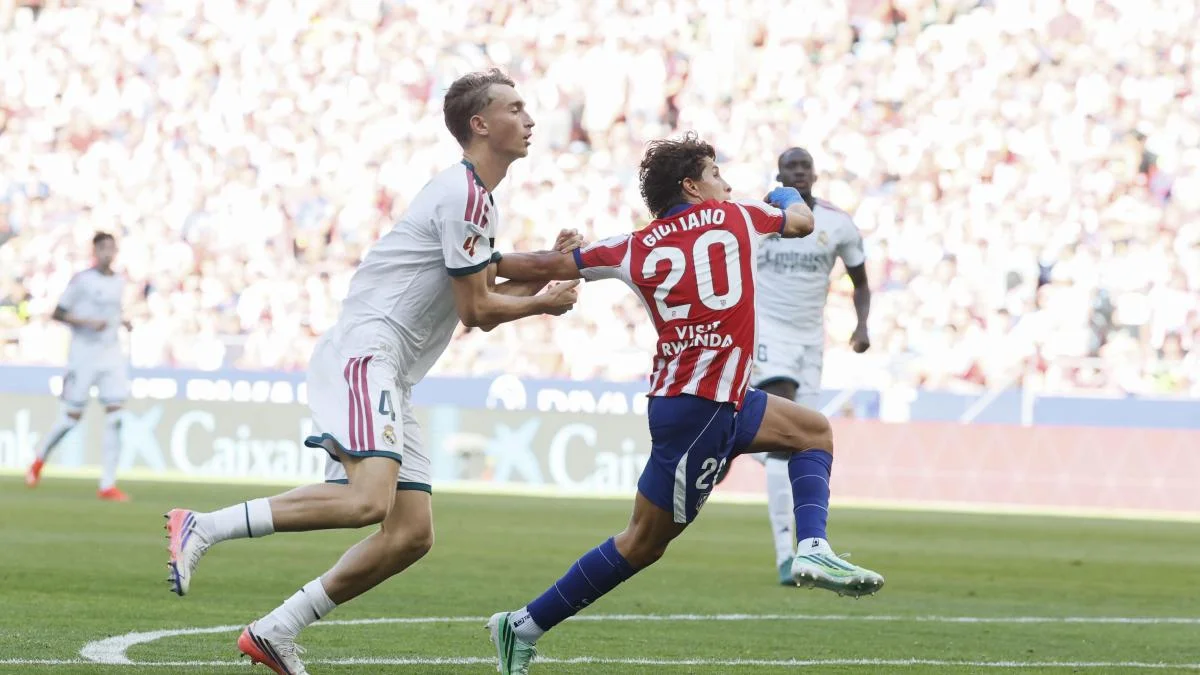
All of these systemic issues render Real Madrid particularly susceptible to high-quality opponents who can easily exploit these defensive and tactical shortcomings. Take their match against Inter Milan in the Champions League as a telling example; despite securing a win, they ceded over 64% possession and faced a staggering 21 shots throughout the game. Similarly, in the recent derby with Atlético Madrid, they struggled to regain control, with Atlético holding a significant 58% possession. Those statistics don’t inspire confidence. The underlying problems within the squad not only raise eyebrows but also cast doubt on their capabilities to effectively compete against elite adversaries.
Implications and Future Outlook
So, what does this mean for Real Madrid going forward? If you're working in this space, consider the potential ramifications of such poor early-season form. The club must not merely revise its tactical approach; it requires an entire philosophical overhaul. Mourinho’s methods, while once effective, may need updating to suit the modern game. Although the board has shown faith in him, questions about his adaptability will persist until noticeable progress is made. The next few matches will be telling, revealing whether the current players can adjust to new strategies and if Mourinho can embed a system that emphasizes both cohesion and spontaneity.
At this stage, it’s clear that Real Madrid will need an urgent reevaluation of its style of play to reclaim its stature among Europe’s football elite. The club can’t afford to lag behind at this level. That would simply signal complacency in a sport where evolution is the key to endurance.
Discussion
Sign in to join the discussion.