Despite rising dollar demand, Argentina stabilizes its peso thanks to unexpectedly high export revenues from oil and crops fueled by the Iran conflict.
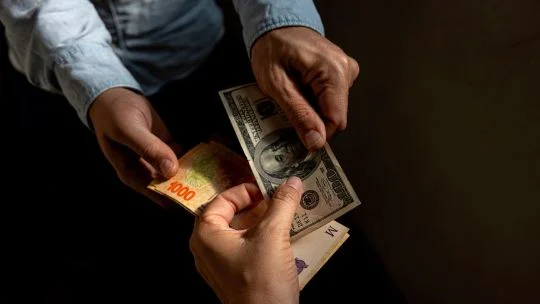
In Argentina, dollar demand is inching back to the peaks seen during last year's market panic, yet President Javier Milei has managed to maintain a semblance of stability for the local currency. The backdrop of conflict in Iran has unexpectedly played a role in this situation, enhancing export revenues that are crucial for the peso's stabilization.
Data from the Central Bank shows that Argentine purchases of US dollars surged by 35% in July, amounting to $3.4 billion, the highest recorded since the last alarming days before the midterm elections. In stark contrast, dollar sales dropped by 13% to merely $608 million.
What's striking is the relative resilience of the peso, a currency notorious for its volatility. Commentators suggest that the surge in oil and agricultural prices—linked directly to the ongoing conflict in the Middle East—has provided an unexpected influx of export dollars for Argentina, allowing it to meet domestic demand and stabilize its currency.
“The war saved us this year,” remarked Sebastián Menescaldi of consultancy Eco Go, emphasizing how the conflict has significantly buoyed prices for Argentina's key commodity exports.
One-time events also contributed to a spike in dollar purchases during July; many Argentines received midyear bonuses, and around 64,000 citizens traveled to the United States, many eager to catch the Argentine national soccer team at the World Cup final.
Beyond hard cash purchases, many Argentines also buy dollars through capital markets, termed 'Dollar MEP' transactions. When these forms of dollar spending are taken into account—alongside credit card expenditures abroad—total demand reached roughly $6 billion in July, according to Central Bank figures.
The official exchange rate has been perceived as relatively cheap recently, bolstered by the peso's modest depreciation against inflation. Despite facing an annual inflation rate of 34%, the peso has only lost around 6% in its value against the dollar over the past year, thanks in part to ongoing foreign exchange interventions maintained by the government.
After Milei’s administration dismantled years of rigid currency controls in 2025, individual Argentines now enjoy the liberty to purchase dollars without limits, a stark contrast to the restrictions imposed on companies. This situation harkens back to the presidency of Mauricio Macri, whose term ended amid economic turmoil in 2019. Although Milei's approval ratings are shaky—slightly more favorable than Macri’s at a similar point—investors appear to be opportunistically buying dollars now, anticipating potential changes in the political landscape.
“Argentines' current behavior is a rational response to the failures of the previous administration,” stated Juan Manuel Pazos, chief economist at One618. “They see this as a crucial moment to buy dollars before the window closes.”
The emerging data illustrates a notable discrepancy; under Macri's administration, dollar purchases and sales were approximately equal. In contrast, with today’s partial restrictions on dollar sales, individuals are only selling about 20% of the dollars they are buying.
As Gabriel Caamaño of consultancy Outlier pointed out, the ongoing dollar purchases reflect an apprehensive sentiment within the market. Although the situation appears stable for now, concerns linger about the sustainability of the current economic model.
Currently, the dynamics seem favorable. Export flow remains strong, thanks in part to abundant dollar influx from both corporate and provincial debt issued abroad. The peso showed minimal weakening in July and August, losing just 1.5% in value, while foreign reserves increased by $5.9 billion during these months to surpass $50 billion. This growth has been supported by Central Bank interventions and loans from international financial institutions.
Looking ahead, the seasonal nature of agricultural dollar inflows raises questions about future market conditions. As Argentina approaches the 2027 presidential election, uncertainty generally heightens demand for dollarization among citizens, increasing fears around potential economic instability.
So far, the market is adequately supplied with dollars, and many investors are banking on Milei's re-election. Yet sudden shifts in electoral forecasts present a tangible risk. “The belief that Milei will secure another term contributes to the current stability,” concluded Pazos. “However, given Argentina’s unpredictable economic history, saving in dollars remains a popular hedge.”
Discussion
Sign in to join the discussion.