Marco Bechis returns to themes of Argentina's dictatorship with "Ritorno a Buenos Aires," exploring survivor trauma through the story of Mariano Guerra.
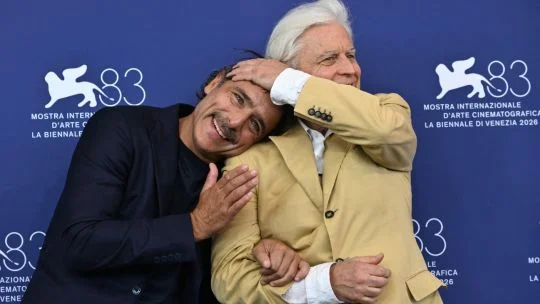
More than two decades after his acclaimed film Garage Olimpo, Marco Bechis revisits the profound impact of Argentina's dictatorship in his latest feature, Ritorno a Buenos Aires, currently showcasing at the Venice Film Festival. This film holds a mirror to not only personal histories but collective memories that still resonate within Argentine society. The haunting echoes of a dark past propel Bechis's narrative, making it more than just cinematic storytelling; it's a crucial exploration of trauma that continues to shape identities and cultures today.
The Narrative Focus: A Personal Journey
This film centers on Mariano Guerra, an Italian physician who, after over 30 years abroad, returns to Buenos Aires to give testimony against the military officers responsible for his captivity and torture. His journey isn't merely about reclaiming his voice; it’s about confronting a deeply troubling chapter marked by state-sponsored violence. Bechis's choice to focus on Guerra is clever because it represents a broader struggle faced by many who were unjustly affected by the regime. It’s as if Guerra embodies the burden of truth-telling in societies where silence often reigns.
Bechis's own past finds resonance here. He draws heavily from his experiences, infusing the narrative with authenticity. In 2020, he returned to Argentina to provide testimony about his own detention in 1977 at an underground concentration camp. This personal connection amplifies the emotional weight of the film, as Bechis channels years of pain and reflection into the character's plight. The choice of this specific timeframe reveals how trauma can linger long after physical wounds have healed, echoing the notion that healing often demands external acknowledgment.
The Survivor's Dilemma
Mariano Guerra's character wrestles with his past as he considers returning to a place filled with painful memories. His extended captivity—over two years—informs his conflicted views about confronting those who once harmed him. This dilemma isn't just Guerra's alone; it speaks to a universal struggle that many survivors face. The emotional and psychological scars, compounded by public perception and societal justice, create a landscape fraught with tension. It reflects the complicated relationship survivors have with their traumas and justice—or the lack thereof.
Bechis finds the narrative of the survivor especially compelling, illustrating the complexities survivors navigate. As he explained, “Guerra had to cooperate within the camps to basically stay alive while also betraying his fellow prisoners.” This duality creates a tension in which some may view him as complicit with the enemy, contrasting survival with moral struggle. The film exposes the harsh reality that survival often doesn’t equate to virtue; those who lived through harrowing experiences may carry guilt and shame—a layered conflict that demands exploration.
(And this is the part most people overlook) The director pointed out a painful reality: many survivors aren't seen as genuine victims. If you're working in this space, consider the stigma attached to survival rather than martyrdom. "There’s a stereotype that survivors, unlike those who disappeared or died, enjoyed a stroke of luck simply by living through the ordeal," he noted, emphasizing the psychological struggles they endure. This perception often diminishes the experiences of survivors, presenting them as mere anecdotes rather than catalysts for understanding the depths of human suffering.
In creating Guerra’s journey, Bechis synthesized multiple accounts rather than basing it on one individual’s experiences. This choice effectively underscores that the narrative, while richly informed by reality, is a collective reflection of trauma. By weaving together various stories, he creates a mosaic that invites viewers to grapple with the implications of a shared yet fragmented past—a reminder that healing is rarely a solo endeavor.
Choosing the Right Actor
To embody the complex protagonist, Bechis selected Adriano Giannini, an actor he felt connected with emotionally. Giannini’s ability to channel the character’s essence is pivotal for the film’s success. “He's absorbed the character’s nuances without necessitating exhaustive background explanations,” Bechis recalled. The choice of an actor who can resonate with viewers on an emotional level is particularly significant; this could easily dictate how audiences perceive the journey of Guerra—from survivor to accuser.
This film is produced as a Brazilian-Italian collaboration, shot in Porto Alegre and Turin, with Buenos Aires serving as a backdrop. Bechis expressed concerns about working in a country he feels is governed by authoritarian forces. “The environment is such that I found it unfeasible to create under the current regime,” he said. This self-imposed exile from his homeland reflects a deeper unease, suggesting that artistic expression remains heavily influenced by political climates. By opting to recreate Buenos Aires through careful staging rather than filming on location, Bechis underscores the persistent threat of oppression that stifles authentic voices.
The narrative mirrors the essence of clandestine centers that housed victims, utilizing limited actual footage of Buenos Aires streets while relying heavily on staged sets to communicate its themes effectively. This juxtaposition allows for a haunting representation of memory versus reality—how recollections can often feel more significant than the physical spaces they inhabit. It also emphasizes Bechis's skill in using cinematic tools to evoke feelings and provoke thoughts about historical memory.
Exploring Authoritarianism: A Timely Reminder
For Bechis, addressing periods of authoritarianism remains vital today. “In contrast to the mass protests we once witnessed against such regimes, there's a concerning silence now that we must scrutinize," he cautioned. This silence can often be mistaken for acceptance—an acquiescence that history might repeat itself. His film serves not just as a medium for storytelling but as a poignant reminder of the unresolved scars of history and the need for continuous dialogue about the past's impact on present and future generations.
Implications and Future Outlook
The implications of Bechis's work extend beyond the screen, raising essential questions about accountability and collective memory. The absence of robust engagement with historical injustices can pave the way for their repetition. As audiences confront the visceral emotions stirred by Ritorno a Buenos Aires, they're invited to reflect on the broader societal obligations to acknowledge and address past atrocities.
As we witness the emergence of social movements across various regions, films like Bechis's remind us that art can often spark necessary discourse while influencing public consciousness. In a world where authoritarianism still poses a threat, compelling narratives can ignite awareness and mobilization. So, what does this mean for you as a listener or viewer? It signifies a call to action—an opportunity to engage critically with history and its ongoing ramifications.
The importance of truth-telling and survivor narratives persists. The ongoing discourse sparked by such films can shape how societies remember and address their histories. As artists like Bechis continue to challenge the status quo, audiences are left with the weighty responsibility of ensuring that history is neither forgotten nor repeated.
Discussion
Sign in to join the discussion.