Ecuador's football federation has appointed Marcelo Gallardo as head coach, tapping into his extensive managerial experience ahead of World Cup qualifiers.
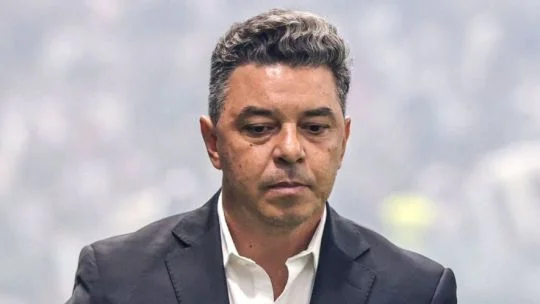
Marcelo Gallardo, the former head coach of River Plate, has been appointed as the new manager of the Ecuador national team as they prepare for the 2030 World Cup qualifying campaign. This announcement came from the Ecuadorian Football Federation on Sunday.
Gallardo’s Impressive Background
At 50, Gallardo brings a wealth of experience, having achieved significant success with River Plate, where he holds the record for the most titles won as head coach, including two Copa Libertadores championships. His tenure at River Plate has made him a respected figure in South American football. He transformed the club into a formidable force, not just locally but in continental competitions. Gallardo's style of play, often characterized by strategic adaptability and a focus on youth development, helped foster a generation of talents who would go on to shine both domestically and internationally.
However, his recent tenure at River ended on a sour note, concluding with his resignation in February due to a less-than-stellar performance devoid of trophies. This abrupt end raised questions about his tactical decisions and player management, suggesting that despite his prior success, the pressure to maintain excellence in football is relentless. Such variables are essential to consider as he transitions to national team duties. Coaching at the club level and managing a national squad are distinct challenges; different pressures, different dynamics.
The Transition to National Management
Gallardo takes over from Sebastián Beccacece, who resigned after Ecuador's disappointing exit in the knockout stage against Mexico in the last World Cup. This transition opens a new chapter for the Ecuadorian team. Beccacece's departure reflects the high expectations around the national squad, especially after they once showed great promise. Gallardo's hiring signals a renewed ambition from the Ecuadorian Football Federation (FEF) to build on past achievements and set higher goals.
A point of interest is the way national teams are often judged against club standards. The skill set necessary for leading a national team, particularly during a World Cup cycle, can differ greatly from that of club-focused competitions. The nuances of managing a roster consisting of players from various clubs across the world requires a different approach. Gallardo's experience might balance these demands if he can unify these talents under a coherent game plan.
The Current State of Ecuadorian Football
Under Gallardo's leadership, Ecuador has the potential to capitalize on recent successes. The team made significant strides in international football, finishing as runners-up in the South American qualifying rounds for the 2026 World Cup, just behind Argentina. This achievement reflects not only a growing football culture in Ecuador but also the emergence of young talents who can reshape the team's future. Indeed, the squad includes rising stars like Piero Hincapié from Arsenal and Willian Pacho from PSG, setting a promising foundation for Gallardo's tenure as they aim for success in upcoming qualifiers.
These young players represent a blend of skill and ambition, but that's just part of the equation. The responsibility falls on Gallardo to nurture this talent and create a compelling vision for the national team. Success in the qualifiers will require not just skill on the pitch, but also tactical awareness, team chemistry, and an ability to adapt to different match scenarios — all qualities that Gallardo hopefully brings with him.
Implications of Gallardo's Appointment
This isn't just another managerial appointment; it's a strategic move with far-reaching implications. Gallardo’s success at River Plate was built on a foundation of trust in youth players, tactical innovation, and a deep understanding of player psychology. Players like Hincapié and Pacho are at a crucial stage in their careers, and how Gallardo handles their development and integration into the national team could define his tenure.
What this means for you, especially if you're working in this space or following football closely, is that Gallardo's impact will likely extend beyond results on the pitch. His methods may also inspire an entire generation of footballers in Ecuador and across South America, influencing coaching philosophies and youth programs.
And yet, the expectations are immense. Ecuadorians expect a national team that can compete on the world stage. Anything less might lead to disappointment among fans who are already riled up from past near-misses. History tells us that transitioning from club to national teams isn't always smooth; many have stumbled and failed to replicate their club successes on international soil.
As Gallardo steps into this role, he carries not just the hopes of a team, but also the pride of a nation keen to assert itself on the world football stage. The upcoming World Cup cycle is before him — an invitation to reflect on past mistakes and set a new course that aligns global expectations with the aspirations of Ecuadorian football. It will be fascinating to observe how he approaches these challenges and if his past successes can translate into a future that elevates the Ecuador national team to new heights.
Discussion
Sign in to join the discussion.