Leo XIV’s four-day Argentina visit marks the country’s first papal trip in nearly 40 years and could put social policy and AI in focus.
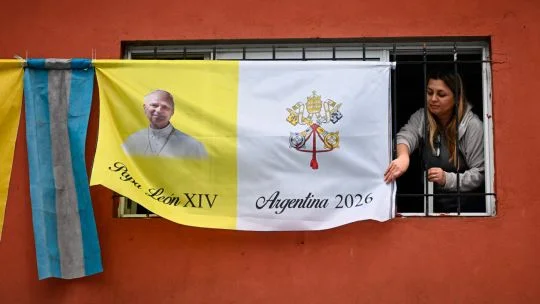
Pope Leo XIV’s four-day visit to Argentina carries a weight that goes beyond its place on his first Latin American tour. It’ll be the first papal visit to the country in almost four decades, with millions of Catholic faithful expected at public events. That long interval gives the trip a historical charge, but the attention won’t be limited to ceremony: Leo’s presence will also bring the Church’s public priorities into view at a moment of economic strain and political debate.
Leo arrives in Buenos Aires on Sunday and will travel to Córdoba and Luján before leaving on November 11. His regional itinerary also includes Uruguay and Peru, giving the Argentina leg a place within a wider South American journey. Argentina’s last papal visitor was John Paul II, who came in April 1987, following an earlier trip in 1982 during the Malvinas War. Those visits took place in a different political setting; the current trip’s meaning will be shaped by the issues facing the country now.
The visit also closes a long-standing gap in the country’s relationship with the papacy. Pope Francis, an Argentine who led the Catholic Church for 12 years, never returned to his homeland during his pontificate. That absence left a particular expectation around a future papal visit: Leo’s arrival offers Argentines a chance to see a pope on home soil, while also renewing attention to the relationship between the Church and a country closely associated with Francis.
A welcome with potential points of tension
President Javier Milei has publicly welcomed Leo’s arrival. The president wrote that Argentina awaited him “with great joy” and said it would be an honour to receive him. He added a hope that the visit would strengthen faith, renew hope and carry a message of peace. The welcome sets a cordial tone, though the language of unity doesn’t settle the questions that may surface when a pope speaks about social concerns.
That warm reception sits alongside possible differences over social policy, support for people with disabilities, inequality and the development of artificial intelligence. Leo’s views on Catholic social doctrine and emerging technology could draw attention in a country where people are feeling economic pressure and voicing frustration with Milei’s economic programme. These subjects connect abstract principles to everyday choices: how institutions respond to hardship, whose needs receive attention, and what responsibilities accompany technological change. The numbers here are underwhelming as a guide to the visit’s impact; what matters is how clearly Leo addresses those concerns.
The government has described the trip as an “apostolic” visit. Officials told reporters last week they weren’t expecting Leo to intervene in domestic politics, while acknowledging that he’s free to express his views. The distinction may matter: a papal visit can become a platform for broader arguments even when its stated purpose is religious. A pope’s comments don’t need to name a government or policy to be heard in political terms, particularly when listeners are already debating inequality and public support. (And this is the part most people overlook.) The setting itself can give a general message a sharper local meaning.
Leo’s message for the tour
Born in the United States and also a Peruvian citizen, Leo said in a post on X last week that his South American journey would seek to “strengthen faith, renew hope, rekindle the fire of charity and serve as an impetus to continue proclaiming the Gospel with joy.” The wording places religious renewal and charitable action side by side. It gives the journey a clear purpose, while leaving room for local audiences to connect that purpose to the questions they face at home.
That message gives the tour a spiritual frame, while the Argentina leg brings its own historical and political context. The scale of public interest, coupled with the unresolved questions around social policy and AI, means Leo’s remarks will be closely watched. If you’re working in this space, the useful distinction is between the message Leo intends to deliver and the meanings Argentines may attach to it. A broad appeal to charity, for example, can invite discussion about social needs without amounting to a specific political intervention.
His visit could show how the Church’s social priorities resonate in a country navigating economic strain and technological change. That’s a meaningful test of how a global religious institution speaks to local pressures: broad principles must become legible to people living with concrete uncertainty. Leo won’t need to offer a policy programme for his words to prompt debate. The challenge is whether the message can hold together spiritual purpose and practical concern without being reduced to a verdict on the government.
What the visit may signal
Argentina’s welcome will be visible in the crowds, but the visit’s wider significance will depend on what Leo chooses to emphasize and how his audience hears it. His itinerary places him before communities in several cities, while the longer regional tour frames Argentina as one stop in a broader encounter with South America. The contrast is useful: the journey has a shared religious message, yet each country brings its own history and public concerns.
For Milei’s government, a respectful reception can coexist with scrutiny of the pope’s remarks. For the Church, the trip offers a public occasion to restate its commitments on faith, charity and social questions. And for Argentines, the return of a pope after such a long gap carries significance in its own right. A visit can’t resolve economic frustration or settle debates about technology. It can, however, make those debates harder to ignore when religious leaders speak about the duties people and institutions owe one another. That’s the real measure to watch: not whether the visit produces a political clash, but whether its message finds purchase beyond the ceremonies.



Discussion
Sign in to join the discussion.