Pope Leo XIV heads to Uruguay, Argentina and Peru for a 12-day visit rooted in his years as a missionary, weeks after cancer surgery.
Pope Leo XIV’s 12-day South American tour carries personal weight and a demanding itinerary. He returns to Peru, where he spent nearly two decades as a missionary, and visits Argentina and Uruguay as the Church faces questions about faith, inequality and social strain. The journey asks him to perform two roles at once: head of a global institution and a priest revisiting places that shaped his life.
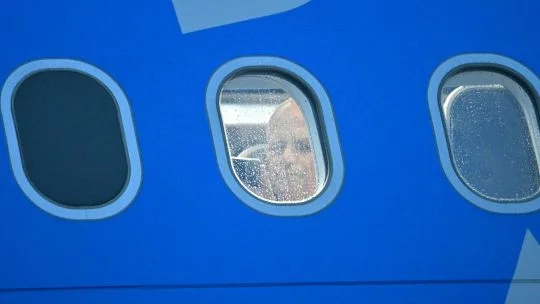
The 71-year-old left Rome on Friday, waving to onlookers before boarding his plane at Fiumicino airport. His departure comes three weeks after surgery to remove a cancerous tumour. The Vatican said doctors had cleared him to travel and that standard medical care for papal trips would suffice. That assurance addresses the immediate question of fitness, while the length and pace of the itinerary will put the practical demands of the office in view.
Leo, the Catholic Church’s first US-born pope, said Wednesday that he looked forward to returning to countries “so dear to me.” He said he hoped the trip would “strengthen faith, renew hope, [and] rekindle the fire of charity.” Those are familiar pastoral aims, but they will be tested against a region where Catholicism is declining and communities are dealing with rising inequality, violence and falling birth rates. A papal visit can draw attention to those pressures; it cannot, by itself, resolve them.
Uruguay sets the opening tone
The first stop is Uruguay, one of Latin America’s wealthiest and most secular countries. Authorities have mobilised about 5,000 police officers and 1,000 soldiers for the visit, a level of preparation that reflects the scale of a papal event as well as its public visibility. In Montevideo, Leo is expected to travel along the waterfront in a custom-made popemobile, meet President Yamandú Orsi and receive the keys to the city.
The visit has drawn interest beyond churchgoers. “I have family members who plan to go to the waterfront to watch him pass,” Janet Rodríguez, 47, told AFP. “I won’t be going, as I’m not religious. But it’s great that someone of such importance is coming.” Her response captures a distinction often blurred in coverage of papal trips: curiosity about the pope can persist even where religious practice is limited.
Cardinal Daniel Sturla, Montevideo’s archbishop, said public interest extended “well beyond the confines of the Catholic Church.” Tickets for masses in Paysandú and Florida were quickly selling out. That demand shows an audience for the visit, though attendance alone won’t establish whether Leo’s message changes how people relate to the Church after the cameras leave.
Uruguay’s laws on same-sex marriage, abortion and euthanasia differ from church teaching; euthanasia was legalised last year. Leo is expected to speak in defence of life and traditional family values. The encounter will put the gap between Catholic teaching and the country’s public choices in plain view. Here’s the thing: a speech can state the Church’s position clearly, but it won’t settle the broader social debate.
A visit to Montevideo’s Casavalle neighbourhood, known for poverty and severe violence, may also put mental health in focus. Uruguay has Latin America’s highest suicide rate. The stop could connect the tour’s religious language about human dignity with conditions people face in daily life (and this is the part most people overlook). Acknowledgment matters, even when a visit offers no immediate remedy.
Argentina and Peru bring personal history
On Sunday, Leo travels to Argentina, the home country of his predecessor, Pope Francis. Francis did not return there during his papacy, giving Leo’s visit added significance for Argentines. The trip therefore carries a public meaning beyond the itinerary: it brings a pope to a country closely associated with the man whose office he now holds.
Vatican expert Christopher White described the itinerary as “a double homecoming of sorts.” Francis was the first Latin American pope; Leo, a Peruvian citizen, “now carries forward that mantle and legacy,” said White, who has written a book about Leo. That framing links the two pontificates through the region, while leaving Leo to establish his own voice and priorities with local audiences.
The tour ends in Peru, where Leo’s arrival on Wednesday is expected to be “a moment full of symbolism and emotion,” White said. The country has embraced the visit with image-printed T-shirts and rosaries, Leo-themed bread and dolls made by women inmates. Callao has also erected a 14-metre (46-foot) statue of the pope. These gestures make the welcome visible, but they also raise expectations for a leader returning as both a national figure and the Church’s head.
In Peru, the itinerary reaches Cusco, the former Inca capital, and the Amazon rainforest. It also returns Leo to places tied to his earlier life as Robert Francis Prevost: he is due to share supper with priests from his former diocese of Chiclayo and visit privately a chapel he helped rebuild. Those stops carry a different weight from public ceremonies. They connect the pope’s current role to ordinary relationships and work he undertook before becoming a global figure.
A homecoming with public stakes
For Leo, the trip joins public duties with a return to people and places that shaped his priesthood. The symbolism is unusually personal, but it also gives the tour a practical test: can a pope’s presence make the Church feel attentive to people facing hardship and social change? If you’re working in this space, the answer will depend less on the spectacle than on the words and encounters that remain after the motorcade moves on.
This is more significant than it looks. A homecoming can strengthen a leader’s connection with familiar communities, yet the region’s pressures extend well beyond any one visit. Leo’s challenge is to speak to that reality in terms people recognise, while showing how the Church intends to remain present. The itinerary will offer clues, not a final verdict.
– TIMES/AFP
Discussion
Sign in to join the discussion.