Brazilian assets are rallying on Flávio Bolsonaro’s election momentum, but investors still need a credible plan to rein in the deficit.
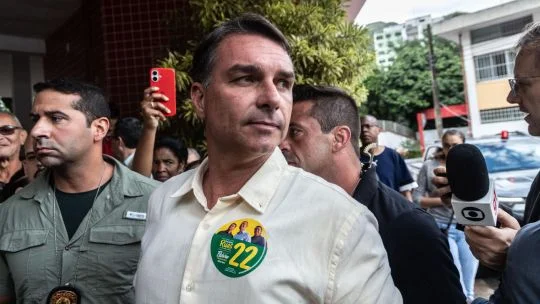
Brazil’s post-election rally rests on a promise investors have yet to see in detail: a credible plan to contain the country’s widening deficit. Flávio Bolsonaro’s unexpectedly strong first-round showing against President Luiz Inácio Lula da Silva has lifted markets, but sustaining those gains will depend on what he proposes—and whether he can deliver it.
Shares, the real and local debt have all drawn investor interest. After a strong session on Monday, gains continued Tuesday as Brazil’s currency rose alongside emerging-market peers and swap rates fell, reflecting expectations of lower interest rates ahead. The iShares MSCI Brazil ETF, the largest exchange-traded fund tracking Brazilian equities, advanced 0.5 percent in New York. It had recorded its highest-ever trading volume and inflows the day before.
“Markets will probably give him the benefit of the doubt for now, but ultimately he will have to deliver on the fiscal front for the rally to be sustained,” said Anthony Kettle, a senior emerging-markets portfolio manager at RBC BlueBay.
The fiscal test behind the rally
Brazil’s public finances give investors a clear reason to focus on the next administration’s plans. The budget deficit has reached nearly 10 percent of gross domestic product, and public debt is above 80 percent of GDP. Analysts say the debt burden keeps interest rates in double digits, weighing on growth and raising borrowing costs for households and businesses.
Bolsonaro has promised to curb spending, reduce bureaucracy and cut taxes. His senior economic adviser, Daniella Marques, has pointed to Javier Milei’s “chainsaw” agenda in Argentina as an influence. So far, though, the campaign has offered few specifics about how it would meet those goals.
That gap between ambition and detail hasn’t stopped investors from treating a Bolsonaro win as a possible break from the current course. After a recent visit to Brazil, TCW Group concluded that his campaign was committed to pursuing fiscal reform, said Ayoti Mittra, the firm’s Latin America sovereign analyst.
The potential payoff reaches across asset classes. JPMorgan Asset Management’s Howard Sheers sees scope for the real to benefit from equity inflows and strong terms of trade. RBC BlueBay sees further room for local debt to rally. Shamaila Khan of UBS Asset Management said Brazilian assets could advance as markets price in tighter fiscal discipline and a greater chance of reform.
“It’s a game-changer for how you should think about Brazilian politics,” said Alexander Robey, a portfolio manager at Allianz Global Investors. “The timing and momentum are on Flávio’s side.”
Congress adds a second layer to the bet
The political shift extends beyond the presidential contest. Voters elected a more right-leaning Congress, including a wave of Bolsonaro allies. That could give Flávio Bolsonaro a stronger base for his agenda if he wins, or limit Lula’s room to pursue spending-heavy policies if he holds the presidency.
The result also fits a wider regional move toward right-leaning candidates. Over the past year, such candidates have won elections in Bolivia, Chile, Colombia and Peru, many with backing from US President Donald Trump. Investors have also been drawn to Latin America’s natural resources and its distance from major geopolitical conflicts.
For Pramol Dhawan, Pimco’s head of emerging markets, the congressional result reduces the risk that fiscal policy remains loose, regardless of who wins the runoff. “A more conservative Congress raises the odds of credible fiscal consolidation over the coming years and meaningfully reduces the left-tail risk of persistently loose fiscal policy, regardless of who wins in the second round,” he said. “We’re constructive on Brazil from here.”
Promises meet the runoff
First, Bolsonaro must convert his strong showing into a runoff victory on October 25. Investors are watching whether Lula can regain support as voters whose preferred candidates were eliminated decide between the two contenders.
Winning would bring a different test. Natalia Gurushina of VanEck said markets would quickly move from campaign pledges to evidence: credible fiscal targets, concrete progress on reform and enough legislative support to make those changes possible. “For Brazil, the clock starts now,” she said.
The rally signals that investors see political change as an opening. Its next phase will depend on whether that opening produces a fiscal plan with enough detail and support to change Brazil’s debt trajectory.






Discussion
Sign in to join the discussion.