President Javier Milei's government extends Aeropuertos Argentina's national airport concession until 2049, along with a substantial investment commitment.
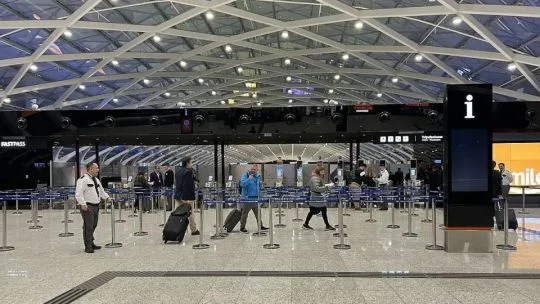
In a significant move for Argentina's aviation infrastructure, President Javier Milei's administration has finalized an agreement to extend Aeropuertos Argentina's management of 35 key airports until 2049, with a potential additional seven-year extension. This agreement is critical as Aeropuertos Argentina oversees prominent terminals, including the vital Ezeiza International Airport, which accounts for around 90% of the country's air traffic.
Background on the Agreement
This airport management extension isn't just a routine agreement; it's a linchpin in Argentina's strategy for improving its aviation capabilities. The importance of Ezeiza International Airport, for instance, can't be overstated. Serving as the main gateway for international travel, it's vital for both tourism and trade. Historically, outdated infrastructure has plagued many of Argentina’s airports, which affects not just passenger experience but also the economy at large. Expanding Aeropuertos Argentina's management through 2049 positions the country to more effectively tackle these long-standing issues.
Strategically, this agreement builds on earlier negotiations under former President Alberto Fernández. In 2020, this administration initiated a ten-year extension approach aimed at attracting significant investment, which is key for modernizing airports. These improvements began to reshape ground transportation, making them safer and more efficient. However, the weight of leadership changes and political pressures surrounding these negotiations brings another layer of complexity.
The Financial Commitment
Aeropuertos Argentina’s commitment to invest an additional US$600 million adds a substantial layer of responsibility and expectation. This follows an already remarkable investment of about $606 million, aimed at overhauling the country’s airport infrastructure in a span set to conclude by 2026. Readers will find this financial involvement aligns with prevailing global trends where public-private partnerships create leverage for countries with limited budgets.
There's a dual-edged sword here. While the investment is a positive indicator of a focus on infrastructure, it also raises questions about sustainability and the viability of such investments. Will Aeropuertos Argentina be able to deliver on these promises as projected? Past experiences with similar projects in other regions show that financial commitments often fall short or come with unforeseen obstacles, especially amidst changing political climates.
Political Context and Influences
Following Milei's inauguration in December 2023, negotiations resumed with renewed vigor. His prior role as chief economist for Corporación América offers a unique insight into the complexities of this agreement. What stands out is not just the financial aspect but the intertwining of political and corporate interests. With appointing a Cabinet that maintains strong ties to Eurnekian’s conglomerate, questions arise about conflicts of interest and transparency. Critics may argue that while this alignment offers efficiency, it can jeopardize the unbiased oversight necessary for such crucial infrastructure projects.
Public-private partnerships can often lead to efficiencies and accelerated timelines. Yet, the risk lies in the potential for favoritism or policies that skew in favor of well-connected corporations. This situation invites skepticism. It raises the question: Are these moves truly in the best interest of the public and economic growth, or do they disproportionately benefit a select few?
Ongoing Developments and Upgrades
The ongoing renovations at Ezeiza and Aeroparque, as well as the upgrades for regional airports like Formosa and Tucumán, indeed reflect efforts to modernize and expand the capacity of Argentina’s air transport systems. But these modifications need continuous monitoring to ensure they meet the demands of both domestic and international travelers. These upgrades are happening in a broader context of new technological integrations and evolving travel expectations, where passengers increasingly demand high-speed connectivity and user-friendly spaces.
(And this is the part most people overlook) The balance between satisfying contemporary needs and future-proofing these facilities for emerging technologies remains delicate. For instance, will the future enhancements allow for the integration of digital services like biometric verification or advanced baggage handling systems? It’s a question many stakeholders will be pondering as they analyze the progress of these renovations. Failure to adapt could result in obsolescence, potentially harming Argentina’s competitive position in global aviation.
Implications for the Future
This extended agreement with Aeropuertos Argentina positions the government to prioritize its transportation infrastructure as a catalyst for economic recovery and growth. If you’re working in this space, understanding this burgeoning partnership can provide valuable insights into the future of Argentina’s aviation industry. The focus on public-private partnerships could mean that similar arrangements might emerge in other sectors of the economy as leaders explore avenues for revitalization.
Yet, the road ahead isn’t without its hurdles. The government must ensure transparency and accountability. Without effective oversight, the potential for corruption or inefficiency lurks just beneath the surface. Argentine aviation risks falling into the same traps that undermine many ambitious infrastructural projects across the globe: lack of compliance, rising costs, and unmet expectations. As economic pressures mount, the sustainability of this partnership may become increasingly scrutinized.
The established timeline until 2049 sets a strong foundation, but the upcoming years will be pivotal. The success of this arrangement will likely signal how effectively Milei’s administration can manage complex intersections of politics, economics, and infrastructure. The implications extend beyond travel; they touch everything from regional connectivity to how Argentina positions itself on the world stage. If Milei's government fails to deliver, the consequences could echo well beyond the runway.
Discussion
Sign in to join the discussion.