The Resurgence of Catalan Castells: A Cultural Tradition Reborn
Published Sep 23, 2026Reads 987By Guillermo Soler García de Oteyza
Once near extinction, the Catalan castells tradition flourishes today with a rich history and community, celebrated for its recent remarkable achievements.
The Rise of Catalan Castells: From the Brink of Extinction to Global Recognition
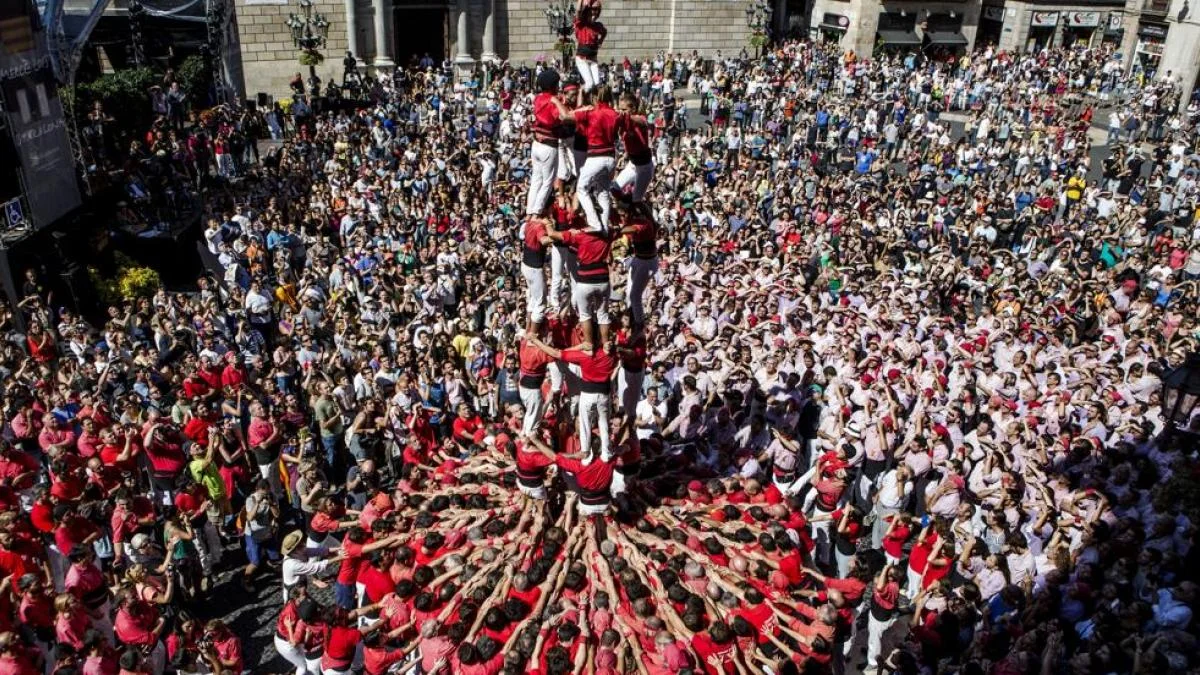
The story of the castells, or human towers, is more than just a cultural tradition; it's a testament to resilience. Officially recognized as part of UNESCO's intangible cultural heritage in 2010, this Catalan phenomenon thrives today with over a hundred active teams and a vibrant community of thousands of practitioners. Recently, history was made when the Castellers de Vilafranca accomplished a significant technical feat—the creation of a “pilar de nou,” a tower comprising four bases, a first in their storied history. You can read more about this achievement [here](https://www.lavanguardia.com/local/barcelona/20260831/11623355/castellers-vilafranca-descarga-primera-vez-historia-pilar-nou.html).
Yet, not too long ago, this celebrated tradition faced a very real threat of disappearing. The early 20th century marked a turning point when new teams emerged in Tarragona and Vendrell, serving as a catalyst for a revitalization that many believed was impossible at the time.
The origins of the castells trace back to the evolving customs of the 18th and 19th centuries, particularly in the city of Valls, where they began as a transformation of an earlier dance, the Ball de Valencians. By the late 19th century, castells had become the centerpiece of major celebrations throughout Tarragona and Penedès. In historical accounts, it’s no exaggeration to state that without the participation of the Xiquets de Valls (typically split into rival factions), no celebration was complete.
But by the turn of the century, the vitality of this tradition began to wane dramatically. Data reveals a stark decline: the last nine-story tower was completed in 1893, followed by the final eight-story structure in 1905. The number of performances plummeted. Alarmed by the decline, the publication *La Crónica de Valls* posed a stark challenge in 1911: "We must ask ourselves—are we to restore the castells to their former glory or allow them to fade into obscurity?" They emphasized that witnessing the gradual decay of such a cherished tradition would be a disservice to its historical dignity.
Understanding why this decline occurred isn’t simple. Factors ranged from demographic shifts like population loss in Valls, economic crisis sparked by the phylloxera epidemic, and the inability of aging castellers to recruit new members. Accidents during performances also tarnished their reputation, while new entertainment forms—especially emerging sports—began to capture the public's interest. Ideologically, sentiments emerged that the traditional form of castells may not mesh with modern sensibilities.
Interestingly, the 1902 play *Lo tres de nou* reflects these shifting attitudes. Its protagonist Joan laments the diminishing caliber of castellers, suggesting that modernization overshadowed traditional practices. This play encapsulates a broad sentiment: as society transformed, so did its appreciation of cultural touchstones.
The eventual revival of the castells can largely be traced to 1926. Historical accounts reveal a resurgence, particularly when towns that had long abandoned the tradition sought to revive it by hiring groups like the Xiquets de Valls. This year marked the official debut of the Xiquets de Tarragona, who breathed new life into the art. A local publication heralded this return as a remarkable step away from the "path of ruin," celebrating the bravery of those who dared to restore what had been fading into oblivion.
Fast on their heels were the Nens del Vendrell, who followed suit just weeks later with their own successful feats. The emergence of these new groups did more than just innovate; it shook up the status quo, compelling traditional teams to up their game as they faced competition.
The years leading up to the Spanish Civil War experienced a renaissance in the castells, termed the “Renaixença.” This period witnessed technical advancements that allowed the construction of eight-story towers to resume, while public interest surged. During this time, innovation was essential; new uniforms and a restructured format for performances became standard, laying the groundwork for how castells are presented today.
As we reflect on this journey, it’s clear that the castells embody a deeper narrative about culture, tradition, and the human spirit. They remind us that, against the odds, heritage can be preserved and transformed, creating meaning for contemporary audiences while honoring the past.
Resiliencia y Renovación en la Tradición de los Castells
El resurgimiento de los castells, un símbolo de identidad regional y nacional en Cataluña, no es un fenómeno simplista. Si bien la decadencia tuvo sus raíces en múltiples factores, su restauración se basa en una serie de motivaciones igualmente complejas que hasta ahora han sido escasamente analizadas. Según el investigador Güell, hay una “toma de conciencia”, aunque sea de forma inconsciente, entre los jóvenes y algunos sectores de la sociedad sobre la relevancia patrimonial de los castells. Esto sugiere que estos grupos han comenzado a ver a los castells no solo como una tradición local, sino como un emblema que refuerza su identidad colectiva.
Un aspecto clave de este renacer es la llegada de una nueva generación que transforma los castells en algo cercano al deporte. En un contexto donde las actividades deportivas gozaban de prestigio, los castells comenzaron a ser vistos de manera similar. Eventos competitivos, como los que tienen lugar en Tarragona, subrayan este cambio hacia una mayor dignificación de la tradición, fusionándola con la emoción y el dramatismo del deporte. Al mismo tiempo, la atracción de figuras intelectuales y artistas, como el venerado músico Pau Casals, fue instrumental. Su apoyo y entusiasmo por los castells ayudaron a atraer la atención a estos eventos, elevando aún más su perfil social y cultural.
Sin embargo, este auge no estuvo exento de interrupciones. Durante la Guerra Civil y los años oscuros del franquismo, los castells enfrentaron serias amenazas. A pesar de esto, la tradición logró resistir, en parte gracias a la protección de las autoridades locales, que lo consideraban un ejemplo de “sano regionalismo”. Esta resistencia aseguró que la pasión por los castells sobreviviera a la opresión.
La verdadera metamorfosis, no obstante, llegó durante las décadas de 1970 y 1980, cuando la sociedad española comenzó su transición hacia la democracia. Este periodo de cambio trajo consigo no solo la recuperación de espacios públicos y festividades, sino también una evolución en la estructura de las collas. La adopción del amateurismo total, la apertura hacia toda la sociedad, la inclusión de mujeres y un renovado enfoque en la seguridad fueron elementos que, a partir de los años 90, propiciaron una explosión de interés en los castells que se mantiene hoy.
Mirando hacia el futuro, sí podemos preguntarnos: ¿será esta fascinación duradera? La historia demuestra que la identidad y el patrimonio pueden ser resilientes, pero también dependen de una constante renovación y contextualización en una sociedad que sigue cambiando. Si estás involucrado en este ámbito, observar cómo las nuevas generaciones interpretan y celebran estas tradiciones será vital para entender su camino adelante.
Discussion
Sign in to join the discussion.