A staggering 60% of residents in Argentina's poorest areas rely on borrowing to purchase food, revealing a dire situation of food insecurity.
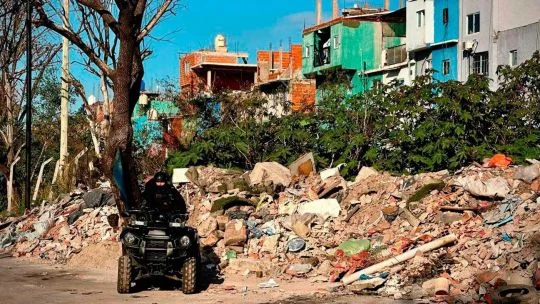
In Argentina's low-income neighborhoods, the struggle to afford food has reached alarming levels, with a recent survey indicating that nearly 60% of these residents resort to borrowing money to meet their basic nutritional needs. This reliance on debt reflects an increasing financial strain on families, with over 40% reporting instances of going without food due to lack of funds. The situation illustrated here isn't just about hunger; it speaks volumes about a society grappling with economic instability.
Debts and Daily Living
The findings, published by Instituto Periferias, reveal that 75% of households in these areas are unable to cover essential expenses, while approximately 62% are managing some form of debt. This marks a significant escalation in how indebtedness is associated with daily living costs, such as food and essential services. Historically, debt was often seen as a way to negotiate temporary financial hardships, like unforeseen medical expenses or major life events. Today, it's a frequent means to cover ongoing living expenses, suggesting a shift in economic conditions that has rendered borrowing a normalized practice among those in financial distress.
Daniel Menéndez, the director of Instituto Periferias, describes the current situation as a chronic cycle of debt. He argues that the economic environment has evolved so significantly that borrowing money, once a rare and last-resort option, has become a predictable aspect of community life. This creates a reliance on debt that can easily spiral out of control, leading to a potentially inescapable cycle. As families chip away at their financial resources just to get by day-to-day, the long-term implications for their financial health become increasingly grim.
The survey indicates the depth of this financial reliance: nearly 60% of participants have taken on debt specifically for food purchases. Alarmingly, more than half, at 53.8%, admitted running out of food at some point, while 43.7% reported being unable to eat for days due to financial constraints. Isn’t it troubling? These figures illustrate that beyond borrowing, many families are devoid of sufficient resources altogether, caught in a paradox where the need for food drives them deeper into financial turmoil.
Declining Access to Nutritious Food
Health-wise, access to nutritious food is dwindling; the survey highlights that 73.4% of individuals in impoverished neighborhoods cannot afford healthy options. Menéndez correlates this trend to the diminishing purchasing power of informal workers, emphasizing a growing concern surrounding income, nutritional quality, and food security. When the essentials like vegetables and proteins become luxuries, it speaks not just to individual choices but to systematic failures in economic policy.
Among those surveyed, 61.8% of families are grappling with various debts. The most common source is credit cards, accounting for 44.8% of responses, followed closely by personal loans from friends or family at 31.9%. Additionally, loans from private individuals and fintech apps account for 27.3% and 23.9%, respectively. Notably, overdue payments for basic utilities affect 21.9% of households, highlighting the pervasive financial instability across these communities. While accessing credit may offer temporary relief, it can also lead to a deeper financial crisis, particularly when unable to meet repayment schedules.
Impact on Mental Health
The socio-economic climate has also had ripple effects on mental health. Menéndez points out that anxiety and feelings of sadness are rampant. A staggering 58.2% of those surveyed experience emotional distress tied to their financial situations. This finding indicates a clear link between financial hardship and mental well-being, an area often overlooked in economic discussions. While economic statistics focus on income and consumption, the psychological toll is a critical lens that can’t be ignored.
Residents voiced their primary concerns, with 61.2% pointing to hunger and poverty as their top issues, followed by a fear of job loss at 49.4%. These are not just fleeting worries; they reflect the persistent and worsening financial landscape in which many live. Faced with these challenges, it’s hard to foster a sense of stability or optimism about the future.
The Bigger Picture and Future Outlook
The normalization of debt for essential needs and the rise in food insecurity reflect deeper systemic issues within Argentina's economy. When borrowing for food becomes commonplace, it raises serious questions about the socio-economic structures in place. This isn’t just an isolated problem; it’s indicative of a society at a tipping point. The broad economic model must be scrutinized as it increasingly marginalizes those at the fringes of society.
If you're working in this space, consider this: the trends observed may not only signify immediate challenges but also foretell longer-term socio-economic instability. Sustainable solutions need to be prioritized, looking beyond quick fixes to address the roots of inequality. Community-led initiatives, government intervention, and international support must align to foster a more balanced economic environment that ensures food security and financial resilience for all.
What this means for you? It could be a clarion call to engage in meaningful dialogue around poverty alleviation and food access, both critical to fostering economic stability.
– TIMES/NA




Discussion
Sign in to join the discussion.