Germany is increasingly at risk from China's rising industrial power, with significant impacts on its economy, particularly in automotive and machinery sectors.
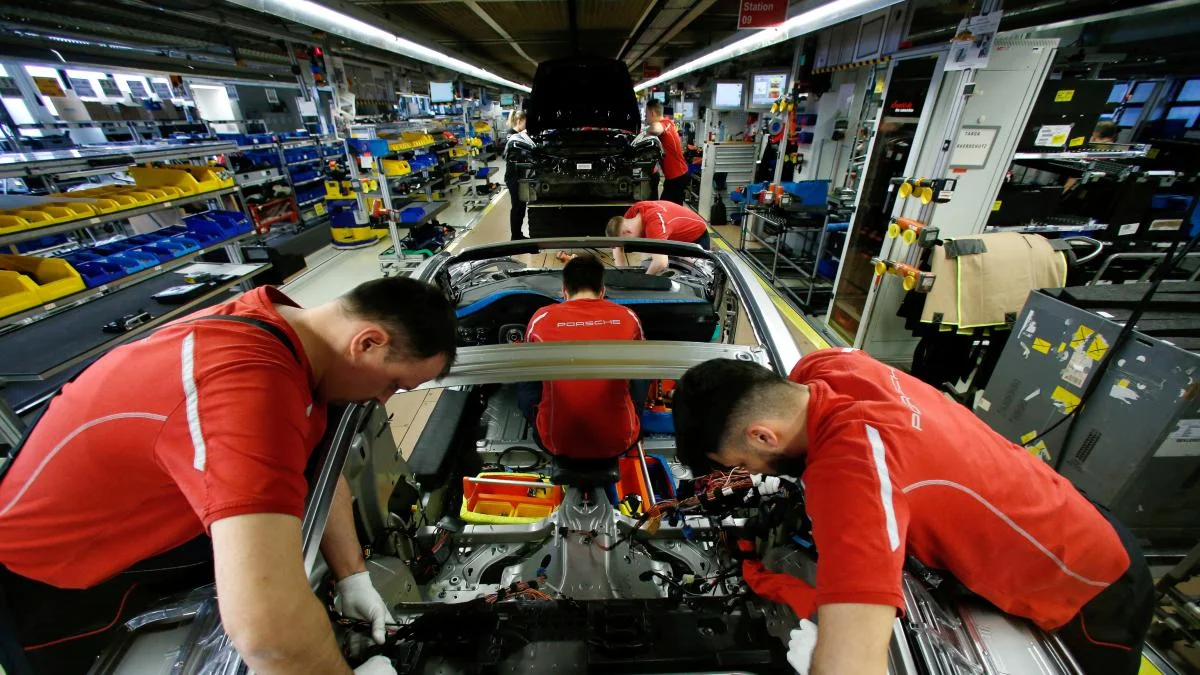
Kaputt. Germany currently finds itself at the forefront of the challenges posed by China's expanding industrial and commercial strategy. A recent report from the European Central Bank (ECB), titled Which countries are most vulnerable to the industrial rise of China? Mapping Europe’s uneven exposure, highlights Germany's precarious position as Europe’s primary victim.
At the turn of the century, as China was rapidly strengthening its manufacturing base and investing heavily in infrastructure, Germany emerged as a quintessential supplier. This partnership flourished as Germany provided advanced machinery and high-end vehicles, effectively capitalizing on China’s developmental boom.
However, the dynamics have shifted dramatically. China is no longer just a source of cheap labor or simple products; it has transformed into a formidable industrial and technological competitor. The once widespread view of China as merely a buyer of German goods is being supplanted by a recognition of it as a direct rival in key sectors like automotive engineering and precision machinery.
According to the ECB study, German exports to China as a percentage of GDP have seen notable declines, plummeting from approximately 3.1% in 2019 to around 1.5% recently. This stark reduction indicates a significant loss of market share for Germany, reflecting a watershed moment in its relationship with China – the latter has evolved from an essential market to a significant competitor.
Germany’s exposure is compounded by the increasing overlap in trade catalogs. The similarity index between German exports and Chinese products has soared by over six percentage points from 2019 to 2025, primarily in machinery and transport sectors. This growing competition asserts pressure on the traditional German economic engines, with 16% of Germany’s industrial jobs tied to sectors reliant on critical raw materials dominated by China.
The ongoing crisis in the German automotive industry exemplifies the impact of these changes. In recent months, Chinese imports of vehicles have outstripped German exports to China for the first time. This shift has been driven particularly by the rising demand for electric vehicles, a segment where China has significantly enhanced its capabilities. As Professor of Economics at Deutsche Bank Research notes, these challenges have consequences for the labor market.
Shift in Consumer Preferences: Germans Turning to Chinese Cars
Trade unions, such as the Mercedes-Benz workers' committee, have voiced concerns about the ongoing crisis affecting their workforce. They argue that the challenges currently faced by the industry are not due to the employees but rather to external factors such as the evolution of the Chinese market, geopolitical tensions, and rising energy costs.
This industrial crisis has broader socio-political implications. In the recent municipal elections, the far-right AfD party emerged as a leading force in Salzgitter—a major industrial hub—garnering 27.4% of the votes. The region is heavily reliant on the steel and automotive industries, where approximately 7,500 Volkswagen employees face uncertainty regarding their jobs.
Beyond Germany, China’s industrial ascendancy is reshaping the global economic landscape, with many European economies experiencing unequal exposure to these changes. Beijing has not only ramped up sales in European and global markets but is also reducing reliance on industrial imports from the EU by enhancing its local production capabilities. The ECB report notes, “The rising competition from China is hampering Europe’s economic performance,” highlighting a reduction in Europe’s share of global goods exports.
Spain, while not insulated, experiences these shifts with less intensity. The ECB’s analysis indicates a slowdown in Spanish sales to China since 2019, predominantly driven by decreased demand for machinery. Yet Spain’s industrial framework exhibits a lower level of critical exposure: only 5% of its employment is contingent on strategic raw materials controlled by China, three times less than in Germany.
Germany and China: Trade Catalogs Converge as Rivals Emerge
The ECB also illustrates a substantial shift in trade flows, with EU countries enhancing their market share in U.S. exports as China's presence declines. This shift could be symptomatic of changing trade dynamics influenced by rising tensions between Washington and Beijing.
For the EU, however, this geopolitical reshuffling serves only as a temporary reprieve amidst a much deeper reconfiguration of international trade. China continues to assert its influence while Germany grapples with the realities of its industrial landscape. It’s hard to imagine that just a few years ago, the narrative was so different.
Discussion
Sign in to join the discussion.