The intrigue with authoritarian systems grows as democracy faces new challenges; a closer look reveals shifting political sentiments worldwide.
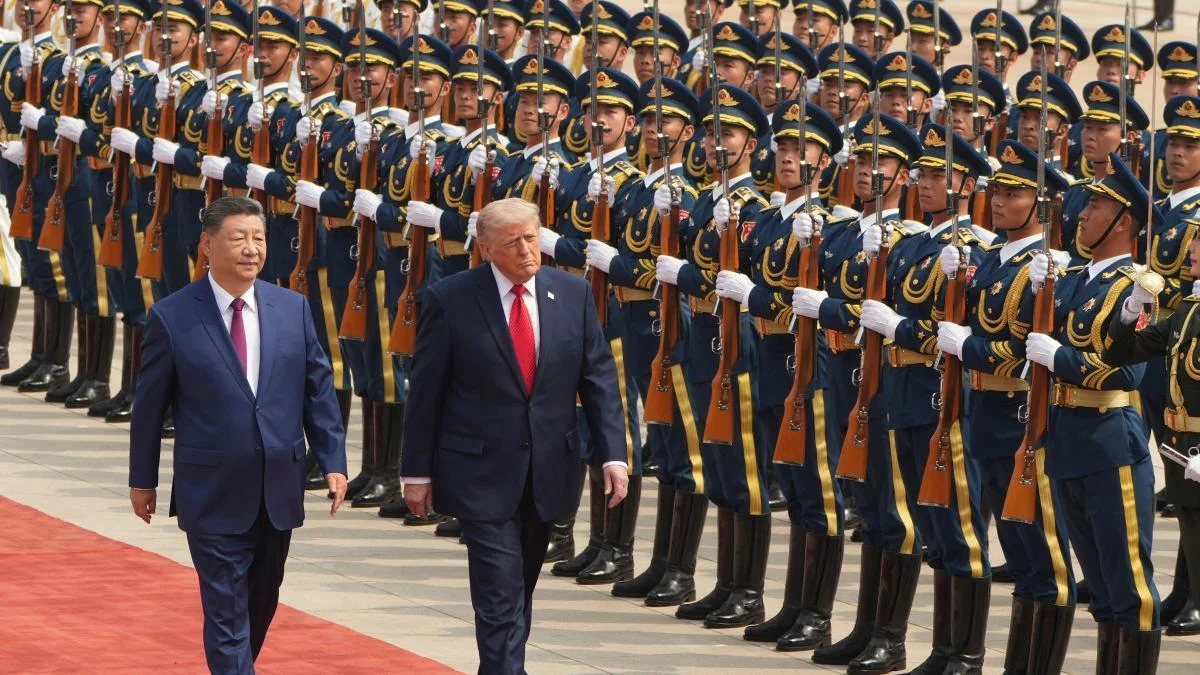
There's a rising perception that authoritarian regimes outperform democracies, a shift that seems particularly pronounced in the fascination with China over the United States. Deng Xiaoping's famous adage, "Time is money and efficiency is life," encapsulates a capitalist approach thriving under a Communist political framework, showcasing that market logic can flourish, even within a one-party state with over eighty million members. This is striking; it indicates a rethinking of traditional political dichotomies where an authoritarian state can seemingly meld economic pragmatism with ideological control.
From Mao to Deng: Shaping Modern China
While Mao Zedong's policies first shaped Chinese governance, it's Deng who fundamentally transformed the modern state. Deng introduced economic reforms that lifted millions out of poverty and reoriented China as a global manufacturing hub. Notably, Mao's image still looms large in the public consciousness, with his historical presence juxtaposed against portraits of Marx, Engels, Lenin, and Stalin, none of whom were Chinese. Mao’s legacy is both a symbol of unity and a reminder of past turmoil, a dichotomy that complicates modern Chinese identity.
The Nixon-Kissinger Diplomatic Shift
Reflecting on Richard Nixon's landmark visit to China in February 1972—an event orchestrated by Henry Kissinger—few could have anticipated that this country of impoverished farmers and the scars of the Cultural Revolution would soon emerge as a formidable rival to the U.S. and Europe across various domains, including technology, commerce, and military might. Nixon's engagement with China was more than policy; it was a recognition of the transformative potential that lay within an isolated nation. Donald Trump’s curious rapport with Vladimir Putin contrasts sharply with his wariness of China, which poses an undeniable challenge for global dominance. The notion of the 'Thucydides Trap,' popularized by Graham Allison, highlights the potential for conflict when a rising power threatens to displace an established one—a timeless concept rooted in ancient dynamics that, eerily, still holds relevance today.
Democracy at Crisis Point
Democracies Confront Hostility as a Political Norm
The tenacity of Russian and Chinese authoritarianism is finding resonance within liberal democracies, where the idea of confrontation has become an ingrained political strategy. Movements like MAGA influence elections throughout Europe, mirroring local sensibilities while aiming to dismantle liberal frameworks established post-World War II. This reflects a broader trend where populist movements capitalize on economic disenfranchisement, striking chords built around national identity and discontent with traditional elites.
Europe stands as a bastion of freedom, albeit one rife with contradictions, where rights for all, particularly the vulnerable, must be safeguarded. On one hand, European democracies espouse values of liberty and equality; on the other, they grapple with historical and contemporary inequalities that often undermine these ideals. Effective checks on executive power lie within an independent judiciary and free press. If either becomes beholden to political leaders, we risk opening the floodgates to populist authoritarianism, regardless of its right or left-wing origins. This isn’t just theoretical; we’re witnessing a slow erosion of those freedoms in various parts of the world.
Despite their flaws, democratic systems in Europe and the West have maintained relative peace for over eighty years. However, as we see reactionary trends rise, their sustainability hangs in the balance. History indicates that when authoritarian practices seep into democratic frameworks, the results can be chilling, as dissent often faces harsh repercussions.
Political Consequences of Authoritarianism
The aversion felt by autocracies toward this "European peace" lies in its blend of social responsibility and mutual respect—concepts that appeal to citizens in various democracies who lean toward order, strength, and financial security instead of navigating the complexities of diverse societal interests. Solon of Athens posited that politics should not aim to erase conflict but to manage the differing social and economic equities that sustain the political community. This remains a relevant viewpoint as current leaders confront a polarized electorate that is increasingly distrustful of the establishment.
As politicians often grapple with low public regard, democracy remains crucial for societal progress and coexistence. If you’re working in this space, you’re likely aware that the reality is that democratic leaders can be replaced swiftly, while autocrats often cling to power until forced out against their will. This fundamental difference poses essential questions about governance: Are we prioritizing the stability of leadership over the dynamic needs of a citizenry? This tension is at the heart of contemporary political struggles.
Future Outlook: Navigating Tensions
The balance of power within democracies is constantly tested by external authoritarian influences, exposing vulnerabilities that must be proactively managed to preserve the values upheld for generations. The stakes are high. Emerging technologies like AI present new battlegrounds for ideology and control, with authoritarian regimes potentially using these tools to tighten their grip. Citizens and leaders alike must confront what this means for democratic accountability and civic freedoms. The next few years will be critical in determining how democratic societies adapt—or resist—this ongoing challenge.
Discussion
Sign in to join the discussion.